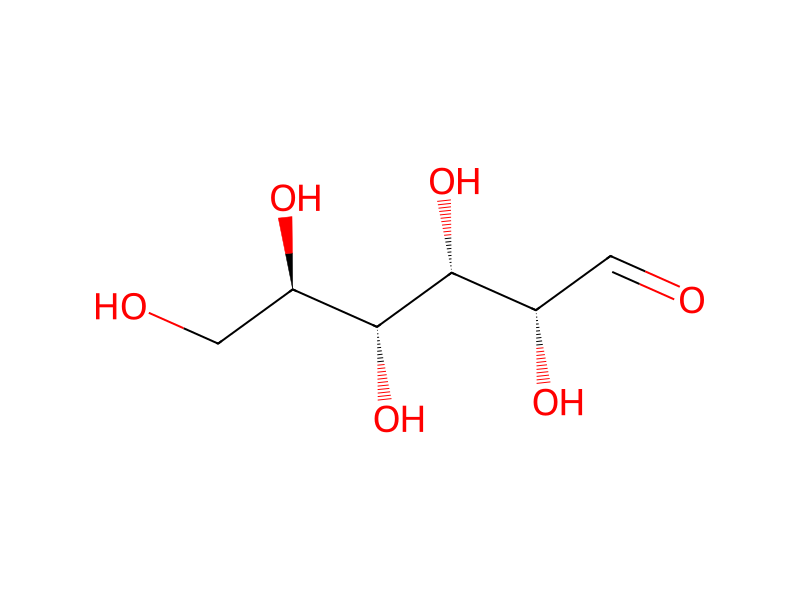
(2R,3S,4R,5R)-2,3,4,5,6-pentahydroxyhexanal → Sweetrex
HRID 1428161
Reaktionsgleichung

[O:1]=[CH:2][C@@H:3]([C@H:5]([C@@H:7]([C@@H:9]([CH2:11][OH:12])[OH:10])[OH:8])[OH:6])[OH:4]>O>[O:1]=[CH:2][C@@H:3]([C@H:5]([C@@H:7]([C@@H:9]([CH2:11][OH:12])[OH:10])[OH:8])[OH:6])[OH:4].[OH:1][CH2:2][C:3]([C@H:5]([C@@H:7]([C@@H:9]([CH2:11][OH:12])[OH:10])[OH:8])[OH:6])=[O:4]Komponenten
3

Reagenzien, Katalysatoren, Lösungsmittel 1

Versuchsvorschrift
In a double-blind, randomised, cross-over design, 34 endurance trained male and 14 female runners and triathletes (35±10 yrs; 70±9 kg; 1.75±0.09 m) completed two 16 km field based runs as fast as possible on two occasions. They received either a glucose gel (GLU) or a glucose+fructose gel (GLU/FRC) to provide CHO at a rate of 1.4 g/min with ad libitum water intake every 3.2 km. Each runner completed a post-exercise questionnaire including 17 questions to assess GI tolerance on a scale from 1 to 10 (from “no problem at all” to “the worst it has ever been”).