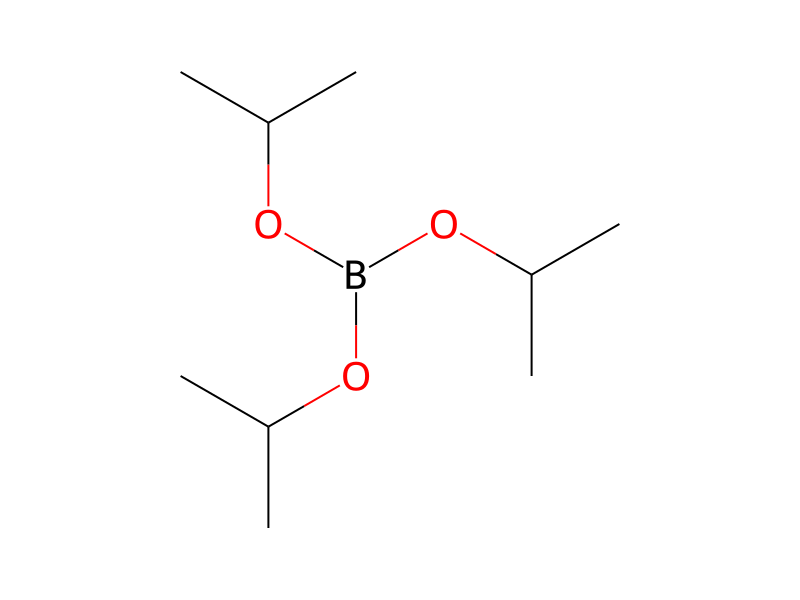
BrC1C=C2C(=CC=1)C=C([C:12]1[CH:24]=[CH:23][C:22]3[C:21]4[C:16](=[CH:17][CH:18]=[CH:19][CH:20]=4)[C:15]([CH3:26])([CH3:25])[C:14]=3[CH:13]=1)C=C2.[CH3:27][CH2:28][CH2:29][CH2:30][CH2:31][CH3:32].[CH2:33]([Li])[CH2:34][CH2:35][CH3:36].[B:38](OC(C)C)([O:43]C(C)C)[O:39]C(C)C.Cl>ClCCl.C1COCC1>[CH3:26][C:15]1([CH3:25])[C:14]2[CH:13]=[C:12]([C:29]3[CH:28]=[C:27]4[C:32](=[CH:31][CH:30]=3)[CH:36]=[C:35]([B:38]([OH:43])[OH:39])[CH:34]=[CH:33]4)[CH:24]=[CH:23][C:22]=2[C:21]2[C:16]1=[CH:17][CH:18]=[CH:19][CH:20]=2A mixed solution of 12.00 g (30.1 mmol) of 2-(6-bromonaphthalene-2-yl)-9,9-dimethyl-9H-fluorene and 120 ml of dehydrated THF was cooled to −70° C. under argon atmosphere, and 23.3 ml (36.0 mmol) of a hexane solution of 1.55M n-butyllithium was added dropwise thereto with stirring. The reaction mixture was stirred at −70° C. for 2 hours. The reaction solution was cooled again to −70° C., and 17.0 g (90.2 mol) of triisopropyl borate was added dropwise thereto. The reaction mixture was heated to room temperature and stirred for one hour, then it was left standing overnight. The reaction mixture was cooled on an ice bath, and a 6N hydrochloric acid aqueous solution was added thereto and stirred at room temperature for one hour. Dichloromethane was added to the reaction mixture to separate the liquid, and the organic phase was washed with water and dried on sodium sulfate. The solvent was removed by distillation under reduced pressure, and the residue was refined by silica gel chromatography to obtain 6.25 g (yield: 57%) of 6-(9,9-dimethyl-9H-fluorene-2-yl)naphthalene-2-ylboronic acid.