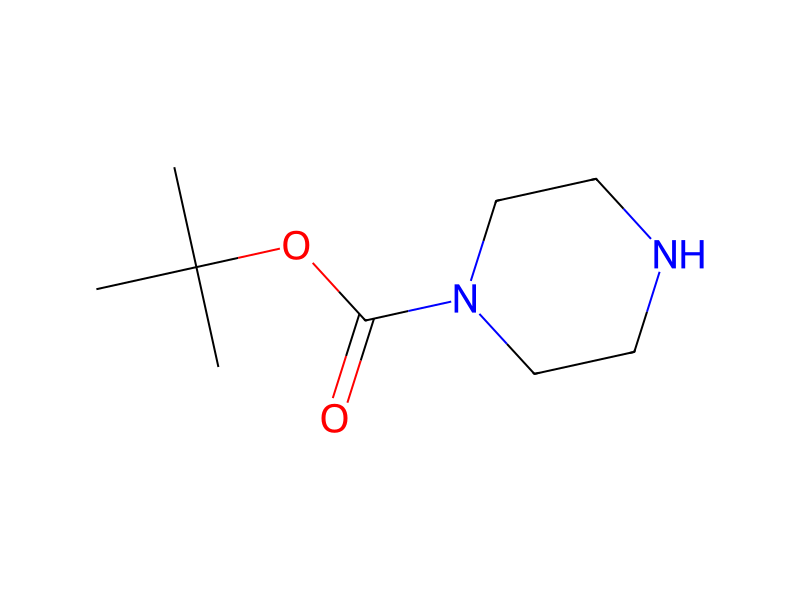
[N:1]1([CH2:7][CH2:8][CH2:9][O:10][C:11]2[CH:18]=[CH:17][C:14]([CH:15]=O)=[CH:13][CH:12]=2)[CH2:6][CH2:5][CH2:4][CH2:3][CH2:2]1.[C:19]([O:23][C:24]([N:26]1[CH2:31][CH2:30][NH:29][CH2:28][CH2:27]1)=[O:25])([CH3:22])([CH3:21])[CH3:20].C(O)(=O)C.C(O[BH-](OC(=O)C)OC(=O)C)(=O)C.[Na+]>ClCCl.C(=O)(O)[O-].[Na+]>[C:19]([O:23][C:24]([N:26]1[CH2:31][CH2:30][N:29]([CH2:15][C:14]2[CH:17]=[CH:18][C:11]([O:10][CH2:9][CH2:8][CH2:7][N:1]3[CH2:6][CH2:5][CH2:4][CH2:3][CH2:2]3)=[CH:12][CH:13]=2)[CH2:28][CH2:27]1)=[O:25])([CH3:22])([CH3:20])[CH3:21]To a solution of 4-(3-(piperidin-1-yl)propoxy)benzaldehyde (WO 02/12214 A2) (1.90 g, 7.68 mmol) in dichloromethane (25 ml) was added 1-N tert butoxy carbonyl piperazine (1.57 g, 8.45 mmol) followed by acetic acid (1 ml), and the reaction stirred for 1 hour at room temperature, then treated with sodium triacetoxy borohydride (2 g, 9.61 mmol) and stirred for 16 hours at room temperature. The reaction was then diluted with saturated sodium bicarbonate solution and extracted with dichloromethane. The dichloromethane was then washed sequentially with water and brine, dried over anhydrous sodium sulfate and evaporated in vacuo to yield a residue which was purified using silica gel chromatography eluting with a mixture of 0.880 ammonia:methanol:dichloromethane (0.5:4.5:95) to afford the title compound (1.586 g, 50%); MS (ES+), m/e 418 [M+H]+.