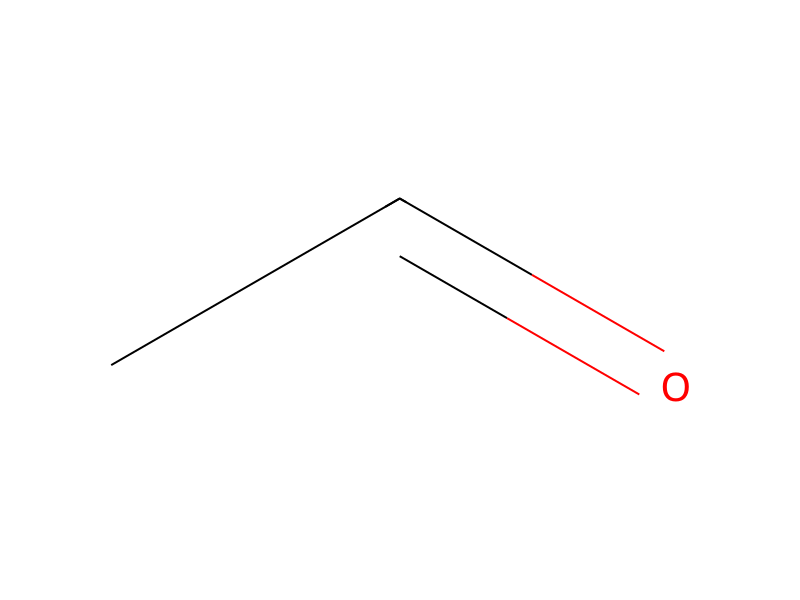
In a Schlenk's tube were charged 710 mg (10 mmole) of azetidin-2-one, 205 mg (2.5 mmole) of anhydrous sodiumacetate, and 130 mg (0.5 mmole, 5 mole %) of ruthenium chloride trihydrate. After thoroughly displacing the atmosphere with oxygen, a balloon filled with oxygen was fitted to the reactor. To the mixture were added 100 ml of ethyl acetate and 5 ml of acetic acid, followed by heating at 40° C. for 30 minutes with stirring. To the reaction mixture was added 1.1 ml (20 mmole) of acetaldehyde all at once while stirring at 40° C., and the reaction was continued for an additional 3 hours. The reaction mixture was poured into 400 ml of a 10% sodium sulfite aqueous solution and extracted twice with 500 ml portions of ethyl acetate. The extract was washed with 200 ml of a saturated sodium chloride aqueous solution and dried over anhydrous sodium sulfate. The solvent was removed by distillation under reduced pressure, and the residue was purified by silica gel column chromatography using a 3:1 (by volume) mixed solvent of n-hexane and ethyl acetate to obtain 1.14 g (8.8 mmole, percent yield: 88%) of 4-acetoxyazetidin-2-one as an oily substance.