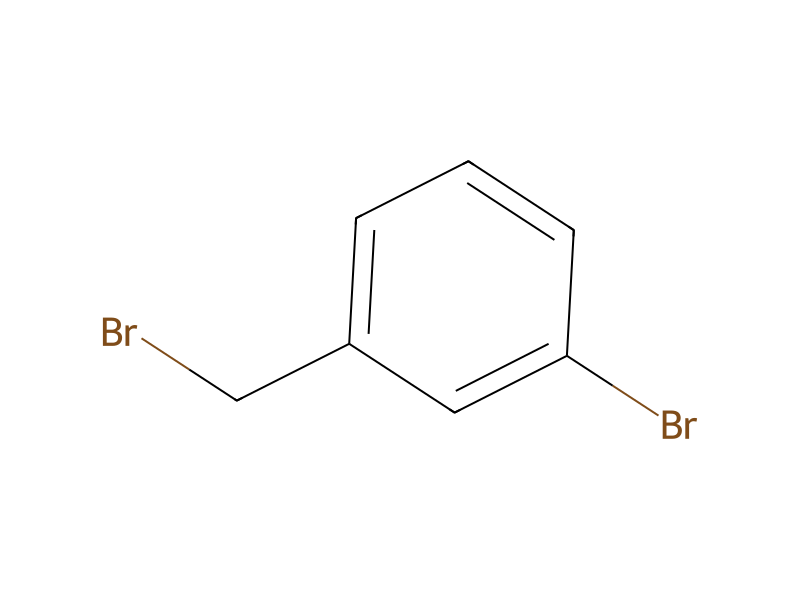
Under argon, 14.8 ml (105.48 mmol) of diisopropylamine were initially charged in 66 ml of dry THF, and the mixture was cooled to −40° C. 42.2 ml (105.48 mmol) of n-butyllithium solution (2.5 M in hexane) were slowly added dropwise and the mixture was stirred for 30 min. The reaction solution was then cooled to −78° C., and a solution of 10.0 g (70.32 mmol) of tert-butyl cyclopropanecarboxylate in 17 ml of THF was added. After 4 h of stirring at −78° C., a solution of 19.34 g (77.36 mmol) of 3-bromobenzyl bromide in 17 ml THF was added. The reaction mixture was slowly warmed to RT overnight, and aqueous ammonium chloride solution was then added carefully and the mixture was extracted three times with ethyl acetate. The combined organic phases were washed with saturated sodium chloride solution, dried over magnesium sulphate and concentrated under reduced pressure. The crude product was purified by chromatography on 750 g of silica gel (mobile phase cyclohexane/dichloromethane 50:1, then 5:1). This gave 13.3 g (60.7% of theory) of the title compound.