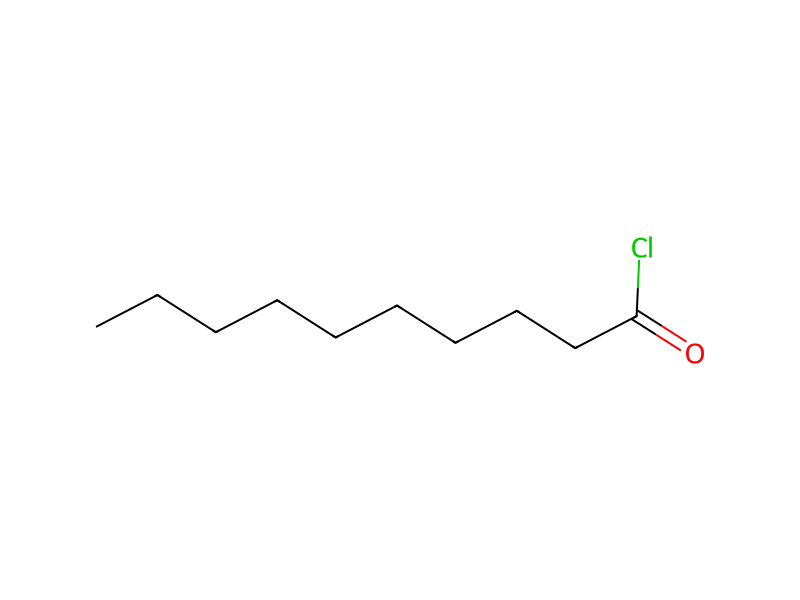
[CH3:1][O:2][C:3]1[CH:12]=[CH:11][C:10]2[C:5](=[CH:6][CH:7]=[CH:8][CH:9]=2)[CH:4]=1.[Cl-].[Al+3].[Cl-].[Cl-].[C:17](Cl)(=[O:27])[CH2:18][CH2:19][CH2:20][CH2:21][CH2:22][CH2:23][CH2:24][CH2:25][CH3:26].O>[N+](C)([O-])=O>[C:17]([C:8]1[CH:7]=[CH:6][C:5]2[C:10](=[CH:11][CH:12]=[C:3]([O:2][CH3:1])[CH:4]=2)[CH:9]=1)(=[O:27])[CH2:18][CH2:19][CH2:20][CH2:21][CH2:22][CH2:23][CH2:24][CH2:25][CH3:26]Under a nitrogen atmosphere, 2-methoxynaphthalene (64 g, 0.41 mol) easily available from a reagent manufacturer was dissolved in nitromethane (150 ml) dried with a molecular sieve 3A. Under an ice bath, aluminum chloride (80 g, 0.60 mol) was added. Subsequently, decanoyl chloride (92 ml, 0.45 mol) was dropped into the solution under the ice bath. The solution was stirred under room temperature for 5 hours, and water (100 ml) was dropped into the solution under the ice bath. The reaction solution was extracted with methylene chloride (200 ml×4), and the obtained organic layer was washed with water (100 ml×3). The organic layer was dried with anhydrous magnesium sulfate, and filtered. Then, the solvent was distilled away under reduced pressure. The obtained yellow solid was recrystallized from hexane to obtain 2-decanoyl-6-methoxynaphthalene (102 g, 82%) as a white solid.