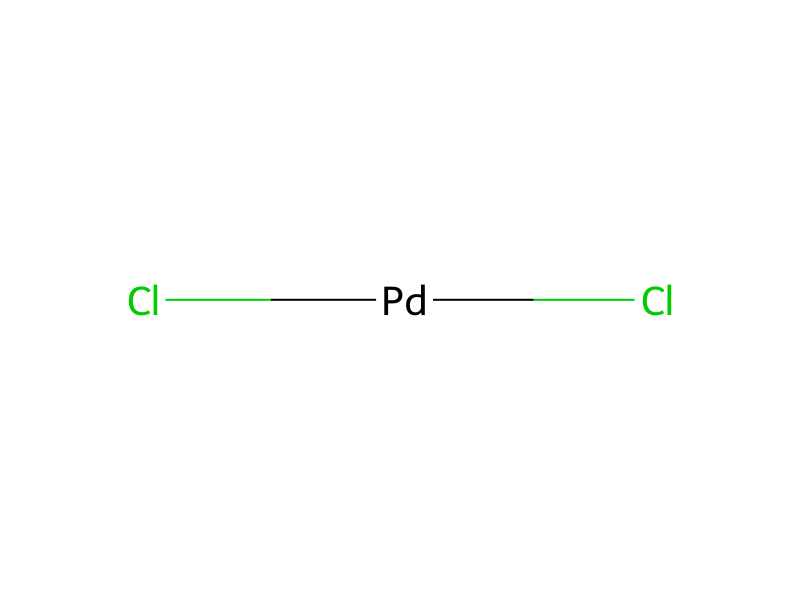
Br[C:2]1[CH:7]=[CH:6][C:5]([S:8]([N:11]([C:16]2[CH:21]=[CH:20][C:19]([CH3:22])=[CH:18][C:17]=2[CH3:23])[CH2:12][CH:13]([CH3:15])[CH3:14])(=[O:10])=[O:9])=[CH:4][CH:3]=1.[B-](F)(F)(F)[CH:25]=[CH2:26].[K+].C1(P(C2C=CC=CC=2)C2C=CC=CC=2)C=CC=CC=1.C(=O)([O-])[O-].[Cs+].[Cs+]>ClCCl.[Pd](Cl)Cl.C(OCC)(=O)C.O.O1CCCC1>[CH3:23][C:17]1[CH:18]=[C:19]([CH3:22])[CH:20]=[CH:21][C:16]=1[N:11]([CH2:12][CH:13]([CH3:15])[CH3:14])[S:8]([C:5]1[CH:6]=[CH:7][C:2]([CH:25]=[CH2:26])=[CH:3][CH:4]=1)(=[O:10])=[O:9]To a microwave vial was added 4-bromo-N-(2,4-dimethylphenyl)-N-isobutylbenzenesulfonamide (4.44 g, 11.20 mmol), potassium trifluoro(vinyl)borate (4.50 g, 33.6 mmol), triphenylphosphine (0.176 g, 0.672 mmol), cesium carbonate (10.95 g, 33.6 mmol) and palladium(II) chloride (0.040 g, 0.224 mmol). Tetrahydrofuran (THF) (12 mL) and water (1.333 mL) were then added, ensuring all particles were below the solvent level. The reaction vessel was sealed and heated in a microwave (Biotage Initiator) to 140° C. for 60 minutes, cooled to room temperature and ethyl acetate (40 mL) added to the mixture. The organic phase was washed with water (50 mL), dried using a hydrophobic frit and evaporated in vacuo to give the crude product as a orange oil. The sample was loaded in dichloromethane and purified by silica (Si) chromatography using a 0-25% ethyl acetate-cyclohexane gradient. The appropriate fractions were combined and evaporated in vacuo to give the required product, 1.8 g, as an off-white solid. LCMS [LCMS1] Rt 1.47 min, m/z (ES+) 344 (M+H).