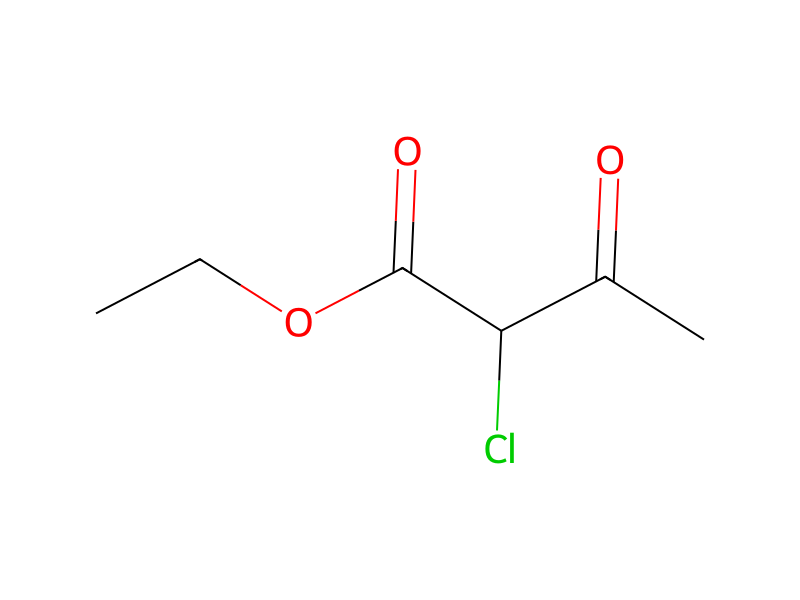
[CH2:1]([O:3][C:4](=[O:10])[CH:5]([Cl:9])C(=O)C)[CH3:2].C([O-])(=O)C.[Na+].[Br:16][C:17]1[CH:18]=[CH:19][C:20]([O:24][CH2:25][CH2:26][C:27]#[CH:28])=[C:21]([NH2:23])[CH:22]=1.[N:29]([O-])=O.[Na+]>Cl.O>[CH2:1]([O:3][C:4](=[O:10])[C:5]([Cl:9])=[N:29][NH:23][C:21]1[CH:22]=[C:17]([Br:16])[CH:18]=[CH:19][C:20]=1[O:24][CH2:25][CH2:26][C:27]#[CH:28])[CH3:2]2-Chloro-3-oxo-butyric acid ethyl ester (1.94 g, 11.2 mmol) and sodium acetate (1.45 g, 17.8 mmol) were stirred in IMS (100 mL) to give a clear solution, then cooled to 0° C. Separately, 5-bromo-2-but-3-ynyloxy-phenylamine (2.68 g, 11.2 mmol) in 6M hydrochloric acid (6.8 mL) was cooled to 0° C. and a solution of sodium nitrite (0.77 g, 11.2 mmol) in water (11.2 mL) was added dropwise with stirring, keeping the temperature below 5° C. The aqueous acidic solution was added to the IMS solution, washed in with a little water, keeping the temperature below 5° C. After 1 h at 0-5° C., the mixture was diluted with water and extracted several times with ethyl acetate. The combined organic extracts were washed with water, dried (Na2SO4), filtered and concentrated in vacuo to give Chloro-(5-bromo-2-but-3-ynyloxyphenylhydrazono)acetic acid ethyl ester as a pale brown solid (3.96 g, 95%). LCMS: RT=4.97 min, [M+Na]+=395/397/399.