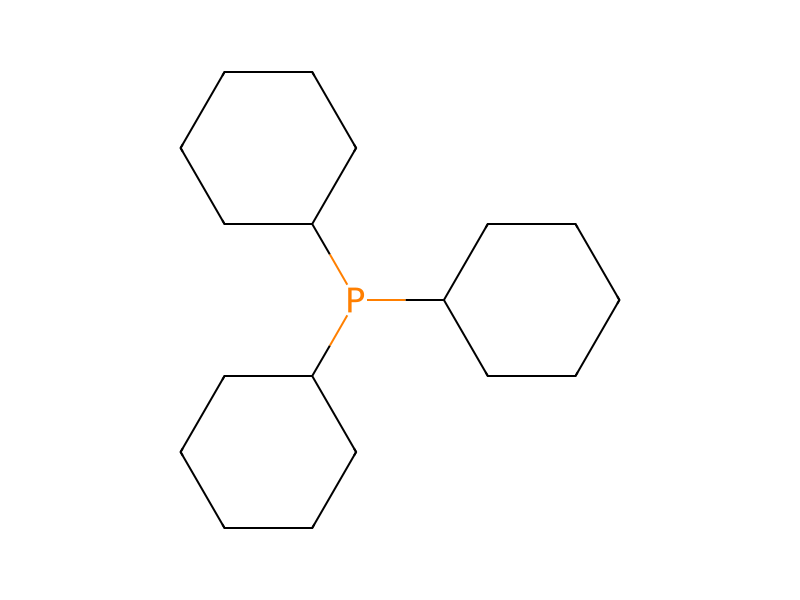
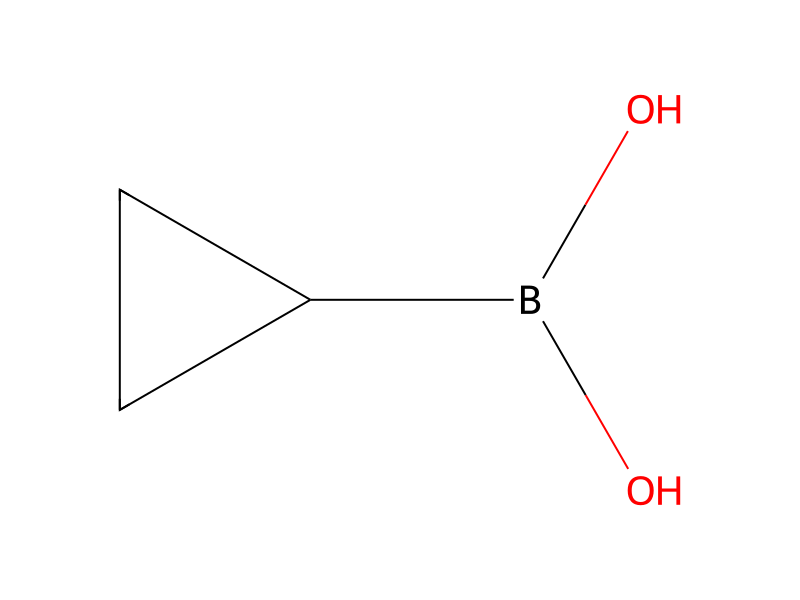
A flask was charged with a mixture of the 2-(4-iodo-1H-pyrazol-1-yl)-5-nitropyridine (0.600 g, 1.90 mmol), cyclopropylboronic acid (652 mg, 7.59 mmol), palladium acetate (43 mg, 0.19 mmol), tricyclohexylphosphine (112 mg, 0.380 mmol), and tripotassium phosphate (1.41 g, 6.64 mmol) and then equipped with a micro reflux condenser and purged with dry nitrogen. Freshly degassed toluene (10 ml) was added followed by degassed water (0.4 ml) and the mixture was heated to reflux for 12 hours. The reaction mixture was cooled to ambient temperature, then diluted with ethyl acetate and water. The aqueous layer was extracted with ethyl acetate (3×) and the combined organic extracts were dried over sodium sulfate, filtered, and concentrated in vacuo. The crude material was purified via ISCO MPLC (SiO2, 0-25% ethyl acetate in heptane) to yield the product (0.12 g, 28%) as a solid. 1H NMR (400 MHz, CDCl3): δ 9.24 (d, J=2.7 Hz, 1H), 8.56 (dd, J=9.1, 2.6 Hz, 1H), 8.32 (s, 1H), 8.08 (d, J=9.0 Hz, 1H), 7.62 (s, 1H), 1.79 (tt, J=8.6, 5.1 Hz, 1H), 0.97 (ddd, J=8.2, 6.1, 4.3 Hz, 2H), 0.64 (dt, J=6.3, 4.7 Hz, 2H).