StartseiteMCPWorkbenchSkills
StartseiteWorkbenchBenachrichtigungenMein Bereich
llms.txt · MCP-AnleitungDatenschutz · Nutzungsbedingungen · Supportv1.8.3
  1. Startseite
  2. /Reaktion

1-isopropyl-3-methyl-1H-1,2,4-triazole → 9-Bromo-2-(2-isopropyl-5-methyl-2H-[1,2,4]triazol-3-yl)-8-methyl-4,5-dihydro-6-oxa-1,3a-diazabenzo[e]azulene

HRID 1530406
Drucken

Reaktionsgleichung

Reaktionsgleichung von HRID 1530406
[CH:1]([N:4]1[CH:8]=[N:7][C:6]([CH3:9])=[N:5]1)([CH3:3])[CH3:2].C(N1C(C)=NC=N1)(C)C.C([Li])CCC.[Br:24][C:25]1[C:26]([CH3:40])=[CH:27][C:28]2[O:37][CH2:36][CH2:35][N:34]3[C:30](=[N:31][C:32](I)=[CH:33]3)[C:29]=2[CH:39]=1>C1COCC1.[Cl-].[Zn+2].[Cl-].C1C=CC([P]([Pd]([P](C2C=CC=CC=2)(C2C=CC=CC=2)C2C=CC=CC=2)([P](C2C=CC=CC=2)(C2C=CC=CC=2)C2C=CC=CC=2)[P](C2C=CC=CC=2)(C2C=CC=CC=2)C2C=CC=CC=2)(C2C=CC=CC=2)C2C=CC=CC=2)=CC=1>[Br:24][C:25]1[C:26]([CH3:40])=[CH:27][C:28]2[O:37][CH2:36][CH2:35][N:34]3[C:30](=[N:31][C:32]([C:8]4[N:4]([CH:1]([CH3:3])[CH3:2])[N:5]=[C:6]([CH3:9])[N:7]=4)=[CH:33]3)[C:29]=2[CH:39]=1
KomponentenReaktionsbedingungenVersuchsvorschriftAufarbeitungQuellen und NachweiseNotizen zur Reaktion

Komponenten

8

Edukt 4

HCID 207448981-isopropyl-3-methyl-1H-1,2,4-triazoleHCID 540510601-isopropyl-5-methyl-1H-[1,2,4]triazoleHCID 6831288010-Bromo-2-iodo-9-methyl-5,6-dihydrobenzo[F]imidazo[1,2-D][1,4]oxazepineHCID 178418339Butyllithium

Produkt 1

HCID 683128519-Bromo-2-(2-isopropyl-5-methyl-2H-[1,2,4]triazol-3-yl)-8-methyl-4,5-dihydro-6-oxa-1,3a-diazabenzo[e]azulene
Ausbeute 35 %

Reagenzien, Katalysatoren, Lösungsmittel 3

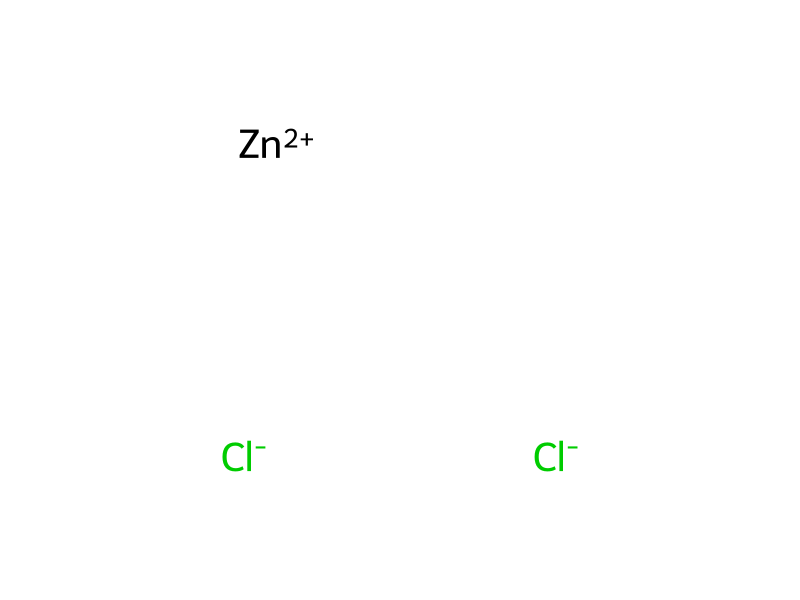
HCID 3007855SinkkikloridiKatalysatorHCID 178418397HCID 178418397, VerbindungKatalysatorHCID 8028TetrahydrofuranLösungsmittel2×

Reaktionsbedingungen

Temperatur
-30 °C

Versuchsvorschrift

A solution of 1-isopropyl-3-methyl-1H-[1,2,4]triazole (in a 6:4 mixture with 1-isopropyl-5-methyl-1H-[1,2,4]triazole, 0.292 g, 1.4 mmol) in THF (5 mL) was cooled to −30° C. and treated with n-butyllithium (2.5M in hexanes, 0.56 mL, 1.40 mmol). Stirring was continued for 1 h maintaining the internal temperature between −30° C. and −20° C. The mixture was then cooled to −30° C. and a solution of zinc chloride (0.5M in THF, 1.66 mL, 0.83 mmol) was added over 2 min. The reaction mixture was then slowly warmed to RT over 1 h. A solution of 9-bromo-2-iodo-8-methyl-4,5-dihydro-6-oxa-1,3a-diazabenzo[e]azulene (404 mg, 1.0 mmol) in THF (5 mL) was added followed by Pd(PPh3)4 (58 mg, 0.128 mmol) and the reaction mixture was stirred at 60° C. under a nitrogen atmosphere for 18 h. After cooling to RT, volatiles were removed in vacuo and the residue was partitioned between EtOAc (300 mL) and water. The aqueous phase was further extracted with EtOAc (300 mL) and the combined organic layers were washed with water followed by brine, then dried (Na2SO4) and concentrated in vacuo. The resulting residue was purified by column chromatography (Si-PCC, eluent 100% EtOAc followed by gradient 1-10% MeOH in EtOAc) affording the title compound (0.168 g, 35%). LCMS: RT 3.71 min [M+H]+ 402.0/404.0. 110178153

Aufarbeitung

  1. temperaturemaintaining the internal temperature between −30° C. and −20° C
  2. temperatureThe reaction mixture was then slowly warmed to RT over 1 h
  3. stirringthe reaction mixture was stirred at 60° C. under a nitrogen atmosphere for 18 h
  4. temperatureAfter cooling to RT
  5. customvolatiles were removed in vacuo
  6. customthe residue was partitioned between EtOAc (300 mL) and water
  7. extractionThe aqueous phase was further extracted with EtOAc (300 mL)
  8. washthe combined organic layers were washed with water
  9. dry with materialdried (Na2SO4)
  10. concentrationconcentrated in vacuo
  11. customThe resulting residue was purified by column chromatography (Si-PCC, eluent 100% EtOAc followed by gradient 1-10% MeOH in EtOAc)

Quellen und Nachweise

ORD-Eintrag
ord-b702cd5ab06345ddae6596128b3b9608
Quelldatensatz
uspto-grants-2015_07
DOI
10.6084/m9.figshare.5104873.v1
Patentnummer
US09090628B2

Notizen zur Reaktion

Auf dieser SeiteKomponentenReaktionsbedingungenVersuchsvorschriftAufarbeitungQuellen und NachweiseNotizen zur Reaktion