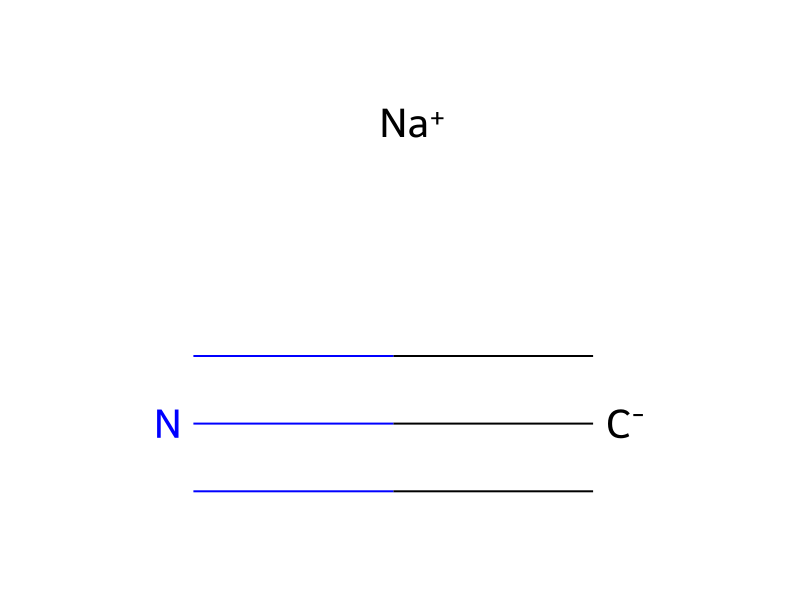
To a rapidly stirred solution of 24.8 grams (0.2 mole) of t-butylhydrazine hydrochloride and 9.8 grams (0.2 mole) of sodium cyanide in 100 ml. of deionized water in a 250 ml. 4-neck round bottom flask, was added a solution of 19.6 grams (0.2 mole) of cyclohexanone in 15 ml. of ethanol. The reaction was stirred for 5 hours at room temperature and then allowed to stand overnight. The next morning the reaction was stirred an additional hour and filtered. The product was dried at 30°C. in a vacuum oven and the yield was 36.3 grams (93.5%) of a white solid melting at 70°-73°C. The white solid evolves HCN on exposure to air over extended periods. The infrared spectrum contained strong NH bands, a cyano band, and did not contain any carbonyl or imino bands. The infrared spectrum was thus consistent with the structure of the desired hydrazo product.