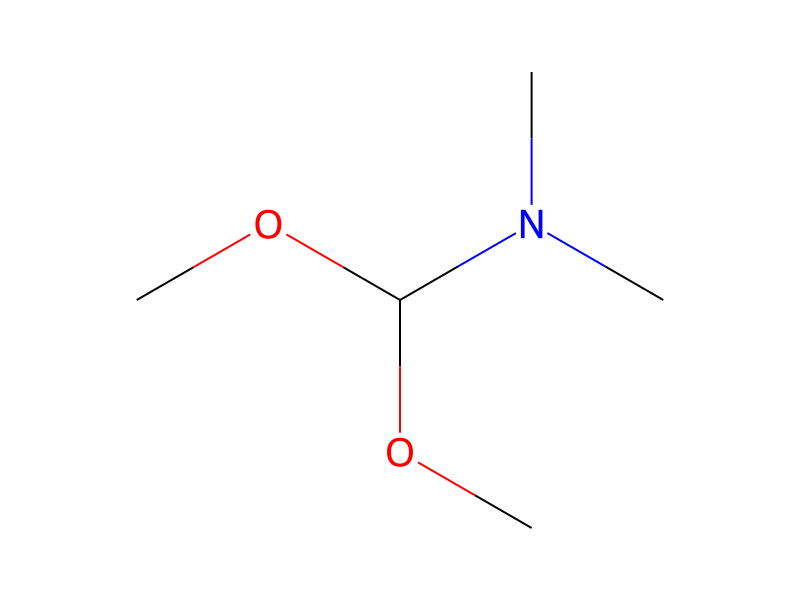
[Br:1][C:2]1[C:15]([F:16])=[CH:14][C:5]([C:6]([CH2:8][C:9]([O:11][CH2:12][CH3:13])=[O:10])=[O:7])=[C:4]([F:17])[C:3]=1[CH3:18].[C:19](OC(=O)C)(=O)[CH3:20].CO[CH:28](OC)[N:29]([CH3:31])C.C1(N)CC1>C(Cl)Cl.C(O)C.CCCCCC>[Br:1][C:2]1[C:15]([F:16])=[CH:14][C:5]([C:6]([C:8](=[CH:31][NH:29][CH:28]2[CH2:20][CH2:19]2)[C:9]([O:11][CH2:12][CH3:13])=[O:10])=[O:7])=[C:4]([F:17])[C:3]=1[CH3:18]In 150 ml of methylene chloride was dissolved 30.0 g of ethyl 4-bromo-2,5-difluoro-3-methylbenzoylacetate, and 19.1 g of acetic anhydride and 22.3 g of N,N-dimethylformamide dimethyl acetal were added to the solution, after which the resulting mixture was stirred at room temperature for one hour. Thereafter, the solvent was removed by distillation under reduced pressure. The residue obtained was dissolved in 90 ml of ethanol and 5.90 g of cyclopropylamine was added thereto, after which the resulting mixture was stirred at room temperature for 30 minutes. The solvent was then removed by distillation under reduced pressure. To the residue obtained was added n-hexane and the crystals formed were collected by filtration, to obtain 35.7 g of colorless, crystalline ethyl 2-(4-bromo-2,5-difluoro-3-methylbenzoyl)-3-cyclopropylaminoacrylate.