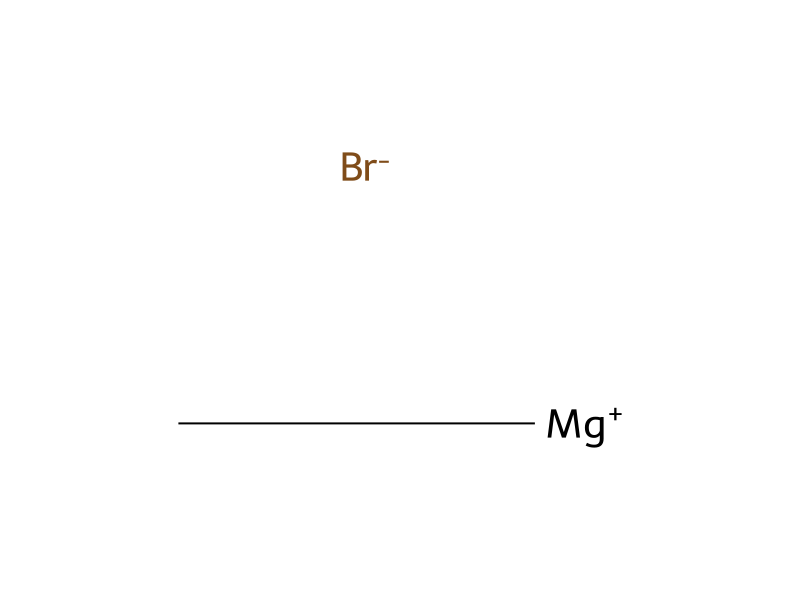
2-Chloro-3-(2,2,2-trifluoro-ethoxy)-pyridine (1.21 g, 5.73 mmol) (Hoglen, D. K. PCT Int. Appl. (2000), WO 2000005212) and 1,3-bis(diphenylphosphino)propane nickel (II) chloride (217 mg, 0.40 mmol) were taken up in Et2O (40 mL) at room temperature. MeMgBr (3.0M in Et2O, 2.25 ml, 5.73 mmol) was added dropwise via syringe over 3 minutes to give a tan slurry. The mixture was refluxed for 16 h, cooled to room temperature, quenched with water (60 mL) and extracted with CH2Cl2 (8×50 mL). The combined organic extracts were dried (Na2SO4), filtered, and concentrated in vacuo to afford 2-methyl-3-(2,2,2-trifluoro-ethoxy)-pyridine as an orange oil. Purification via column chromatography on silica gel (CH2Cl2) afforded 2-methyl-3-(2,2,2-trifluoro-ethoxy)-pyridine as a yellow solid (0.46 g, 42%). 1H NMR (CDCl3) δ 2.52 (s, 3H), 4.36 (q, 2H, J=7.5 Hz), 7.06-7.14 (m, 2H), 8.19 (d, 1H, J=3.0 Hz). 19F NMR (CDCl3) δ 2.03 (s).