Reaktionsgleichung

[OH-].[K+].[CH3:3][CH:4]([OH:6])[CH3:5].[OH:7][C:8]1[C:21]2[C:20](=[O:22])[C:19]3[C:14](=[C:15]([OH:23])[CH:16]=[CH:17][CH:18]=3)[O:13][C:12]=2[CH:11]=[C:10]([OH:24])[CH:9]=1.[CH2:25]([CH:27]1[O:29][CH2:28]1)Cl>O.CO>[O:6]1[CH2:5][CH:4]1[CH2:3][O:24][C:10]1[CH:9]=[C:8]([OH:7])[C:21]2[C:20](=[O:22])[C:19]3[C:14]([O:13][C:12]=2[CH:11]=1)=[C:15]([O:23][CH2:25][CH:27]1[O:29][CH2:28]1)[CH:16]=[CH:17][CH:18]=3Komponenten
7
Edukt 4



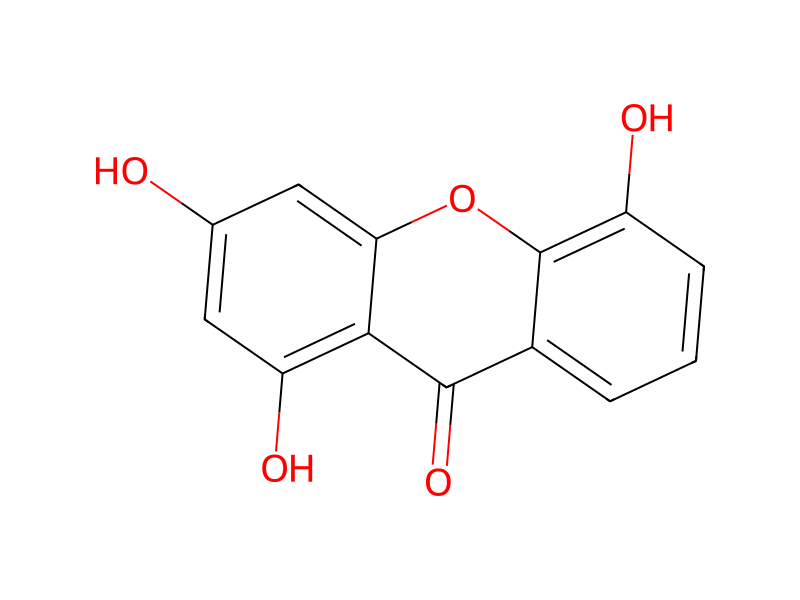
Produkt 1

Reagenzien, Katalysatoren, Lösungsmittel 2


Versuchsvorschrift
To a solution of 0.28 g (5.0 mmol) of potassium hydroxide in 3 ml of water was added 25 ml of 2-propanol and the 1.3 g (5.33 mmol) of 1,3,5-trihydroxyxanthone. To the above mixture was the added 7.5 ml (93.47 mmol) of epichlorohydrin, and the mixture was treated as example 4 to yield a pale yellow powder (MeOH) (21), 0.45 g (1.26 mmol, 35%)
Aufarbeitung
- additionthe mixture was treated as example 4
Quellen und Nachweise
- ORD-Eintrag
- ord-e02c57dca0d74373b6ceaa82ced71384
- Quelldatensatz
- uspto-grants-1999_11
- Patentnummer
- US05981774
Verknüpfte Notizen
Wird geladen…