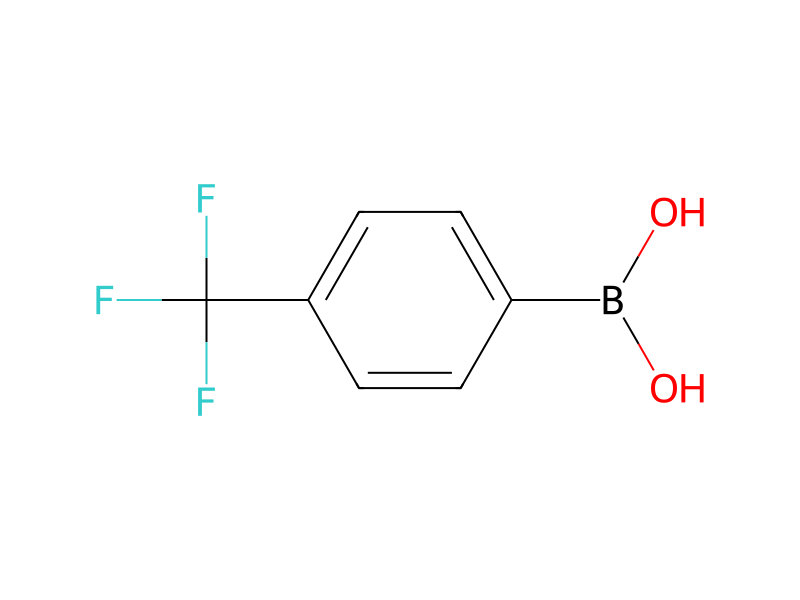
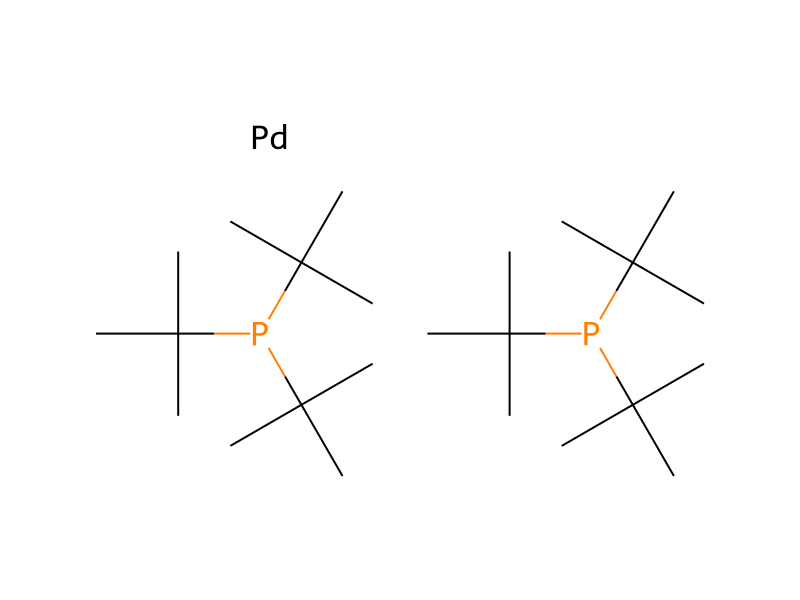
Cl[C:2]1[CH:7]=[CH:6][C:5]([OH:8])=[C:4]([C:9]2[CH:14]=[CH:13][N:12]=[N:11][CH:10]=2)[CH:3]=1.[F:15][C:16]([F:27])([F:26])[C:17]1[CH:22]=[CH:21][C:20](B(O)O)=[CH:19][CH:18]=1.C(=O)([O-])[O-].[K+].[K+]>O1CCOCC1.O.Cl.[Cl-].[Na+].O.[Pd].C(P(C(C)(C)C)C(C)(C)C)(C)(C)C.C(P(C(C)(C)C)C(C)(C)C)(C)(C)C>[N:12]1[CH:13]=[CH:14][C:9]([C:4]2[CH:3]=[C:2]([C:20]3[CH:21]=[CH:22][C:17]([C:16]([F:27])([F:26])[F:15])=[CH:18][CH:19]=3)[CH:7]=[CH:6][C:5]=2[OH:8])=[CH:10][N:11]=1To a solution of 4-chloro-2-pyridazin-4-ylphenol (Preparation 7, 1.5 g, 7.26 mmol) and 4-trifluoromethylbenzene boronic acid (3.45 g, 18.1 mmol) in 1,4-dioxane (20 mL) was added a solution of potassium carbonate (2.0 g, 14.5 mmol) in water (4 mL). The reaction mixture was degassed, then bis(tri-t-butylphosphine) palladium (0) (371 mg, 0.726 mmol) added and the reaction mixture heated to 100° C. for 18 hours. The mixture was diluted with a 2M aqueous solution of hydrogen chloride and brine, then extracted with ethyl acetate. The organic layer was separated and dried over anhydrous magnesium sulfate, filtered and concentrated in vacuo. The residue was purified by silica gel column chromatography (0%-100% ethyl acetate in dichloromethane gradient elution) to afford the title compound as a solid (940 mg, 41%).