StartseiteMCPWorkbenchSkills
StartseiteWorkbenchBenachrichtigungenMein Bereich
llms.txt · MCP-AnleitungDatenschutz · Nutzungsbedingungen · Supportv1.8.3
  1. Startseite
  2. /Reaktion

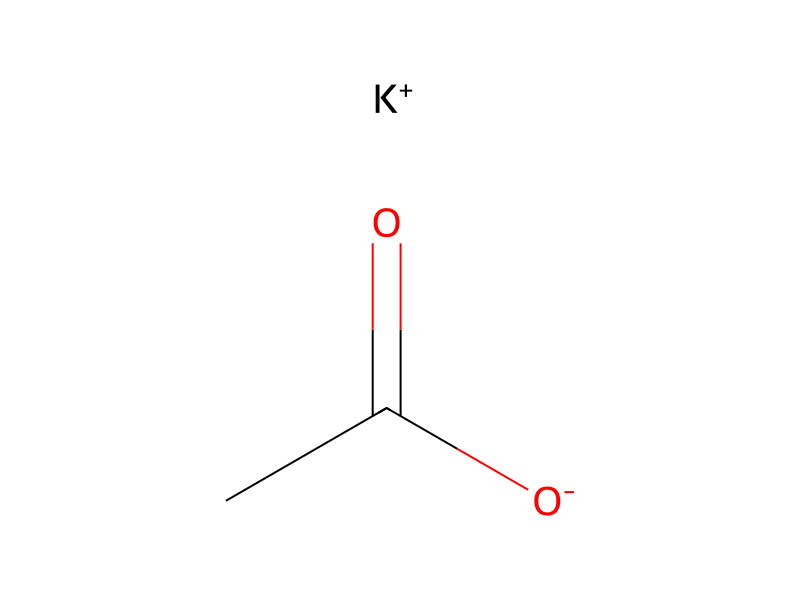
Potassium Acetate → Tert-butyl 4-(1-(5-(4-(bis(4-methoxybenzyl)amino)-6-methyl-1,3,5-triazin-2-yl)-6-fluoropyridin-3-yl)ethyl)piperazine-1-carboxylate

HRID 1621854
Drucken

Reaktionsgleichung

Reaktionsgleichung von HRID 1621854
Cl[C:2]1[N:7]=[C:6]([CH3:8])[N:5]=[C:4]([N:9]([CH2:19][C:20]2[CH:25]=[CH:24][C:23]([O:26][CH3:27])=[CH:22][CH:21]=2)[CH2:10][C:11]2[CH:16]=[CH:15][C:14]([O:17][CH3:18])=[CH:13][CH:12]=2)[N:3]=1.[C:28]([O:32][C:33]([N:35]1[CH2:40][CH2:39][N:38]([CH:41]([C:43]2[CH:44]=[C:45](B(O)O)[C:46]([F:49])=[N:47][CH:48]=2)[CH3:42])[CH2:37][CH2:36]1)=[O:34])([CH3:31])([CH3:30])[CH3:29].C([O-])(=O)C.[K+]>O1CCOCC1.ClCCl.O.[Cl-].[Na+].O>[CH3:18][O:17][C:14]1[CH:15]=[CH:16][C:11]([CH2:10][N:9]([CH2:19][C:20]2[CH:25]=[CH:24][C:23]([O:26][CH3:27])=[CH:22][CH:21]=2)[C:4]2[N:5]=[C:6]([CH3:8])[N:7]=[C:2]([C:45]3[CH:44]=[C:43]([CH:41]([N:38]4[CH2:37][CH2:36][N:35]([C:33]([O:32][C:28]([CH3:29])([CH3:31])[CH3:30])=[O:34])[CH2:40][CH2:39]4)[CH3:42])[CH:48]=[N:47][C:46]=3[F:49])[N:3]=2)=[CH:12][CH:13]=1
KomponentenReaktionsbedingungenVersuchsvorschriftAufarbeitungQuellen und NachweiseNotizen zur Reaktion

Komponenten

8

Edukt 3

HCID 517044Potassium AcetateHCID 595482094-chloro-N,N-bis(4-methoxybenzyl)-6-methyl-1,3,5-triazin-2-amineHCID 666004735-(1-(4-(Tert-butoxycarbonyl)piperazin-1-yl)ethyl)-2-fluoropyridin-3-ylboronic acid

Produkt 1

HCID 66611395Tert-butyl 4-(1-(5-(4-(bis(4-methoxybenzyl)amino)-6-methyl-1,3,5-triazin-2-yl)-6-fluoropyridin-3-yl)ethyl)piperazine-1-carboxylateAusbeute 100 %

Reagenzien, Katalysatoren, Lösungsmittel 4

HCID 962WaterLösungsmittel2×HCID 6344DichloromethaneLösungsmittelHCID 312751,4-DioxaneLösungsmittelHCID 57417360Sodium chloride; waterLösungsmittel

Reaktionsbedingungen

Temperatur
120 °C

Versuchsvorschrift

A glass microwave reaction vessel was charged with 4-chloro-N,N-bis(4-methoxybenzyl)-6-methyl-1,3,5-triazin-2-amine (0.300 g, 0.780 mmol) and 5-(1-(4-(tert-butoxycarbonyl)piperazin-1-yl)ethyl)-2-fluoropyridin-3-ylboronic acid (0.385 g, 1.091 mmol) in dioxane (3 mL). Then A-Phos (0.055 g, 0.078 mmol), potassium acetate (0.230 g, 2.339 mmol) and water (0.5 mL) were added into the reaction mixture. The reaction mixture was stirred and heated in a CEM Explorer Microwave at 120° C. for 10 min (120 watts, Powermax feature on). The mixture was diluted with dichloromethane (10 mL), water (10 mL) and brine (5 mL). The organic layer was collected by extracting with dichloromethane (3×10 mL). The combined organic extracts were dried (magnesium sulfate), filtered and concentrated in vacuo to give the crude material as tan oil. The crude material was adsorbed onto silica gel and purified by chromatography through a silica-gel column (40 g) eluting with 100% ethyl acetate to give tert-butyl 4-(1-(5-(4-(bis(4-methoxybenzyl)amino)-6-methyl-1,3,5-triazin-2-yl)-6-fluoropyridin-3-yl)ethyl)piperazine-1-carboxylate (0.513 g, 0.780 mmol, 100% yield) as a tan solid. 1H NMR (400 MHz, CDCl3) δ 8.19-8.32 (m, 1H) 7.91 (d, J=8.02 Hz, 1H) 7.22 (dd, J=8.61, 2.93 Hz, 4H) 6.83-6.97 (m, 4H) 4.82 (d, J=9.39 Hz, 4H) 3.76-3.83 (m, 6H) 3.67-3.71 (m, 3H) 3.40 (s, 4H) 3.01 (s, 1H) 2.55 (s, 3H) 2.45 (s, 2H) 2.37 (s, 2H) 2.04-2.07 (m, 3H) 1.38-1.53 (m, 9H). m/z (ESI, +ve ion) 658.3 (M+H)+.

Aufarbeitung

  1. customA glass microwave reaction vessel
  2. customThe organic layer was collected
  3. extractionby extracting with dichloromethane (3×10 mL)
  4. dry with materialThe combined organic extracts were dried (magnesium sulfate)
  5. filtrationfiltered
  6. concentrationconcentrated in vacuo
  7. customto give the crude material as tan oil
  8. custompurified by chromatography through a silica-gel column (40 g)
  9. washeluting with 100% ethyl acetate

Quellen und Nachweise

ORD-Eintrag
ord-ba80352ac1164fee9f8261fa3957e802
Quelldatensatz
uspto-grants-2014_07
DOI
10.6084/m9.figshare.5104873.v1
Patentnummer
US08772480B2

Notizen zur Reaktion

Auf dieser SeiteKomponentenReaktionsbedingungenVersuchsvorschriftAufarbeitungQuellen und NachweiseNotizen zur Reaktion