StartseiteMCPWorkbenchSkills
StartseiteWorkbenchBenachrichtigungenMein Bereich
llms.txt · MCP-AnleitungDatenschutz · Nutzungsbedingungen · Supportv1.8.3
  1. Startseite
  2. /Reaktion

Water → 3-(3,4-Dimethoxyphenyl)acrylonitrile

HRID 1624855
Drucken

Reaktionsgleichung

Reaktionsgleichung von HRID 1624855
[CH3:1][O:2][C:3]1[CH:4]=[C:5]([CH:8]=[CH:9][C:10]=1[O:11][CH3:12])[CH:6]=O.CCOP(OCC)([CH2:18][C:19]#[N:20])=O.CC(C)([O-])C.[K+].O>C1COCC1>[CH3:1][O:2][C:3]1[CH:4]=[C:5](/[CH:6]=[CH:18]/[C:19]#[N:20])[CH:8]=[CH:9][C:10]=1[O:11][CH3:12]
KomponentenReaktionsbedingungenVersuchsvorschriftAufarbeitungQuellen und NachweiseNotizen zur Reaktion

Komponenten

6

Edukt 4

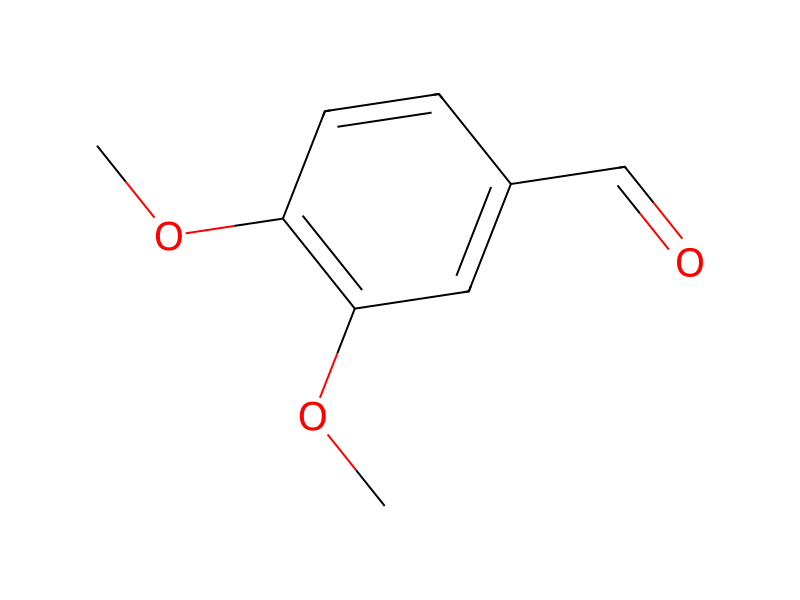
HCID 962WaterHCID 8419VeratraldehydeHCID 75676Diethyl (cyanomethyl)phosphonateHCID 23665647Potassium tert-butoxide

Produkt 1

HCID 15509583-(3,4-Dimethoxyphenyl)acrylonitrileAusbeute 96,5 %

Reagenzien, Katalysatoren, Lösungsmittel 1

HCID 8028
Tetrahydrofuran
Lösungsmittel

Reaktionsbedingungen

Temperatur
0 °C

Versuchsvorschrift

7 g of 3,4-dimethoxybenzaldehyde (42.1 mmoles) are dissolved in 84 mL of THF and the solution is cooled to 0° C. 8.2 g of diethyl cyanomethyl phosphonate (7.5 mL, 46.3 mmoles, 1.1 eq.) and subsequently 5.2 g of potassium tert-butoxide (46.3 mmoles, 1.1 eq.) are added little by little. The mixture is stirred for one hour at 0° C. and then overnight at ambient temperature. The reaction mixture is hydrolysed using 175 mL of water and extracted twice with dichloromethane. The organic phases are collected and the solvent is evaporated off under reduced pressure to yield 7.69 g of the title product in the form of a beige solid.

Aufarbeitung

  1. customovernight
  2. customat ambient temperature
  3. extractionextracted twice with dichloromethane
  4. customThe organic phases are collected
  5. customthe solvent is evaporated off under reduced pressure

Quellen und Nachweise

ORD-Eintrag
ord-b897f1ce897a4b85a57664f67d776c25
Quelldatensatz
uspto-grants-2014_07
DOI
10.6084/m9.figshare.5104873.v1
Patentnummer
US08779121B2

Notizen zur Reaktion

Auf dieser SeiteKomponentenReaktionsbedingungenVersuchsvorschriftAufarbeitungQuellen und NachweiseNotizen zur Reaktion