StartseiteMCPWorkbenchSkills
StartseiteWorkbenchBenachrichtigungenMein Bereich
llms.txt · MCP-AnleitungDatenschutz · Nutzungsbedingungen · Supportv1.8.0
  1. Startseite
  2. /Reaktion

Methanesulfonic Acid → 2-Bromo-3-(2,2,2-trifluoroethoxy)pyridine

HRID 1635620
Notizen
Druckvorschau

Reaktionsgleichung

Reaktionsgleichung von HRID 1635620
N[C:2]1[C:3]([Br:8])=[N:4][CH:5]=[CH:6][CH:7]=1.[F:9][C:10]([F:14])([F:13])[CH2:11][OH:12].CS(O)(=O)=O.C(ON=O)(C)(C)C.C(=O)(O)[O-].[Na+]>>[Br:8][C:3]1[C:2]([O:12][CH2:11][C:10]([F:14])([F:13])[F:9])=[CH:7][CH:6]=[CH:5][N:4]=1
KomponentenVersuchsvorschriftAufarbeitungQuellen und NachweiseNotizen zur Reaktion

Komponenten

6

Edukt 5

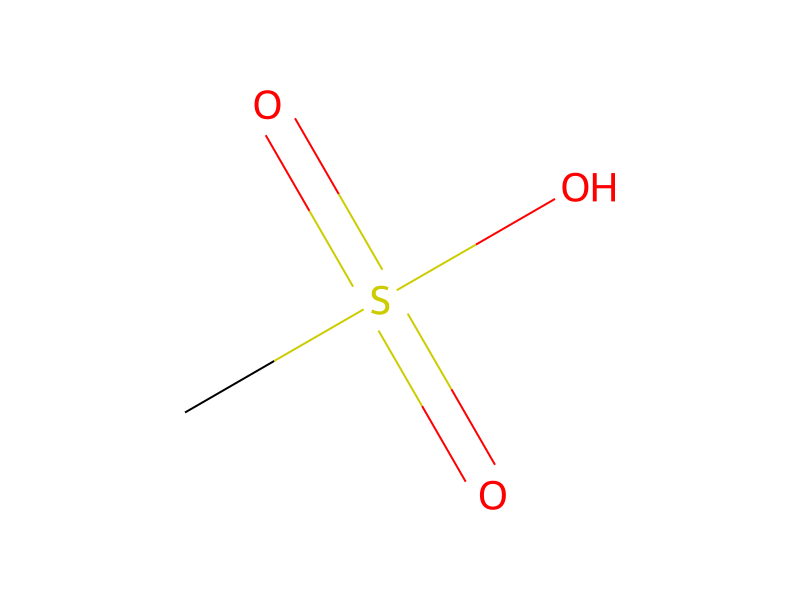
HCID 6395Methanesulfonic AcidHCID 64092,2,2-TrifluoroethanolHCID 10906Tert-Butyl nitriteHCID 516892Sodium BicarbonateHCID 6428163-Amino-2-bromopyridine

Produkt 1

HCID 120567292-Bromo-3-(2,2,2-trifluoroethoxy)pyridine

Versuchsvorschrift

A reactor vessel is charged with 3-amino-2-bromopyridine (2.0 g, 11.4 mmol), 2,2,2-trifluoroethanol (20 g, 200 mmol), and methanesulfonic acid (1.7 g, 18 mmol). The solution is heated to the range 65° C. to 70° C. and then t-butylnitrite (1.46 g of a 90% solution, 12.7 mmol) is added drop-wise to the vessel while maintaining the temperature at 55° C. to 70° C. After nitrogen evolution ceases, the solution is cooled, neutralized with aqueous saturated sodium bicarbonate solution and then extracted with MTBE. The solvent is removed by evaporation to obtain 2-bromo-3-(2,2,2-trifluoroethoxy)pyridine as a crude oil (2.85 g, crude yield of 96%).

Aufarbeitung

  1. temperatureThe solution is heated to the range 65° C. to 70° C.
  2. temperaturewhile maintaining the temperature at 55° C. to 70° C
  3. temperatureAfter nitrogen evolution ceases, the solution is cooled
  4. extractionextracted with MTBE
  5. customThe solvent is removed by evaporation

Quellen und Nachweise

ORD-Eintrag
ord-97a283dced14494d939068b89263ad5c
Quelldatensatz
uspto-grants-2003_01
DOI
10.6084/m9.figshare.5104873.v1
Patentnummer
US06509471B2

Notizen zur Reaktion

Wird geladen…

Auf dieser SeiteKomponentenVersuchsvorschriftAufarbeitungQuellen und NachweiseNotizen zur Reaktion
