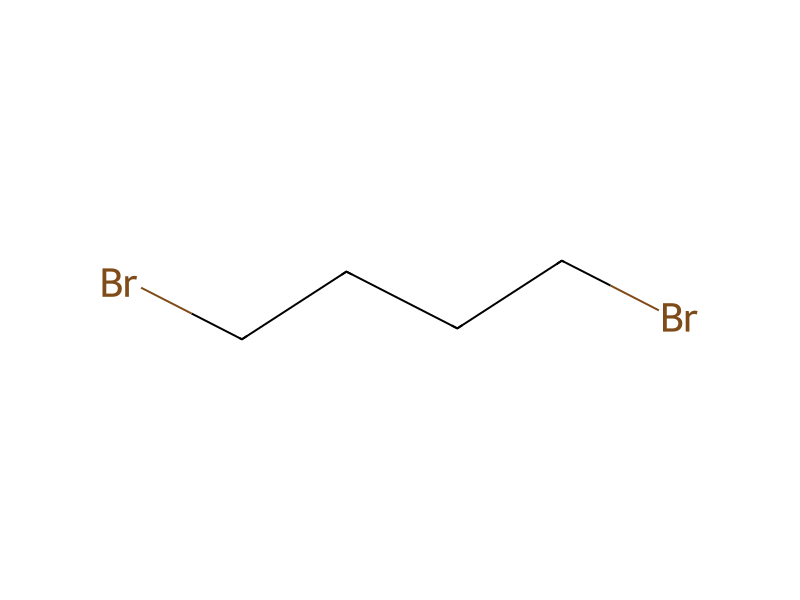
1,4-Dibromobutane → 4-(4-Bromobutoxy)phenyl 4-allyloxybenzoate
Reaktionsgleichung

[CH2:1]([O:4][C:5]1[CH:20]=[CH:19][C:8]([C:9]([O:11][C:12]2[CH:17]=[CH:16][C:15]([OH:18])=[CH:14][CH:13]=2)=[O:10])=[CH:7][CH:6]=1)[CH:2]=[CH2:3].[Br:21][CH2:22][CH2:23][CH2:24][CH2:25]Br.C(=O)([O-])[O-].[K+].[K+]>C(C(C)=O)C>[CH2:1]([O:4][C:5]1[CH:20]=[CH:19][C:8]([C:9]([O:11][C:12]2[CH:13]=[CH:14][C:15]([O:18][CH2:25][CH2:24][CH2:23][CH2:22][Br:21])=[CH:16][CH:17]=2)=[O:10])=[CH:7][CH:6]=1)[CH:2]=[CH2:3]Komponenten
5
Edukt 3


Produkt 1

Reagenzien, Katalysatoren, Lösungsmittel 1

Reaktionsbedingungen
- Temperatur
- 80 °C
Versuchsvorschrift
162.1 g (0.6 mol) of 4-hydroxyphenyl 4-allyloxybenzoate, known from U.S. Pat. No. 5,211,877, were dissolved in 3 l of methyl ethyl ketone, and 1.32 kg (6 mol) of commercial 1,4-dibromobutane, and 414 g (3 mol) of potassium carbonate were added. The mixture was heated to 80° C. with stirring and held at this temperature for 4 h. It was subsequently cooled, the remaining potassium carbonate was filtered off and the filtrate was concentrated. After the excess dibromobutane had been stripped off, the crude product was recrystallized twice from isopropanol. 4-(4-Bromobutoxy)phenyl 4-allyloxybenzoate was obtained in a yield of 90%. The ester shows the following phase behavior: C 64, N 81-85, isotropic.
Aufarbeitung
- temperatureIt was subsequently cooled
- filtrationthe remaining potassium carbonate was filtered off
- concentrationthe filtrate was concentrated
- customthe crude product was recrystallized twice from isopropanol
Quellen und Nachweise
- ORD-Eintrag
- ord-c22c61fc11c54747ab5d3c4ab6e44418
- Quelldatensatz
- uspto-grants-2000_03
- Patentnummer
- US06040411
Notizen zur Reaktion
Wird geladen…