StartseiteMCPWorkbenchSkills
StartseiteWorkbenchBenachrichtigungenMein Bereich
llms.txt · MCP-AnleitungDatenschutz · Nutzungsbedingungen · Supportv1.8.3
  1. Startseite
  2. /Reaktion

Ethylenediamine → Benzyl 4-(t-butyldimethylsilyloxy)indole-1-carboxylate

HRID 16568
Drucken

Reaktionsgleichung

Reaktionsgleichung von HRID 16568
[Si:1]([O:8][C:9]1[CH:17]=[CH:16][CH:15]=[C:14]2[C:10]=1[CH:11]=[CH:12][NH:13]2)([C:4]([CH3:7])([CH3:6])[CH3:5])([CH3:3])[CH3:2].[OH-].[Na+].Cl[C:21]([O:23][CH2:24][C:25]1[CH:30]=[CH:29][CH:28]=[CH:27][CH:26]=1)=[O:22].C(N)CN>[Br-].C([N+](CCCC)(CCCC)CCCC)CCC.ClCCl.O.C(OCC)C>[Si:1]([O:8][C:9]1[CH:17]=[CH:16][CH:15]=[C:14]2[C:10]=1[CH:11]=[CH:12][N:13]2[C:21]([O:23][CH2:24][C:25]1[CH:30]=[CH:29][CH:28]=[CH:27][CH:26]=1)=[O:22])([C:4]([CH3:7])([CH3:6])[CH3:5])([CH3:3])[CH3:2]
KomponentenVersuchsvorschriftAufarbeitungQuellen und NachweiseNotizen zur Reaktion

Komponenten

9

Edukt 4

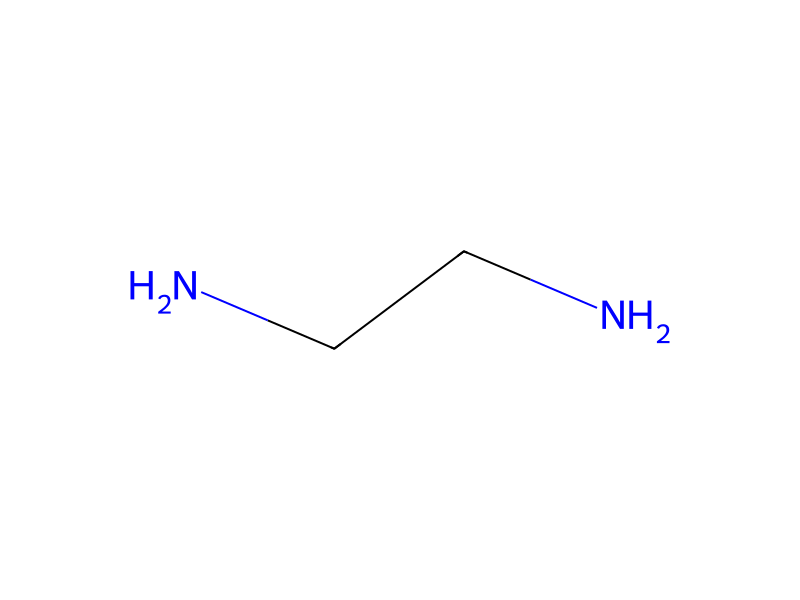
HCID 3301EthylenediamineHCID 10387Benzyl chloroformate2×HCID 14798Sodium HydroxideHCID 115939764-(t-Butyldimethylsilyloxy)indole

Produkt 1

HCID 11703628Benzyl 4-(t-butyldimethylsilyloxy)indole-1-carboxylateAusbeute 100 %

Reagenzien, Katalysatoren, Lösungsmittel 4

HCID 74236
Tetrabutylammonium Bromide
Katalysator
HCID 962WaterLösungsmittel
HCID 3283Diethyl EtherLösungsmittel
HCID 6344DichloromethaneLösungsmittel

Versuchsvorschrift

A stirred, ice-cold mixture of 9 (18.56 g, 75 mmol), tetrabutylammonium bromide (2.42 g, 7.5 mmol) and powdered sodium hydroxide (4.0 g, 75 mmol) in dichloromethane (375 mL) was treated dropwise with benzyl chloroformate (95% purity; 20.20 g, 112.5 mmol). The reaction mixture was stirred at room temperature and the progress of the reaction was followed by TLC [ethyl acetate-hexanes (1:9)]. Further aliquots of benzyl chloroformate (each 20.20 g) were added after 1 h and 2 h, and the mixture was stirred at room temperature for a total of 18 h, diluted with water and extracted with dichloromethane. The combined organic phases were washed with brine, dried and evaporated. The residual oil was dissolved in dry diethyl ether (250 mL), cooled in ice and treated dropwise with a solution of ethylenediamine (47 mL, 355 mmol) in dry diethyl ether (150 mL) and stirred at room temperature for 0.5 h. The mixture was washed with 0.5 M aq. hydrochloric acid and brine and the organic phase was dried and evaporated. After trituration with diethyl ether and cooling in ice, some precipitated N,N-di-(benzyloxycarbonyl)ethylenediamine was removed by filtration and 10 was isolated as a pale oil (28.62 g, 100%) which was used in the next step without further purification; 1H NMR (90 MHz) δ 7.78 (d, J=7.2 Hz, 1H), 7.00-7.56 (m, 7H), 6.58-6.72 (m, 2H), 5.42 (s, 2H), 1.03 (s, 9H), 0.22 (s, 6H).

Aufarbeitung

  1. stirringthe mixture was stirred at room temperature for a total of 18 h
  2. extractionextracted with dichloromethane
  3. washThe combined organic phases were washed with brine
  4. customdried
  5. customevaporated
  6. dissolutionThe residual oil was dissolved in dry diethyl ether (250 mL)
  7. temperaturecooled in ice
  8. stirringstirred at room temperature for 0.5 h
  9. washThe mixture was washed with 0.5 M aq. hydrochloric acid and brine
  10. customthe organic phase was dried
  11. customevaporated
  12. temperatureAfter trituration with diethyl ether and cooling in ice
  13. customsome precipitated N,N-di-(benzyloxycarbonyl)ethylenediamine was removed by filtration

Quellen und Nachweise

ORD-Eintrag
ord-59cc8906c497489aa95901cbd7c7b9c8
Quelldatensatz
uspto-grants-2010_06
DOI
10.6084/m9.figshare.5104873.v1
Patentnummer
US07737169B2

Notizen zur Reaktion

Auf dieser SeiteKomponentenVersuchsvorschriftAufarbeitungQuellen und NachweiseNotizen zur Reaktion





