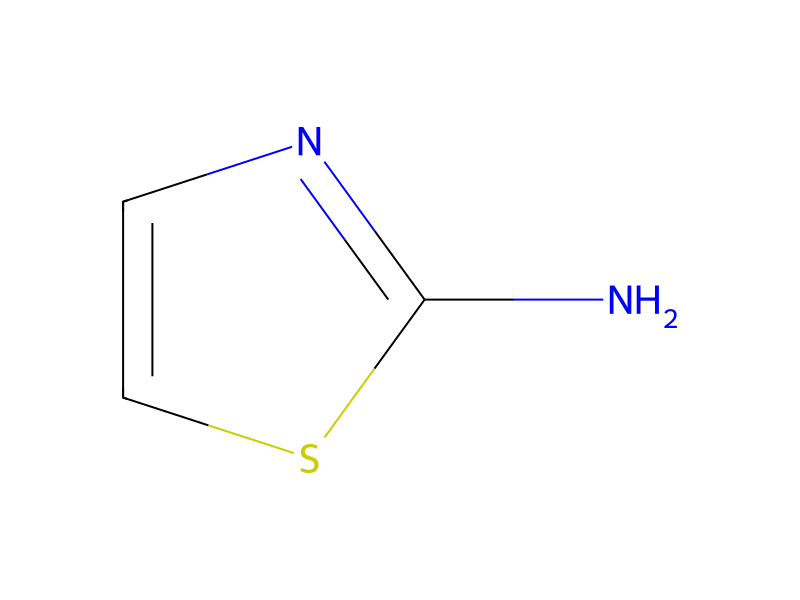
A flask charged with 4-chlorothieno[3,2-c]pyridine (New, James S. et al. J. Med. Chem., 32(6), p. 1147-1156 (1989)) (2.307 g, 13.6 mmol), 2-aminothiazole (1.67 g, 16.68 mmol), tris(dibenzylideneacetone)dipalladium (0) (0.225 g, 0.25 mmol), XANTPHOS (0.424 g, 0.73 mmol) and K3PO4 (4.08 g, 19.22 mmol) was purged with argon (3×). Dioxane (54 mL) was then added and the mixture was again purged with argon (5×). The reaction was heated to 100° C. with stirring under argon overnight. The reaction was then cooled to room temperature and gave a precipitate. This mixture was diluted with THF, filtered through Celite and washed with THF. SiO2 was then added and the mixture was concentrated and purified on several Biotage silica gel chromatographies (5% to 100% ethyl acetate in hexane; 10% to 100% (2:1 dichloromethane:acetone) in dichloromethane; 10% to 100% (10% methanol in dichloromethane) in dichloromethane) to give the title material (1.97 g, 62%) as a solid. 1H NMR (400 MHz, DMSO-d6) δ ppm: 11.59 (1H, s), 8.20 (1H, d, J=5.56 Hz), 8.13 (1H, d, J=5.81 Hz), 7.80 (1H, d, J=5.56 Hz), 7.60 (1H, d, J=5.56 Hz), 7.47 (1H, d, J=3.54 Hz), 7.07 (1H, d, J=3.79 Hz). LC/MS (M+H)+: 234. HPLC ret. time (Condition I): 1.73 min.