StartseiteMCPSkillsWorkbenchOpenChem
StartseiteWorkbenchBenachrichtigungenMein Bereich
llms.txt · skill.md · MCP-AnleitungDatenschutz · Nutzungsbedingungen · Supportv1.8.5
  1. Startseite
  2. /Reaktion

Hydrochloric Acid → 2-(1-(Ethylsulfonyl)azetidin-3-ylidene)acetonitrile

HRID 1692970
Drucken

Reaktionsgleichung

[C:1]([CH:3]=[C:4]1[CH2:7][N:6](C(OC(C)(C)C)=O)[CH2:5]1)#[N:2].Cl.C(N(C(C)C)CC)(C)C.[CH2:25]([S:27](Cl)(=[O:29])=[O:28])[CH3:26]>C(#N)C>[CH2:25]([S:27]([N:6]1[CH2:5][C:4](=[CH:3][C:1]#[N:2])[CH2:7]1)(=[O:29])=[O:28])[CH3:26]
KomponentenReaktionsbedingungenVersuchsvorschriftAufarbeitungQuellen und NachweiseNotizen zur Reaktion

Komponenten

6

Edukt 4

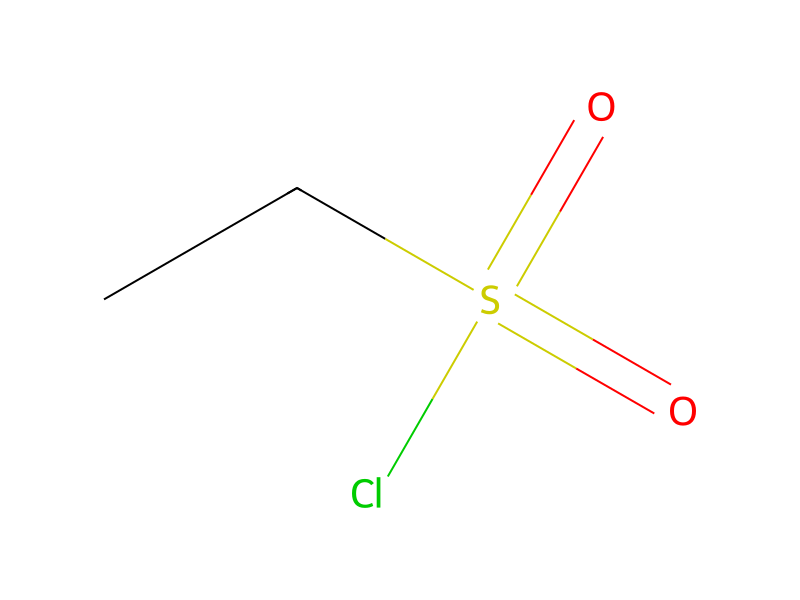
HCID 313Hydrochloric AcidHCID 11667Ethanesulfonyl chlorideHCID 81531DiisopropylethylamineHCID 457892161-(tert-Butoxycarbonyl)-3-(cyanomethylene)azetidine2×

Produkt 1

HCID 578688542-(1-(Ethylsulfonyl)azetidin-3-ylidene)acetonitrileAusbeute 91,1 %

Reagenzien, Katalysatoren, Lösungsmittel 1

HCID 6342AcetonitrileLösungsmittel

Reaktionsbedingungen

Temperatur
2.5 °C

Versuchsvorschrift

A solution of tert-butyl 3-(cyanomethylene)azetidine-1-carboxylate (9, 1000g, 5.2 mol) in acetonitrile (7 L) and a 3 N aqueous HCl solution (7 L) was stirred at room temperature for 18 h. When HPLC showed that all the starting material (9) was consumed, the reaction mixture was concentrated under reduced pressure to dryness. The residue, which contains the crude desired deprotection product (10), was then suspended in acetonitrile (12 L) and the resulting suspension was cooled to 0-5° C. Diisopropyethylamine (DIEA, 3.14 L, 18.03 mol, 3.5 equiv) was then slowly added while keeping the internal temperature below 5° C. The resulting homogeneous solution was allowed to cool down to 0° C. and ethane sulfonyl chloride (EtSO2Cl, 730 mL, 7.73 mol, 1.5 equiv) was added over 1 h while keeping the internal temperature below 5° C. The resulting reaction mixture was allowed to gradually warm to room temperature and stirred at room temperature for overnight. When HPLC showed that the reaction was complete, the reaction mixture was concentrated under reduced pressure to a volume of approximately 2 L. The bath temperature of the rotary evaporator is set to not exceed 45° C. The concentrated residue was then diluted with dichloromethane (CH2Cl2, 10 L) and the resulting dichloromethane solution was washed with aqueous sodium chloride solution (10 L). The aqueous phase was back extracted with dichloromethane (CH2Cl2, 5 L). The combined organic layers were dried over anhydrous sodium sulfate (Na2SO4) and the residue was absorbed onto silica gel (SiO2, 1 Kg) under reduced pressure. The bath temperature of the rotary evaporator was set to not exceed 45° C. The material was then loaded onto a silica gel column (SiO2, 2.5 Kg) and eluted with 20-60 % ethyl acetate in heptane to afford 2-(1-(ethylsulfonyl)azetidin-3-ylidene)acetonitrile (11, 882 g, 968.4 g theoretical, 91% yield) as off-white solids. For 11: 1H NMR (CDCl3, 300 MHz) δ 5.46 (m, 1H), 4.77 (m, 2H), 4.70 (m, 2H), 3.05 (q, 2H), 1.39 (t, 3H) ppm; C7H10N2O2S (MW, 186.23), LCMS (EI) m/e 187 (M++H).


Aufarbeitung

  1. customwas consumed
  2. concentrationthe reaction mixture was concentrated under reduced pressure to dryness
  3. customthe internal temperature below 5° C
  4. temperatureto cool down to 0° C.
  5. customthe internal temperature below 5° C
  6. customThe resulting reaction mixture
  7. temperatureto gradually warm to room temperature
  8. concentrationthe reaction mixture was concentrated under reduced pressure to a volume of approximately 2 L
  9. customThe bath temperature of the rotary evaporator
  10. customexceed 45° C
  11. additionThe concentrated residue was then diluted with dichloromethane (CH2Cl2, 10 L)
  12. washthe resulting dichloromethane solution was washed with aqueous sodium chloride solution (10 L)
  13. extractionThe aqueous phase was back extracted with dichloromethane (CH2Cl2, 5 L)
  14. dry with materialThe combined organic layers were dried over anhydrous sodium sulfate (Na2SO4)
  15. customthe residue was absorbed onto silica gel (SiO2, 1 Kg) under reduced pressure
  16. customThe bath temperature of the rotary evaporator
  17. customexceed 45° C
  18. washeluted with 20-60 % ethyl acetate in heptane

Quellen und Nachweise

ORD-Eintrag
ord-1a56b36a2d3f4d9fb7e10844191ab6b9
Quelldatensatz
uspto-grants-2012_04
DOI
10.6084/m9.figshare.5104873.v1
Patentnummer
US08158616B2

Notizen zur Reaktion

Auf dieser SeiteKomponentenReaktionsbedingungenVersuchsvorschriftAufarbeitungQuellen und NachweiseNotizen zur Reaktion