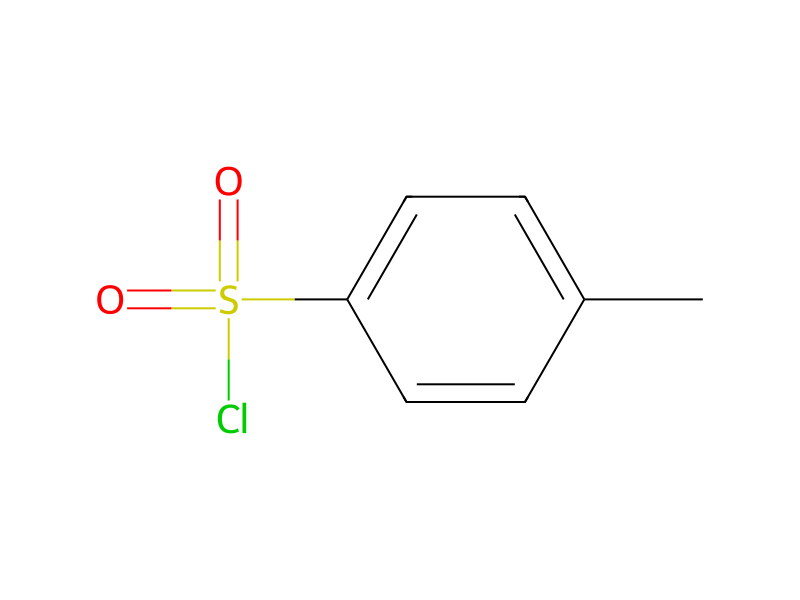
[Cl:1][C:2]1[CH:28]=[CH:27][CH:26]=[CH:25][C:3]=1[C:4]([C:6]1[CH:11]=[C:10]([Cl:12])[CH:9]=[CH:8][C:7]=1[N:13]1[C:17]([CH2:18][N:19]([CH3:21])[CH3:20])=[N:16][C:15]([C:22]([NH2:24])=O)=[N:14]1)=[O:5].C1(C)C=CC(S(Cl)(=O)=O)=CC=1.CCOCC>N1C=CC=CC=1.CN(C)C=O>[Cl:1][C:2]1[CH:28]=[CH:27][CH:26]=[CH:25][C:3]=1[C:4]([C:6]1[CH:11]=[C:10]([Cl:12])[CH:9]=[CH:8][C:7]=1[N:13]1[C:17]([CH2:18][N:19]([CH3:21])[CH3:20])=[N:16][C:15]([C:22]#[N:24])=[N:14]1)=[O:5]A mixture of 4.18 g (0.01 mole) of 1-[2-(o-chlorobenzoyl)-4-chlorophenyl]-5-[(dimethylamino)-methyl]-1H-1,2,4-triazole-3-carboxamide and 2.86 g (0.015 mole) of p-toluenesulphonic acid chloride in 2.42 ml of pyridine and 24 ml of N,N-dimethylformamide is stirred for 2 hours at room temperature. The initially yellow colour of the reaction mixture changes during this time to green and then to red-brown. The reaction solution is poured into ice water, and extraction is performed twice with ether. The organic phase is washed three times with water and once with saturated sodium chloride solution; it is dried over sodium sulphate and concentrated in vacuo to dryness. The residue is crystallised from isopropanol. After filtration with suction followed by drying, there is obtained 1-[2-(o-chlorobenzoyl)-4-chlorophenyl]-5-[(dimethylamino)-methyl]-1H-1,2,4-triazole-3-carbonitrile, m.p. 117°-119°.