StartseiteMCPWorkbenchSkills
StartseiteWorkbenchBenachrichtigungenMein Bereich
llms.txt · MCP-AnleitungDatenschutz · Nutzungsbedingungen · Supportv1.8.3
  1. Startseite
  2. /Reaktion

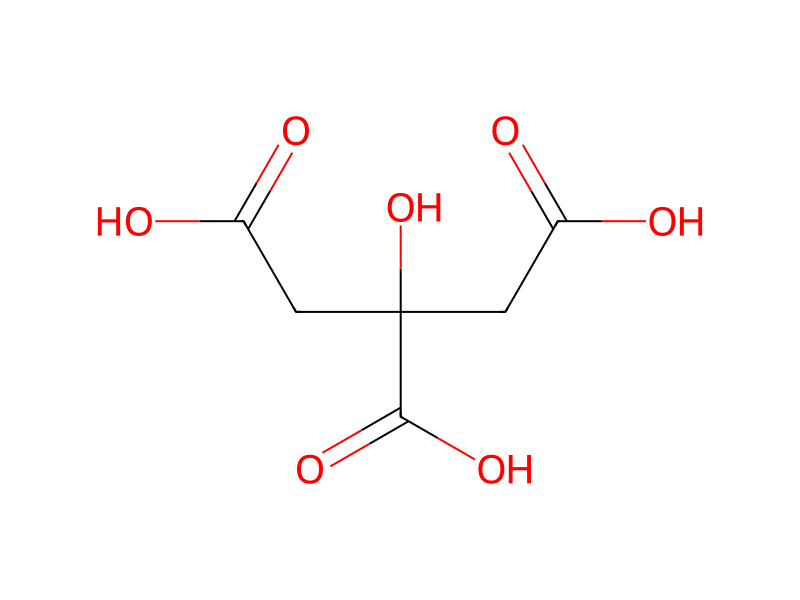
Citric Acid → (R)-3-(Tert-butoxycarbonyl)-2,2-dimethyloxazolidine-4-carboxylic acid

HRID 1724720
Drucken

Reaktionsgleichung

Reaktionsgleichung von HRID 1724720
[C:1]([O:5][C:6]([N:8]1[C@@H:12]([C:13]([O:15]C)=[O:14])[CH2:11][O:10][C:9]1([CH3:18])[CH3:17])=[O:7])([CH3:4])([CH3:3])[CH3:2].O[Li].O.C(O)(=O)CC(CC(O)=O)(C(O)=O)O>O1CCCC1>[C:1]([O:5][C:6]([N:8]1[C@@H:12]([C:13]([OH:15])=[O:14])[CH2:11][O:10][C:9]1([CH3:18])[CH3:17])=[O:7])([CH3:4])([CH3:2])[CH3:3]
KomponentenVersuchsvorschriftAufarbeitungQuellen und NachweiseNotizen zur Reaktion

Komponenten

5

Edukt 3

HCID 311Citric AcidHCID 168937Lithium hydroxide, monohydrateHCID 6882203-tert-butyl 4-methyl (4R)-2,2-dimethyl-1,3-oxazolidine-3,4-dicarboxylate

Produkt 1

HCID 6932185(R)-3-(Tert-butoxycarbonyl)-2,2-dimethyloxazolidine-4-carboxylic acidAusbeute 47,9 %

Reagenzien, Katalysatoren, Lösungsmittel 1

HCID 8028
Tetrahydrofuran
Lösungsmittel

Versuchsvorschrift

Methyl 3-tert-butoxycarbonyl-2,2-dimethyloxazolidine-4-(R)-carboxylate (3.0 g) is dissolved in a mixture of tetrahydrofurane (THF)/H2O (3/1; 30 ml), and LiOH.H2O (684 mg) is added. After being subjected to agitation for 3 hours at room temperature, the reaction mixture is acidified with citric acid 1N (11 ml). THF is concentrated and the aqueous phase is extracted with ethyl acetate. The organic phase is dried on MgSO4, filtered and concentrated to obtain the expected product as a viscous orange oil (1.36 g).

Aufarbeitung

  1. additionis added
  2. concentrationTHF is concentrated
  3. extractionthe aqueous phase is extracted with ethyl acetate
  4. customThe organic phase is dried on MgSO4
  5. filtrationfiltered
  6. concentrationconcentrated

Quellen und Nachweise

ORD-Eintrag
ord-93aca3c42f1340daaa14c8fbb1bca918
Quelldatensatz
uspto-grants-2009_02
DOI
10.6084/m9.figshare.5104873.v1
Patentnummer
US07488755B2

Notizen zur Reaktion

Auf dieser SeiteKomponentenVersuchsvorschriftAufarbeitungQuellen und NachweiseNotizen zur Reaktion