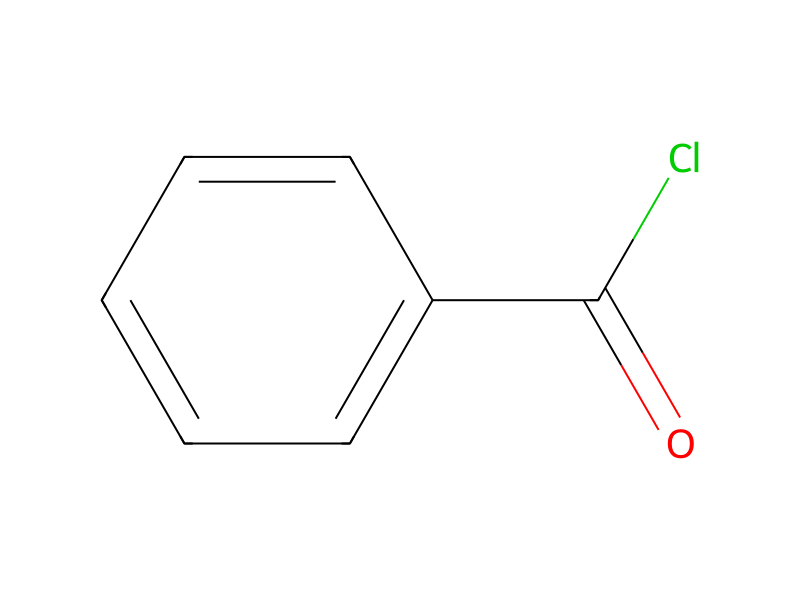
[H-].[Na+].[Br:3][C:4]1[C:5]([C:17]#[N:18])=[C:6]([Cl:16])[NH:7][C:8]=1[C:9]1[CH:14]=[CH:13][C:12]([Cl:15])=[CH:11][CH:10]=1.CN(C)P(N(C)C)(N(C)C)=O.[C:30](Cl)(=[O:37])[C:31]1[CH:36]=[CH:35][CH:34]=[CH:33][CH:32]=1>O1CCCC1.O.C(OCC)C>[C:30]([N:7]1[C:8]([C:9]2[CH:10]=[CH:11][C:12]([Cl:15])=[CH:13][CH:14]=2)=[C:4]([Br:3])[C:5]([C:17]#[N:18])=[C:6]1[Cl:16])(=[O:37])[C:31]1[CH:36]=[CH:35][CH:34]=[CH:33][CH:32]=1To a suspension of sodium hydride (0.21 g of a 60% dispersion, 5.3 mmol) in 50 mL of dry tetrahydrofuran in a 100 mL single neck round bottom flask fitted with a condenser and a nitrogen inlet is added portionwise 4-bromo-2-chloro-5-(p-chlorophenyl)pyrrole-3-carbonitrile (1.0 g, 3.2 mmol). The reaction is stirred for 15 minutes at room temperature before the pipette addition of hexamethylphosphoramide (HMPA) (3 mL) followed immediately by benzoyl chloride (0.75 g, 5.4 mmol). Thereafter the reaction mixture is heated to reflux for 17 hours and allowed to cool. Rotary evaporation yields a crude semi-solid to which is added 15 mL of diethyl ether and 15 mL of water. Vigorous stirring over a period of 20 minutes followed by vacuum filtration results in the isolation of the product as a yellow solid (1.0 g, 2.4 mmol, 75%), mp 179°-181° C.