StartseiteMCPWorkbenchSkills
StartseiteWorkbenchBenachrichtigungenMein Bereich
llms.txt · MCP-AnleitungDatenschutz · Nutzungsbedingungen · Supportv1.8.3
  1. Startseite
  2. /Reaktion

Potassium Carbonate → 3-(Pyridin-3-yloxy)-4,5-dihydroisoxazole

HRID 1746145
Drucken

Reaktionsgleichung

Reaktionsgleichung von HRID 1746145
[O:1]1[CH:5]=[CH:4][CH2:3][NH:2]1.[CH3:6][Si]([C:10]#[CH:11])(C)C.C([N:15]([CH2:19]C)[CH:16]([CH3:18])C)(C)C.[C:21](=[O:24])([O-])[O-].[K+].[K+].C[Si]([N:31]=[N+:32]=[N-:33])(C)C>CN(C)C=O.[Cu](I)I.C1C=CC([P]([Pd]([P](C2C=CC=CC=2)(C2C=CC=CC=2)C2C=CC=CC=2)([P](C2C=CC=CC=2)(C2C=CC=CC=2)C2C=CC=CC=2)[P](C2C=CC=CC=2)(C2C=CC=CC=2)C2C=CC=CC=2)(C2C=CC=CC=2)C2C=CC=CC=2)=CC=1.O.C(OCC)(=O)C>[N:15]1[CH:16]=[CH:18][CH:6]=[C:21]([O:24][C:3]2[CH2:4][CH2:5][O:1][N:2]=2)[CH:19]=1.[NH:31]1[CH:11]=[CH:10][N:33]=[N:32]1
KomponentenReaktionsbedingungenVersuchsvorschriftAufarbeitungQuellen und NachweiseNotizen zur Reaktion

Komponenten

12

Edukt 5

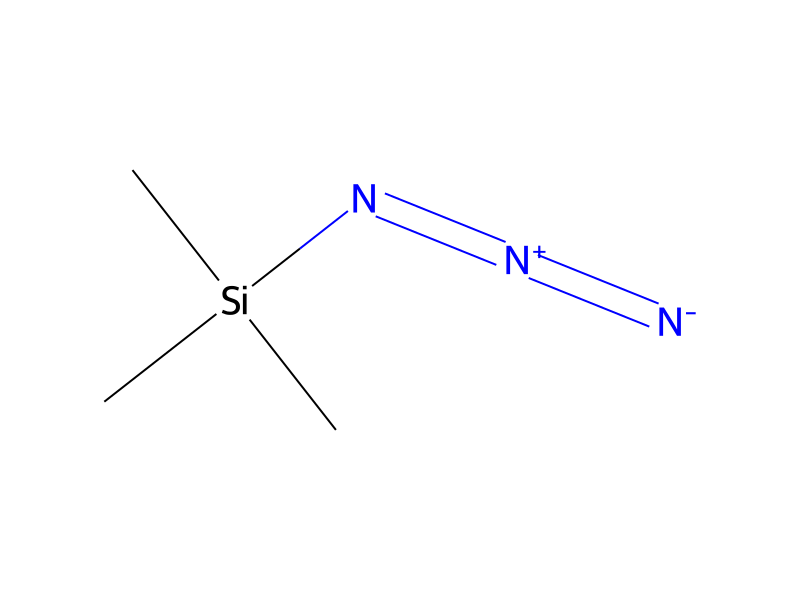
HCID 11430Potassium CarbonateHCID 66111TrimethylsilylacetyleneHCID 78378AzidotrimethylsilaneHCID 81531DiisopropylethylamineHCID 193504172,3-Dihydro-1,2-oxazole

Produkt 2

HCID 668185323-(Pyridin-3-yloxy)-4,5-dihydroisoxazole
HCID 178418936
HCID 178418936, Verbindung

Reagenzien, Katalysatoren, Lösungsmittel 5

HCID 83717Copper iodideKatalysatorHCID 178418397HCID 178418397, VerbindungKatalysatorHCID 962WaterLösungsmittel2×HCID 6228DimethylformamideLösungsmittelHCID 8857Ethyl AcetateLösungsmittel2×

Reaktionsbedingungen

Temperatur
100 °C

Versuchsvorschrift

3-(pyridin-3-yloxy)-4,5-dihydroisoxazole I-236a and I-236b were prepared in 3 steps according to the following procedures: racemic dihydroisoxazole I-161 (1.0 equiv) was dissolved in N,N-dimethylforamide (0.1 M). Copper iodide (1.0 equiv) was added followed by trimethylsilylacetylene (3.0 equiv) and N,N-diisopropyl ethylamine (2.0 equiv). Palladium tetrakis (15 mol %) was added and the reaction was sealed and heated in a microwave reactor at 100° C. for 1 h. The reaction was allowed to cool after which it was transferred to a separatory funnel with ethyl acetate and water. The organic layer was then washed with water and brine, dried over sodium sulfate, concentrated and purified by flash silica gel chromatography (gradient ethyl acetate/hexanes). The TMS group was then deprotected by dissolving this material in methanol (0.07 M) and adding potassium carbonate (3.0 equiv). After stirring for 4 h at room temperature, the reaction was transferred a separatory funnel with ethyl acetate and water. The organic layer was then washed with water and brine, dried over sodium sulfate, concentrated and purified by flash silica gel chromatography (gradient ethyl acetate/hexanes). The resulting alkyne was then converted to the desired triazole by first dissolving it in neat trimethyl silylazide (80 equiv), purging the reaction mixture with Argon and heating in a microwave reactor to 110° C. for 3 h. After an additional 4 h of heating the reaction was 60% complete by LC/MS analysis at which point it was concentrated and purified directly by flash silica gel chromatography (gradient methanol/methylene chloride) to provide the desired racemic triazole I-236. These compounds can be separated using chiral HPLC methods known in the art. For example, see chiral HPLC Method disclosed herein. [M+H]+=392.9 m/z. Activity: A


Aufarbeitung

  1. customthe reaction was sealed
  2. temperatureto cool after which it
  3. washThe organic layer was then washed with water and brine
  4. dry with materialdried over sodium sulfate
  5. concentrationconcentrated
  6. custompurified by flash silica gel chromatography (gradient ethyl acetate/hexanes)
  7. dissolutionby dissolving this material in methanol (0.07 M)
  8. washThe organic layer was then washed with water and brine
  9. dry with materialdried over sodium sulfate
  10. concentrationconcentrated
  11. custompurified by flash silica gel chromatography (gradient ethyl acetate/hexanes)
  12. custompurging the reaction mixture with Argon
  13. temperatureheating in a microwave reactor to 110° C. for 3 h
  14. temperatureAfter an additional 4 h of heating the reaction
  15. concentrationwas concentrated
  16. custompurified directly by flash silica gel chromatography (gradient methanol/methylene chloride)

Quellen und Nachweise

ORD-Eintrag
ord-fef9070fadbb4989876c58b4af4e5090
Quelldatensatz
uspto-grants-2015_10
DOI
10.6084/m9.figshare.5104873.v1
Patentnummer
US09149465B2

Notizen zur Reaktion

Auf dieser SeiteKomponentenReaktionsbedingungenVersuchsvorschriftAufarbeitungQuellen und NachweiseNotizen zur Reaktion