StartseiteMCPWorkbenchSkills
StartseiteWorkbenchBenachrichtigungenMein Bereich
llms.txt · MCP-AnleitungDatenschutz · Nutzungsbedingungen · Supportv1.8.0
  1. Startseite
  2. /Reaktion

Benzaldehyde → HCID 58400975, Verbindung

HRID 1750904
Notizen
Druckvorschau

Reaktionsgleichung

Reaktionsgleichung von HRID 1750904
Br[C:2]1[C:10]2[C:9]3[CH:11]=[CH:12][CH:13]=[CH:14][C:8]=3[O:7][C:6]=2[CH:5]=[C:4](Br)[C:3]=1[NH2:16].[CH3:17][C:18]1(C)[C:22](C)(C)OB(C(C)=C)O1.[CH:29]1(P(C2CCCCC2)C2C=CC=CC=2C2C(OC)=CC=CC=2OC)[CH2:34]CCC[CH2:30]1.C(=O)C1C=CC=CC=1.O.P([O-])([O-])([O-])=O.[K+].[K+].[K+]>C1C=CC(/C=C/C(/C=C/C2C=CC=CC=2)=O)=CC=1.C1C=CC(/C=C/C(/C=C/C2C=CC=CC=2)=O)=CC=1.C1C=CC(/C=C/C(/C=C/C2C=CC=CC=2)=O)=CC=1.[Pd].[Pd].O.C1(C)C=CC=CC=1>[CH2:17]=[C:18]([C:2]1[C:10]2[C:9]3[CH:11]=[CH:12][CH:13]=[CH:14][C:8]=3[O:7][C:6]=2[CH:5]=[C:4]([C:29]([CH3:34])=[CH2:30])[C:3]=1[NH2:16])[CH3:22]
KomponentenVersuchsvorschriftAufarbeitungQuellen und NachweiseNotizen zur Reaktion

Komponenten

9

Edukt 5

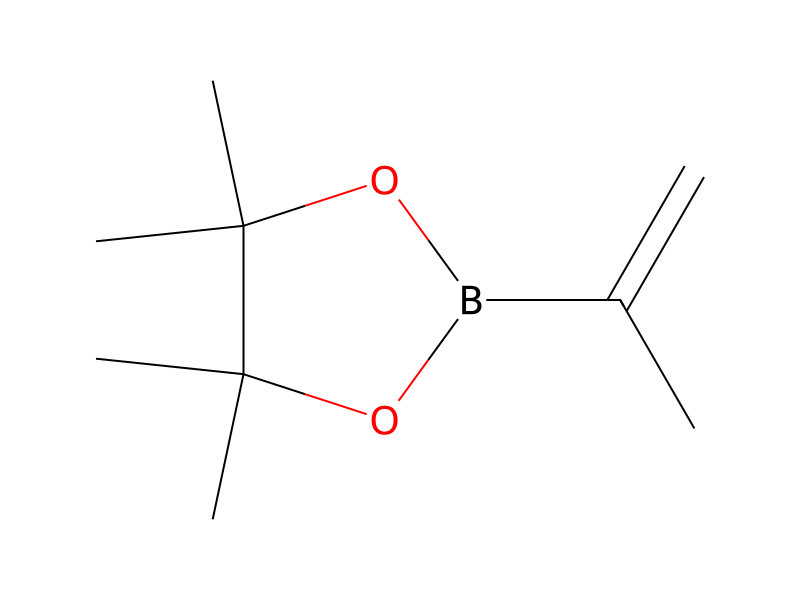
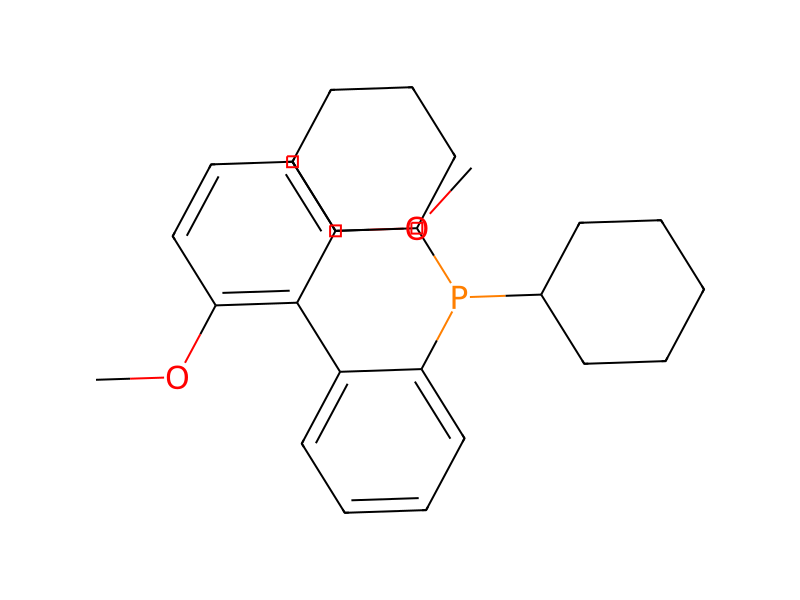
HCID 240BenzaldehydeHCID 109974264,4,5,5-Tetramethyl-2-(prop-1-en-2-yl)-1,3,2-dioxaborolaneHCID 112698722-Dicyclohexylphosphino-2',6'-dimethoxybiphenylHCID 19737928HCID 19737928, VerbindungHCID 22031701Potassium phosphate, tribasic, monohydrate

Produkt 1

HCID 58400975
HCID 58400975, Verbindung

Reagenzien, Katalysatoren, Lösungsmittel 3

HCID 9811564Bis(dibenzylideneacetone)palladiumKatalysatorHCID 962WaterLösungsmittelHCID 1140TolueneLösungsmittel

Versuchsvorschrift

In a 3-neck, 500 mL round-bottom flask, 1,3-dibromodibenzo[b,d]furan-2-amine (19.24 g, 56.4 mmol), 4,4,5,5-tetramethyl-2-(prop-1-en-2-yl)-1,3,2-dioxaborolane (30 g, 179 mmol), dicyclohexyl(2′,6′-dimethoxybiphenyl-2-yl)phosphine (1.85 g, 4.51 mmol), benzaldehyde (5.7 mL, 56.4 mmol), potassium phosphate monohydrate (52 g, 226 mmol), toluene (400 mL), and water (40 mL) were mixed. Nitrogen was bubbled directly into the mixture for 15 minutes, then Pd2(dba)3 (1.03 g, 1.13 mmol) was added. The reaction mixture was heated to reflux overnight. After cooled to room temperature, the organic layer was separated. 40 mL of concentrated HCl was added to the organic layer. The mixture was vigorously stirred for 1 h. Aqueous sodium hydroxide solution was added to basify the mixture. The organic layer was separated and purify by silica gel plug eluting with 1:1 dichloromethane/hexanes 19.1 g of a brown oil was obtained.

Aufarbeitung

  1. customNitrogen was bubbled directly into the mixture for 15 minutes
  2. temperatureThe reaction mixture was heated
  3. temperatureto reflux overnight
  4. customthe organic layer was separated
  5. addition40 mL of concentrated HCl was added to the organic layer
  6. additionAqueous sodium hydroxide solution was added
  7. customThe organic layer was separated
  8. custompurify by silica gel plug
  9. washeluting with 1:1 dichloromethane/hexanes 19.1 g of a brown oil
  10. customwas obtained

Quellen und Nachweise

ORD-Eintrag
ord-0c98d1f103504d839c1ea1c6b260fb5b
Quelldatensatz
uspto-grants-2015_10
DOI
10.6084/m9.figshare.5104873.v1
Patentnummer
US09156870B2

Notizen zur Reaktion

Wird geladen…

Auf dieser SeiteKomponentenVersuchsvorschriftAufarbeitungQuellen und NachweiseNotizen zur Reaktion