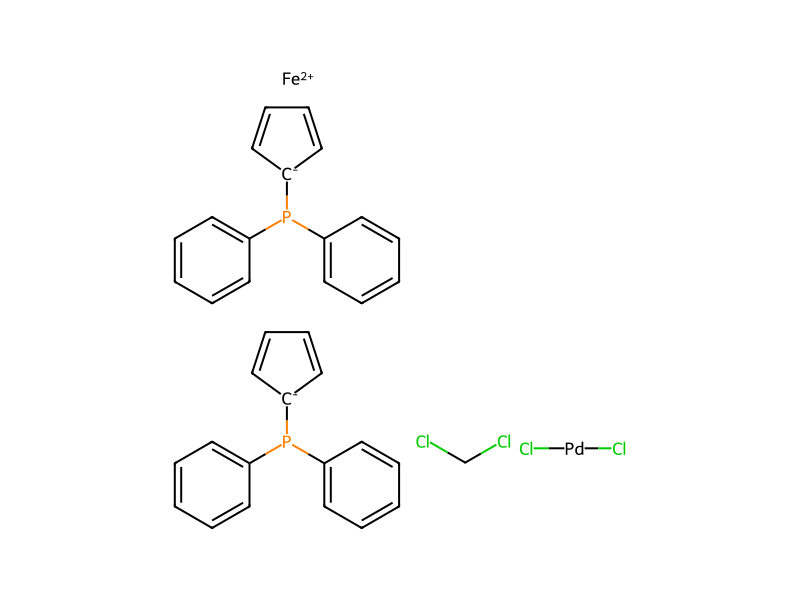
[Cl:1][C:2]1[N:11]=[C:10](Cl)[C:9]([F:13])=[CH:8][C:3]=1[C:4]([O:6][CH3:7])=[O:5].[CH3:14]B1OB(C)OB(C)O1.C(=O)([O-])[O-].[Cs+].[Cs+]>O.ClCCl.[Pd](Cl)Cl.C1(P(C2C=CC=CC=2)[C-]2C=CC=C2)C=CC=CC=1.[C-]1(P(C2C=CC=CC=2)C2C=CC=CC=2)C=CC=C1.[Fe+2]>[Cl:1][C:2]1[N:11]=[C:10]([CH3:14])[C:9]([F:13])=[CH:8][C:3]=1[C:4]([O:6][CH3:7])=[O:5]A mixture of methyl 2,6-dichloro-5-fluoronicotinate (17) (3.5 g 15.62 mmol), trimethylboroxin (1.96 g, 15.62 mmol), 1,1′-Bis(diphenylphosphino)ferrocene-palladium(II)dichloride dichloromethane (1.276 g, 1.562 mmol) and cesium carbonate 15.27 g, 46.86 mmol) was heated at 110° C. overnight. The mixture is cooled to room temperature, diluted with water, and extracted with EtOAc. The combined organic phase is washed with water followed by brine, then dried over anhydrous sodium sulfate and concentrated under reduced pressure. The residue is purified by flash silica gel chromatography using a gradient of 0-30% EtOAc/heptanes to provide methyl 2-chloro-5-fluoro-6-methylnicotinate (18) 0.8 g as a colorless solid (0.8 g 25%).