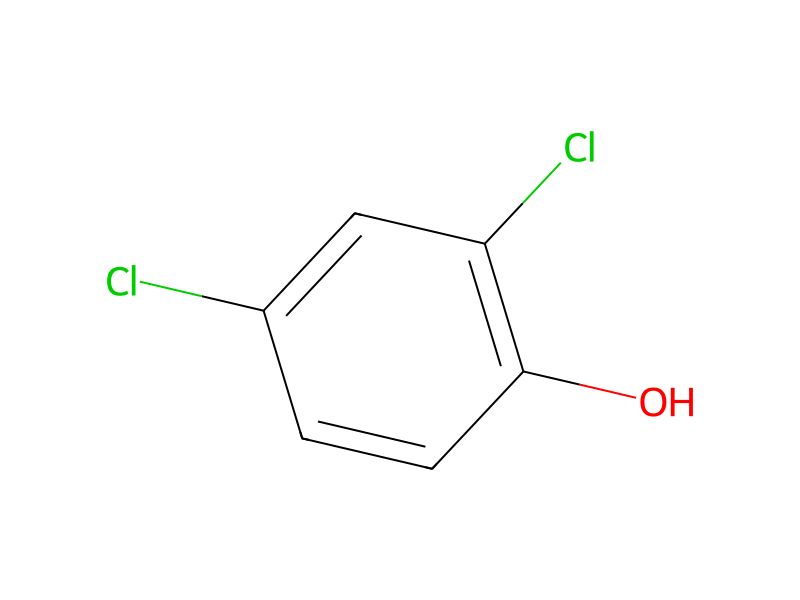
[Cl:1][C:2]1[CH:7]=[C:6]([Cl:8])[CH:5]=[CH:4][C:3]=1[OH:9].C([O-])([O-])=O.[K+].[K+].[CH2:16]([O:18][C:19](=[O:24])[C:20](Br)([CH3:22])[CH3:21])[CH3:17].[NH4+].[Cl-]>CN(C)C(=O)C.O>[CH2:16]([O:18][C:19](=[O:24])[C:20]([O:9][C:3]1[CH:4]=[CH:5][C:6]([Cl:8])=[CH:7][C:2]=1[Cl:1])([CH3:22])[CH3:21])[CH3:17]2,4-Dichlorophenol (448 mg, 2.75 mmol) and K2CO3 (775 mg, 5.61 mmol) were continuously added to 2-bromo-2-methyl-propionic acid ethyl ester (800 mg, 4.10 mmol) in N,N-dimethylacetamide (4 ml) at room temperature. The mixture was stirred at 110° C. for 14 hours, and saturated NH4Cl and H2O were then added, followed by extraction with AcOEt (×2). The organic layers were combined and sequentially washed with H2O and saturated brine, and then dried over Na2SO4 and concentrated under reduced pressure. The resulting residue was purified by silica gel column chromatography (n-hexane/AcOEt) to give 2-(2,4-dichloro-phenoxy)-2-methyl-propionic acid ethyl ester (389 mg, 50%).
Wird geladen…