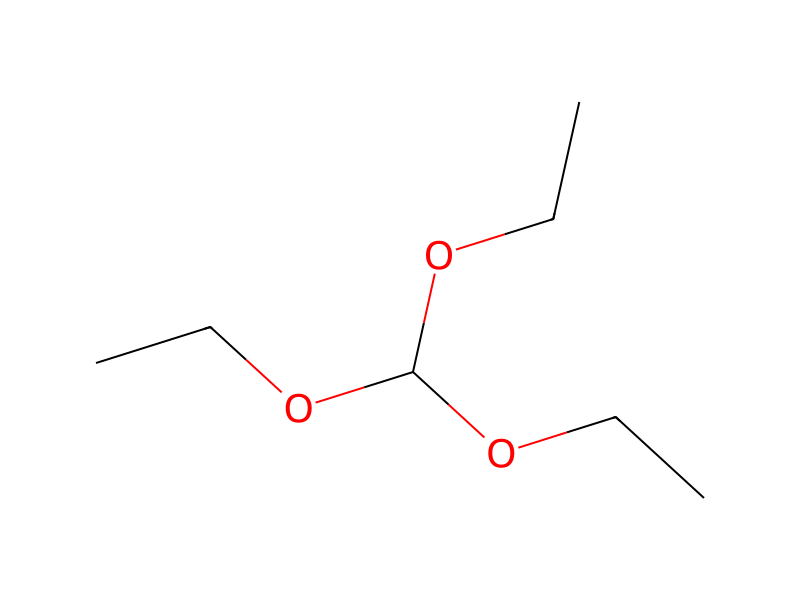
[ClH:1].Cl.[CH3:3][C:4]1[CH:9]=[C:8]([CH3:10])[CH:7]=[C:6]([CH3:11])[C:5]=1[NH:12][CH:13]([NH:15][C:16]1[C:21]([CH3:22])=[CH:20][C:19]([CH3:23])=[CH:18][C:17]=1[CH3:24])C.[CH2:25](OC(OCC)OCC)[CH3:26].C(O)(=O)C>O>[Cl-:1].[CH3:3][C:4]1[CH:9]=[C:8]([CH3:10])[CH:7]=[C:6]([CH3:11])[C:5]=1[NH+:12]1[CH2:26][CH2:25][N:15]([C:16]2[C:21]([CH3:22])=[CH:20][C:19]([CH3:23])=[CH:18][C:17]=2[CH3:24])[CH2:13]1A 500 mL three-neck round bottom flask, containing a Teflon-coated stirbar and fitted with an internal thermometer and a short path distillation head, was charged with bis-(2,4,6-trimethylphenylamino)ethane dihydrochloride (20.18 g, 54.63 mmol) and triethylorthoformate (200 mL). Acetic acid (98%, ca. 4 drops from a Pasteur pipette) was added, and the reaction vessel was placed in a 130° C. oil bath. As the beige slurry was heated and stirred, a water white liquid began to distill away from the reaction mixture which itself had taken on a pink tint. Heating was continued until distillation ceased, about 4 hours. The final temperature of the reaction mixture was 120° C. After the reaction mixture had cooled to ambient temperature, the pink color had discharged. The solid product was isolated by filtration and washed with hexanes (3×100 mL). Vacuum drying afforded 18.21 g (97%) of 1,3-Bis-(2,4,6-trimethylphenyl)imidazolinium chloride as a white, crystalline powder.