Reaktionsgleichung

[C:1]([OH:20])(=[O:19])[CH2:2][CH2:3][CH2:4][CH2:5][CH2:6]CC/C=C\C/C=C\CCCCC.[C:21]([OH:40])(=[O:39])[CH2:22][CH2:23][CH2:24][CH2:25][CH2:26][CH2:27]C/C=C\CCCCCCCC.OO.Cl.[C:44]([OH:48])([CH3:47])(C)C>[O-][V]([O-])([O-])=O.[Na+].[Na+].[Na+]>[C:1]([OH:20])(=[O:19])[CH2:2][CH2:3][CH2:4][CH2:5][CH3:6].[C:21]([OH:40])(=[O:39])[CH2:22][CH2:23][CH2:24][CH2:25][CH2:26][CH2:27][CH2:47][C:44]([OH:48])=[O:19]Komponenten
Edukt 5



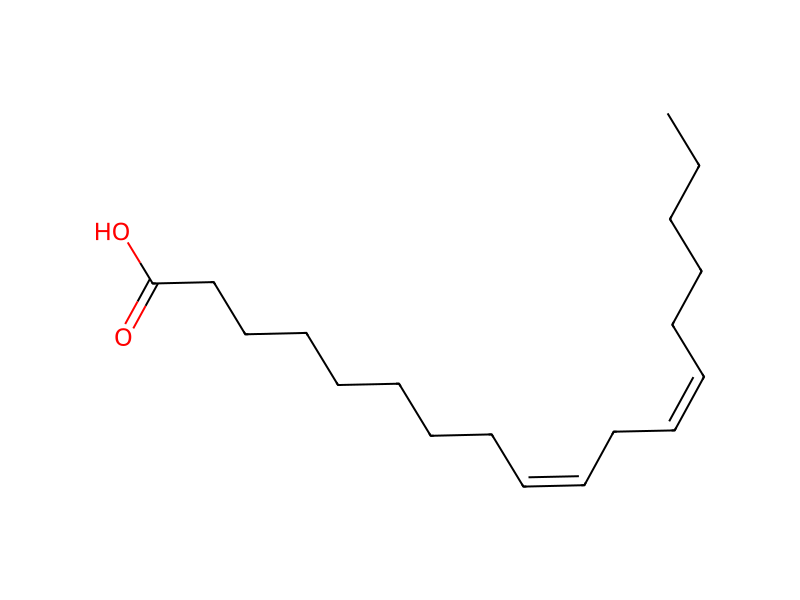
Produkt 2

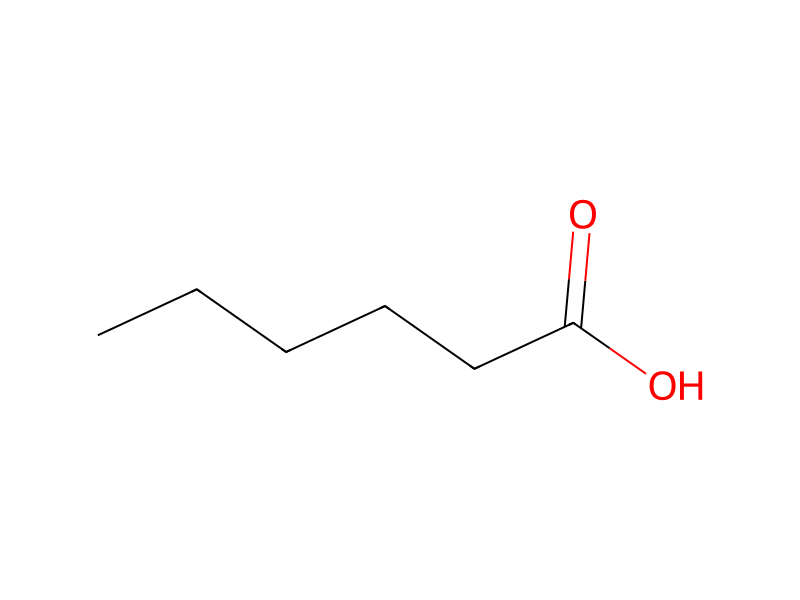
Reagenzien, Katalysatoren, Lösungsmittel 1

Versuchsvorschrift
A mixture of linoleic acid (562.4 mg, 2 mmol) and oleic acid (565.7 mg, 2 mmol) was treated with sodium orthovanadate (18.9 mg, 0.1 mmol) and 30% w/v hydrogen peroxide (6 ml) in tertiary butanol (20 ml) in a manner analogous to that in Example 9. In this example, the pH of the reaction mixture was about 6 to 7 after the addition of catalyst. The pH was adjusted to about 2 to 3 with concentrated hydrochloric acid before heating was commenced. After heating, the resulting product was further processed and analyzed in a manner analogous to that in Example 1. The analytical results showed that essentially all of the linoleic acid had been cleaved to produce hexanoic acid and azelaic acid, whereas only 6% of the oleic acid was cleaved to produce pelargonic acid and azelaic acid.
Aufarbeitung
- additionafter the addition of catalyst
- temperaturebefore heating
- temperatureAfter heating
- customThe analytical results
Quellen und Nachweise
- ORD-Eintrag
- ord-1c2fecca1b2a479d9fafd320ef5ea175
- Quelldatensatz
- uspto-grants-1995_01
- Patentnummer
- US05380931
Verknüpfte Notizen
Wird geladen…