StartseiteMCPSkillsWorkbenchOpenChem
StartseiteWorkbenchBenachrichtigungenMein Bereich
llms.txt · skill.md · MCP-AnleitungDatenschutz · Nutzungsbedingungen · Supportv1.8.5
  1. Startseite
  2. /Reaktion

Sodium Carbonate → 5-tert-Butyl-2-(3-(5-(1-cyclopropyl-1H-pyrazol-3-ylamino)-1-methyl-6-oxo-1,6-dihydropyridin-3-yl)-2-(hydroxymethyl)phenyl)isoindolin-1-one

HRID 1772120
Drucken

Reaktionsgleichung

Br[C:2]1[CH:3]=[C:4]([NH:10][C:11]2[CH:15]=[CH:14][N:13]([CH:16]3[CH2:18][CH2:17]3)[N:12]=2)[C:5](=[O:9])[N:6]([CH3:8])[CH:7]=1.C([O:22][CH2:23][C:24]1[C:29](B2OC(C)(C)C(C)(C)O2)=[CH:28][CH:27]=[CH:26][C:25]=1[N:39]1[CH2:47][C:46]2[C:41](=[CH:42][CH:43]=[C:44]([C:48]([CH3:51])([CH3:50])[CH3:49])[CH:45]=2)[C:40]1=[O:52])(=O)C.C(=O)([O-])[O-].[Na+].[Na+].O.[OH-].[Li+]>C(OCC)(=O)C.O.C1C=CC([P]([Pd]([P](C2C=CC=CC=2)(C2C=CC=CC=2)C2C=CC=CC=2)([P](C2C=CC=CC=2)(C2C=CC=CC=2)C2C=CC=CC=2)[P](C2C=CC=CC=2)(C2C=CC=CC=2)C2C=CC=CC=2)(C2C=CC=CC=2)C2C=CC=CC=2)=CC=1.O1CCOCC1.CN(C=O)C>[C:48]([C:44]1[CH:45]=[C:46]2[C:41](=[CH:42][CH:43]=1)[C:40](=[O:52])[N:39]([C:25]1[CH:26]=[CH:27][CH:28]=[C:29]([C:2]3[CH:3]=[C:4]([NH:10][C:11]4[CH:15]=[CH:14][N:13]([CH:16]5[CH2:18][CH2:17]5)[N:12]=4)[C:5](=[O:9])[N:6]([CH3:8])[CH:7]=3)[C:24]=1[CH2:23][OH:22])[CH2:47]2)([CH3:51])([CH3:49])[CH3:50]

KomponentenVersuchsvorschriftAufarbeitungQuellen und NachweiseNotizen zur Reaktion

Komponenten

10

Edukt 4

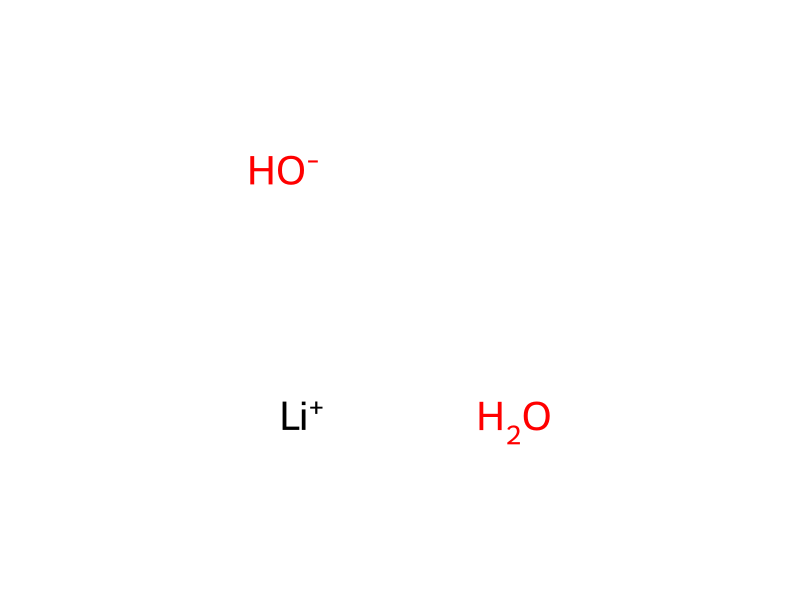
HCID 10340Sodium CarbonateHCID 168937Lithium hydroxide, monohydrateHCID 58044266HCID 58044266, VerbindungHCID 866979362-(5-tert-Butyl-1-oxoisoindolin-2-yl)-6-(4,4,5,5-tetramethyl-1,3,2-dioxaborolan-2-yl)benzyl Acetate

Produkt 1

HCID 56928656
5-tert-Butyl-2-(3-(5-(1-cyclopropyl-1H-pyrazol-3-ylamino)-1-methyl-6-oxo-1,6-dihydropyridin-3-yl)-2-(hydroxymethyl)phenyl)isoindolin-1-one
Ausbeute 39,3 %

Reagenzien, Katalysatoren, Lösungsmittel 5

HCID 178418397HCID 178418397, VerbindungKatalysatorHCID 962WaterLösungsmittel2×HCID 6228DimethylformamideLösungsmittelHCID 8857Ethyl AcetateLösungsmittelHCID 312751,4-DioxaneLösungsmittel

Versuchsvorschrift

A 50-mL three-neck round-bottomed flask equipped with a reflux condenser, magnetic stirrer and nitrogen inlet was charged with 115a (263 mg, 0.850 mmol), 103f (473 mg, 1.02 mmol), sodium carbonate (270 mg, 2.55 mmol), DMF (5 mL), water (2.5 mL) and 1,4-dioxane (8 mL). After bubbling nitrogen through the resulting suspension for 30 min, tetrakis(triphenylphosphine)palladium(0) (98 mg, 0.085 mmol) was added, and the reaction mixture was heated at reflux for 14 h. After this time, the mixture was cooled to room temperature and diluted with ethyl acetate (150 mL) and water (30 mL). The organic layer was separated, and the aqueous layer was extracted with ethyl acetate (3×150 mL). The combined organic layers were dried over sodium sulfate and concentrated under reduced pressure. The residue was dissolved in a mixture of THF (8 mL), methanol (4 mL) and water (4 mL). To the resulting solution was added lithium hydroxide monohydrate (420 mg, 10.0 mmol). The mixture was stirred for 4 h at room temperature and then concentrated in vacuo. The residue was partitioned between ethyl acetate (150 mL) and water (30 mL). The organic layer was separated, and the aqueous layer was extracted with a 20% (v/v) solution of methanol in methylene chloride (3×150 mL). The combined organic layers were dried over sodium sulfate and concentrated under reduced pressure. The residue was purified by column chromatography (silica, 0% to 10% methanol/methylene chloride) to afford a 39% yield (175 mg) of 115 as an off-white solid: mp 173-175° C.; 1H NMR (500 MHz, DMSO-d6) δ 8.10 (s, 1H), 8.08 (d, 1H, J=2.5 Hz), 7.71 (m, 2H), 7.61 (dd, 1H, J=7.9, 1.5 Hz), 7.55 (d, 1H, J=2.5 Hz), 7.50 (m, 1H), 7.43 (dd, 1H, J=7.9, 1.5 Hz), 7.38 (dd, 1H, J=8.0, 1.5 Hz), 7.25 (d, 1H, J=2.1 Hz), 6.06 (d, 1H, J=2.4 Hz), 4.94 (s, 2H), 4.89 (t, 1H, J=4.5 Hz), 4.35 (d, 2H, J=4.5 Hz), 3.58 (s, 3H), 3.54 (m, 1H), 1.37 (s, 9H), 0.96 (m, 2H), 0.87 (m, 2H); MS (ESI+) m/z 524.2 (M+H).

Aufarbeitung

  1. customA 50-mL three-neck round-bottomed flask equipped with a reflux condenser, magnetic stirrer and nitrogen inlet
  2. customAfter bubbling nitrogen through the resulting suspension for 30 min
  3. temperaturethe reaction mixture was heated
  4. temperatureat reflux for 14 h
  5. customThe organic layer was separated
  6. extractionthe aqueous layer was extracted with ethyl acetate (3×150 mL)
  7. dry with materialThe combined organic layers were dried over sodium sulfate
  8. concentrationconcentrated under reduced pressure
  9. dissolutionThe residue was dissolved in a mixture of THF (8 mL), methanol (4 mL) and water (4 mL)
  10. concentrationconcentrated in vacuo
  11. customThe residue was partitioned between ethyl acetate (150 mL) and water (30 mL)
  12. customThe organic layer was separated
  13. extractionthe aqueous layer was extracted with a 20% (v/v) solution of methanol in methylene chloride (3×150 mL)
  14. dry with materialThe combined organic layers were dried over sodium sulfate
  15. concentrationconcentrated under reduced pressure
  16. customThe residue was purified by column chromatography (silica, 0% to 10% methanol/methylene chloride)

Quellen und Nachweise

ORD-Eintrag
ord-55a45acd50b34779bec7ea0e0ddf19cc
Quelldatensatz
uspto-grants-2016_02
DOI
10.6084/m9.figshare.5104873.v1
Patentnummer
US09249123B2

Notizen zur Reaktion

Auf dieser SeiteKomponentenVersuchsvorschriftAufarbeitungQuellen und NachweiseNotizen zur Reaktion




