StartseiteMCPWorkbenchSkills
StartseiteWorkbenchBenachrichtigungenMein Bereich
llms.txt · MCP-AnleitungDatenschutz · Nutzungsbedingungen · Supportv1.8.0
  1. Startseite
  2. /Reaktion

Guanidine Hydrochloride → HCID 178513074, Verbindung

HRID 1792814
Notizen
Druckvorschau

Reaktionsgleichung

Reaktionsgleichung von HRID 1792814
C[O-].[Na+].Cl.[NH2:5][C:6]([NH2:8])=[NH:7].Cl[C:10]([C:12]1[C:16]([CH:17]2[CH2:19][CH2:18]2)=[CH:15][N:14]([C:20]2[C:29]3[C:24](=[CH:25][CH:26]=[CH:27][CH:28]=3)[N:23]=[CH:22][CH:21]=2)[CH:13]=1)=[O:11]>COCCOC.C(Cl)(Cl)Cl.CO>[CH:17]1([C:16]2[C:12]([C:10]([NH:7][C:6]([NH2:8])=[NH:5])=[O:11])=[CH:13][N:14]([C:20]3[C:29]4[C:24](=[CH:25][CH:26]=[CH:27][CH:28]=4)[N:23]=[CH:22][CH:21]=3)[CH:15]=2)[CH2:19][CH2:18]1
KomponentenReaktionsbedingungenVersuchsvorschriftAufarbeitungQuellen und NachweiseNotizen zur Reaktion

Komponenten

7

Edukt 3

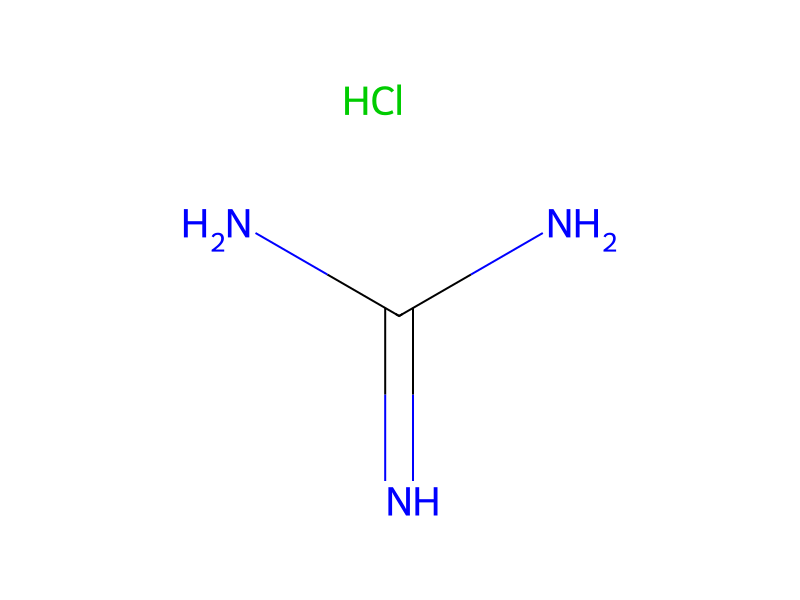
HCID 5742Guanidine HydrochlorideHCID 10942334Sodium MethoxideHCID 220249424-Cyclopropyl-1-(quinolin-4-yl)-1H-pyrrole-3-carbonyl chloride

Produkt 1

HCID 178513074HCID 178513074, VerbindungAusbeute 63,8 %

Reagenzien, Katalysatoren, Lösungsmittel 3

HCID 887MethanolLösungsmittel2×
HCID 6212
Chloroform
Lösungsmittel
HCID 80711,2-DimethoxyethaneLösungsmittel

Reaktionsbedingungen

Temperatur
20 °C

Versuchsvorschrift

1.19 g (22 mmol) of sodium methoxide are added to 25 mL of methanol at a temperature in the region of 20° C. under an argon atmosphere. After total dissolution, 2.2 g (23 mmol) of guanidine hydrochloride are added. After stirring at a temperature in the region of 20° C. for 0.5 hour, the reaction mixture is concentrated to dryness under reduced pressure (2.7 kPa) to give a residue, which is suspended in 50 mL of 1,2-dimethoxyethane and then concentrated to dryness again. The residue is suspended in a mixture of 100 mL of tetrahydrofuran and 100 mL of dichloromethane at a temperature in the region of 20° C. under an argon atmosphere, and 1.12 g (3.78 mmol) of 3-chlorocarbonyl-4-cyclopropyl-1-(quinolin-4-yl)-1H-pyrrole dissolved in 25 mL of chloroform are then added. After stirring for 17 hours at a temperature in the region of 20° C., the reaction mixture is concentrated to dryness under reduced pressure (2.7 kPa) to give a residue, which is triturated in 100 mL of water. After filtration, a gum is obtained, which is dissolved in 50 mL of methanol. The solution is partially concentrated to a volume of from 5 to 10 mL and then purified by chromatography on silica gel [eluent: chloroform/methanol (75/25 by volume)]. After the fractions containing the expected product have been concentrated to dryness under reduced pressure, the residue is dissolved in 20 mL of methanol, and 2 mL of 6 N hydrochloric dioxane are added. The solution obtained is concentrated to dryness under reduced pressure (2.7 kPa) and the residue is then triturated in a mixture of dichloromethane and diethyl ether and filtered, giving 0.77 g of 4-cyclopropyl-3-guanidinocarbonyl-1-(quinolin-4-yl)-1H-pyrrole in the form of a yellow solid melting at 185° C. Mass spectrum (EI): m/e 319 (M+.) (base peak), m/e 260, m/e 231.

Aufarbeitung

  1. additionare added
  2. concentrationthe reaction mixture is concentrated to dryness under reduced pressure (2.7 kPa)
  3. customto give a residue, which
  4. concentrationconcentrated to dryness again
  5. additionThe residue is suspended in a mixture of 100 mL of tetrahydrofuran and 100 mL of dichloromethane at a temperature in the region of 20° C. under an argon atmosphere
  6. additionare then added
  7. stirringAfter stirring for 17 hours at a temperature in the region of 20° C.
  8. concentrationthe reaction mixture is concentrated to dryness under reduced pressure (2.7 kPa)
  9. customto give a residue, which
  10. customis triturated in 100 mL of water
  11. filtrationAfter filtration
  12. customa gum is obtained
  13. concentrationThe solution is partially concentrated to a volume of from 5 to 10 mL
  14. custompurified by chromatography on silica gel [eluent: chloroform/methanol (75/25 by volume)]
  15. additionAfter the fractions containing the expected product
  16. concentrationhave been concentrated to dryness under reduced pressure
  17. dissolutionthe residue is dissolved in 20 mL of methanol
  18. addition2 mL of 6 N hydrochloric dioxane are added
  19. customThe solution obtained
  20. concentrationis concentrated to dryness under reduced pressure (2.7 kPa)
  21. customthe residue is then triturated in a mixture of dichloromethane and diethyl ether
  22. filtrationfiltered

Quellen und Nachweise

ORD-Eintrag
ord-488f452e1c6146b4a870ed73f4b787fe
Quelldatensatz
uspto-grants-2006_07
DOI
10.6084/m9.figshare.5104873.v1
Patentnummer
US07078414B2

Notizen zur Reaktion

Wird geladen…

Auf dieser SeiteKomponentenReaktionsbedingungenVersuchsvorschriftAufarbeitungQuellen und NachweiseNotizen zur Reaktion



