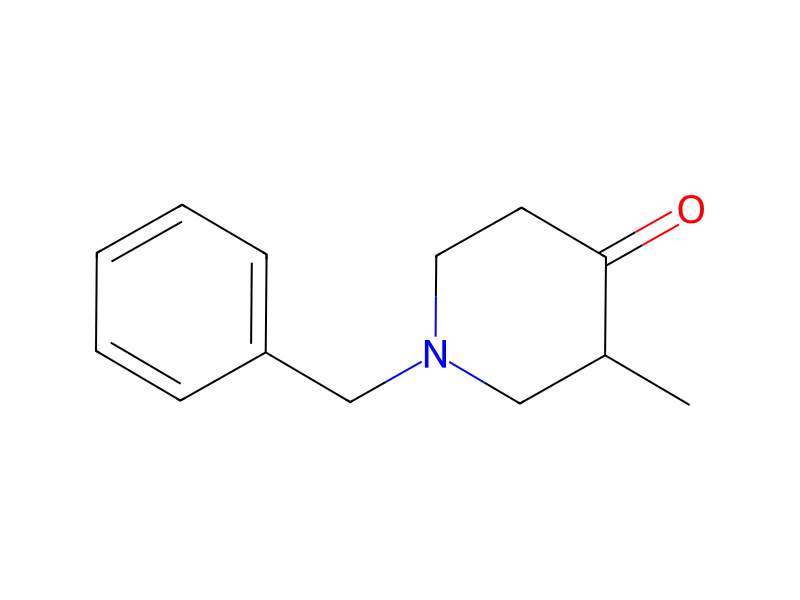
Br[C:2]1[C:10]2[O:9][CH:8]=[CH:7][C:6]=2[CH:5]=[C:4]([F:11])[CH:3]=1.[Mg].[CH2:13]([N:20]1[CH2:25][CH2:24][C:23](=[O:26])[CH:22]([CH3:27])[CH2:21]1)[C:14]1[CH:19]=[CH:18][CH:17]=[CH:16][CH:15]=1.O>C(OCC)C.O1CCCC1.ClCCl>[CH2:13]([N:20]1[CH2:25][CH2:24][C:23]([OH:26])([C:2]2[C:10]3[O:9][CH:8]=[CH:7][C:6]=3[CH:5]=[C:4]([F:11])[CH:3]=2)[CH:22]([CH3:27])[CH2:21]1)[C:14]1[CH:15]=[CH:16][CH:17]=[CH:18][CH:19]=1A mixture of 6.0 gm (27.9 mMol) 7-bromo-5-fluorobenzofuran and 0.70 gm (28.8 mMol) magnesium in 75 mL diethyl ether was heated at reflux for 30 minutes. To this mixture was then added a solution of 6.3 gm (31 mMol) 1-benzyl-3-methyl-4-oxopiperidine in 30 mL tetrahydrofuran dropwise over 15 minutes. The resulting mixture was heated at reflux for about 24 hours. The reaction mixture was cooled to room temperature and poured into 100 mL water. The resulting emulsion was diluted with 500 mL dichloromethane and then filtered through a bed of celite. The filter cake was washed with 2×200 mL dichloromethane. The filtrate aqueous phase was washed with 2×200 mL dichloromethane. All organic phases were combined, dried over magnesium sulfate, and concentrated under reduced pressure The residue was subjected to silica gel chromatography, eluting with a gradient of hexane containing from 0-50% ethyl acetate. Fractions containing product were combined and concentrated under reduced pressure to provide 7.3 gm (77%) of the desired compound.