StartseiteMCPWorkbenchSkills
StartseiteWorkbenchBenachrichtigungenMein Bereich
llms.txt · MCP-AnleitungDatenschutz · Nutzungsbedingungen · Supportv1.8.0
  1. Startseite
  2. /Reaktion

Triethylamine → 3-(4-Fluorophenyl)-2-[1-(2-methoxy-ethylamino)-ethyl]-3H-quinazolin-4-one

HRID 1827328
Notizen
Druckvorschau

Reaktionsgleichung

Reaktionsgleichung von HRID 1827328
[F:1][C:2]1[CH:7]=[CH:6][C:5]([N:8]2[C:17](=[O:18])[C:16]3[C:11](=[CH:12][CH:13]=[CH:14][CH:15]=3)[N:10]=[C:9]2[CH:19]([NH:21][CH2:22][CH2:23][O:24][CH2:25]C)[CH3:20])=[CH:4][CH:3]=1.C(N(CC)CC)C.C(Cl)(=O)CCCCCCCCC>CN(C1C=CN=CC=1)C.O1CCOCC1>[F:1][C:2]1[CH:7]=[CH:6][C:5]([N:8]2[C:17](=[O:18])[C:16]3[C:11](=[CH:12][CH:13]=[CH:14][CH:15]=3)[N:10]=[C:9]2[CH:19]([NH:21][CH2:22][CH2:23][O:24][CH3:25])[CH3:20])=[CH:4][CH:3]=1
KomponentenVersuchsvorschriftAufarbeitungQuellen und NachweiseNotizen zur Reaktion

Komponenten

6

Edukt 3

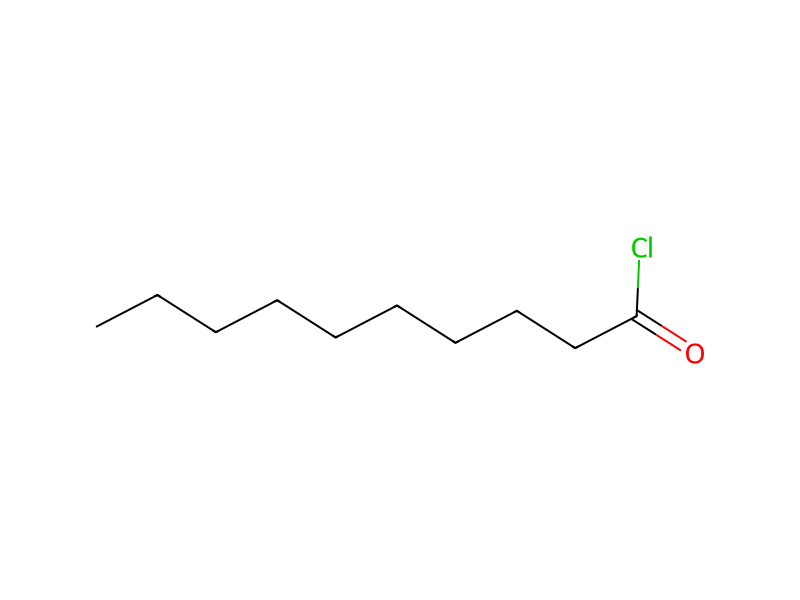
HCID 8471TriethylamineHCID 66982Decanoyl chlorideHCID 221376113-(4-fluorophenyl)-2-[1-(2-ethoxy-ethylamino)-ethyl]-3H-quinazolin-4-one

Produkt 1

HCID 220522713-(4-Fluorophenyl)-2-[1-(2-methoxy-ethylamino)-ethyl]-3H-quinazolin-4-oneAusbeute 92,3 %

Reagenzien, Katalysatoren, Lösungsmittel 2

HCID 14284
4-(Dimethylamino)pyridine
Katalysator
HCID 312751,4-DioxaneLösungsmittel

Versuchsvorschrift

To a solution of 130 mg 3-(4-fluorophenyl)-2-[1-(2-ethoxy-ethylamino)-ethyl]-3H-quinazolin-4-one (VI) (0.381 mmol, 1.00 equiv), 59 μL triethylamine (0.419 mmol, 1.10 equiv), and 2 mg DMAP (16 μmol, 0.04 equiv) dissolved in 3 mL 1,4-dioxane at room temperature was added 79 μL neat decanoyl chloride (0.381 mmol, 1.00 equiv); a colorless precipitate developed. The reaction mixture was stirred overnight at room temperature then concentrated in vacuo to remove the dioxaxie. The resulting concentrate was partitioned between dichloromethane and aqueous saturated sodium bicarbonate solution (20 mL each). The separated aqueous layer was extracted again with dichloromethane (15 mL) and the combined organic extracts dried over sodium sulfate, filtered, and concentrated in vacuo to yield a yellow, glassy oil. The crude product was purified by chromatography on silica gel (2.5 cm o.d.×10 cm h) eluting with a gradient of 20 to 25% ethyl acetate in hexane. Fractions containing product at Rf=0.84, 5% methanol in chloroform, were combined and concentrated in vacuo to afford 120 mg of a colorless solid. m.p. 71.4° C. 1H NMR (d6-DMSO; T=140° C.) δ 0.90 (t, 3H, J=7.2 Hz), 1.18–1.44 (m, 14H), 1.44 (d, 3H, J=7.2 Hz), 1.98–2.08 (m, 2H), 3.11 (s, 3H), 3.33–3.52 (m, 4H), 5.11 (br q, 1H, J=6.0 Hz), 7.32 (br m, 3H), 7.49 (br m, 1H), 7.55 (ddd, 1H, J1=1.2 Hz, J2=7.6 Hz, J3=8.0 Hz), 7.73 (d, 1H, J=8.0 Hz), 7.85 (ddd, 1H, J1=1.2 Hz, J2=7.2 Hz, J3=8.4 Hz), 8.15 (dd, 1H, J1=1.6 Hz, J2=8.0 Hz) ppm. At room temperature, compound exists as a mixture of cis/trans amide rotamers, ca. 1:1 determined by integration of characteristic 1H NMR peaks (CDCl3, T=25° C.) at δminor 4.78 (q, 1.0H, J=7.2 Hz) and δmajor 5.33 (q, 1.2H, J=7.2 Hz) ppm. MS (ESI+) 496.4 [MH]+


Aufarbeitung

  1. concentrationthen concentrated in vacuo
  2. customto remove the dioxaxie
  3. concentrationThe resulting concentrate
  4. customwas partitioned between dichloromethane and aqueous saturated sodium bicarbonate solution (20 mL each)
  5. extractionThe separated aqueous layer was extracted again with dichloromethane (15 mL)
  6. dry with materialthe combined organic extracts dried over sodium sulfate
  7. filtrationfiltered
  8. concentrationconcentrated in vacuo
  9. customto yield a yellow, glassy oil
  10. customThe crude product was purified by chromatography on silica gel (2.5 cm o.d.×10 cm h)
  11. washeluting with a gradient of 20 to 25% ethyl acetate in hexane
  12. additionFractions containing product at Rf=0.84, 5% methanol in chloroform
  13. concentrationconcentrated in vacuo

Quellen und Nachweise

ORD-Eintrag
ord-624509ce3983417c8899df76c43ba63e
Quelldatensatz
uspto-grants-2006_05
DOI
10.6084/m9.figshare.5104873.v1
Patentnummer
US07053215B2

Notizen zur Reaktion

Wird geladen…

Auf dieser SeiteKomponentenVersuchsvorschriftAufarbeitungQuellen und NachweiseNotizen zur Reaktion