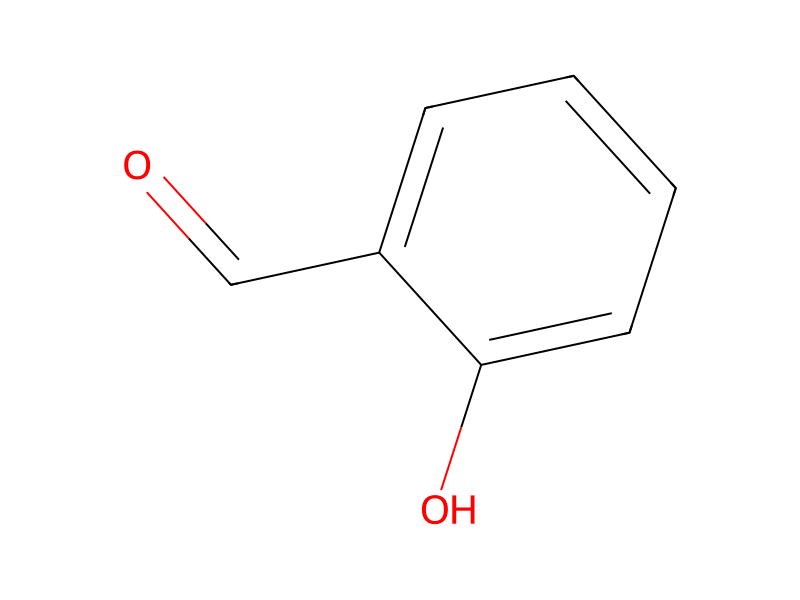
Salicylaldehyde → m-PEG4-benzaldehyde
HRID 1827664
Reaktionsgleichung

[CH3:1][O:2][CH2:3][CH2:4][O:5][CH2:6][CH2:7][O:8][CH2:9][CH2:10][O:11][CH3:12].ClCCOCCOCCOC.O[C:25]1[CH:32]=C[CH:30]=[CH:29][C:26]=1[CH:27]=[O:28]>>[O:11]([C:12]1[CH:30]=[CH:29][C:26]([CH:27]=[O:28])=[CH:25][CH:32]=1)[CH2:10][CH2:9][O:8][CH2:7][CH2:6][O:5][CH2:4][CH2:3][O:2][CH3:1]Komponenten
4


Versuchsvorschrift
The bisacrylamide triethylene glycol acetal crosslinker (606) or triglyme crosslinker as shown in FIG. 6 was synthesized in four steps on a multigram scale. The first step involved the preparation of 1-chloro-3,6,9-trioxadecane (603) using the procedure of Loth, H. & Ulrich, F. (1998) J. Control Release. 54, 273. Compound 603 was then used to alkylate hydroxy benzaldehyde (605) and produce p-(1,4,7,10-Tetraoxaundecyl)benzaldehyde (604). Compound 603 was chosen as the alkylating agent since it can be easily synthesized on a large scale (100 grams) enabling the preparation of 4 on a 20 gram scale (70% yield), using potassium carbonate as the base and 18-crown-6 as the phase transfer catalyst. Hydroxy-benzaldehyde could also be alkylated using 1-tosyl-3,6,9-trioxadecane and 1-bromo-3,6,9-trioxadecane but these approaches were discontinued because significantly lower yields of the desired product were obtained.