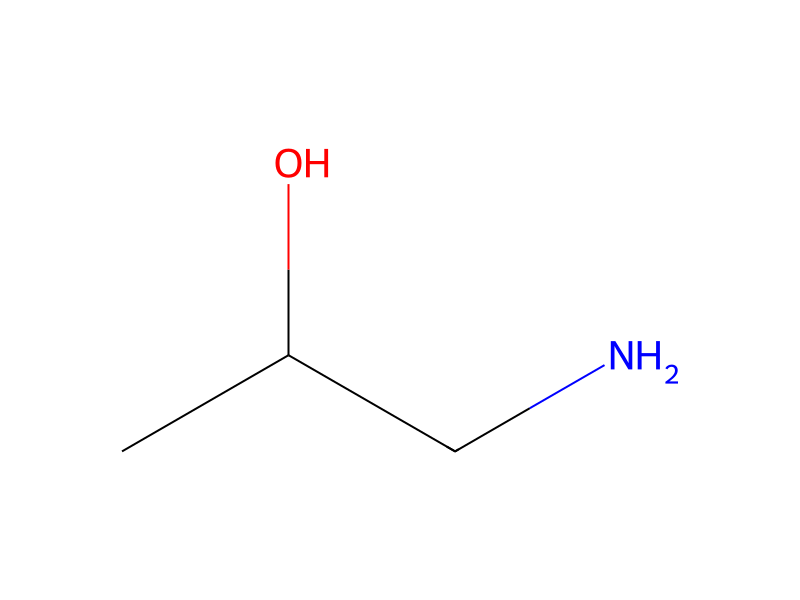
Into a 250-mL round-bottom flask equipped with a magnetic stir bar, a thermocouple, a condenser, and a nitrogen bubbler, was charged 1-amino-2-propanol (54.1 g, 720 mmol). The reactor contents were heated in an oil bath to an internal temperature of 85° C. 1-Chloro-4-(2-chloroethyl)benzene (25.218 g, 144 mmol) was slowly charged via addition funnel, while maintaining the internal temperature at <100° C. On completion of the addition, stirring was continued at an internal temperature between 90° C. and 95° C. for 3 h. The reaction was allowed to cool to 40° C. (bath) and stirring was continued at that temperature overnight. Chlorobenzene (50 mL) was charged to the flask followed by water (25 mL) and the mixture was stirred at 80° C. (bath) for 15 min. The layers were then allowed to separate at room temperature and the organic phase was removed. The aqueous phase was extracted with chlorobenzene (2×25 mL) at 80° C. (bath). The organic phases were combined and washed with water (25 mL) at 80° C. (bath). The organic phase was removed and concentrated at 60° C. (water bath) under reduced pressure. A total of 69.261 g of distillate was removed by distillation. The residue was diluted with chlorobenzene (62.4 mL). The resulting mixture, which contained 0.0172% water by Karl Fischer titration, was carried forward to Step C without further purification.