Acetic Acid → 3-(Acetoxymethyl)tetrahydrofuran
HRID 1857807
Reaktionsgleichung

[CH3:1][CH:2]1[CH2:6][CH2:5][O:4][CH2:3]1.OCC1CCOC1.[C:14]([OH:17])(=[O:16])[CH3:15]>O>[C:14]([O:17][CH2:1][CH:2]1[CH2:6][CH2:5][O:4][CH2:3]1)(=[O:16])[CH3:15]Komponenten
5
Edukt 3

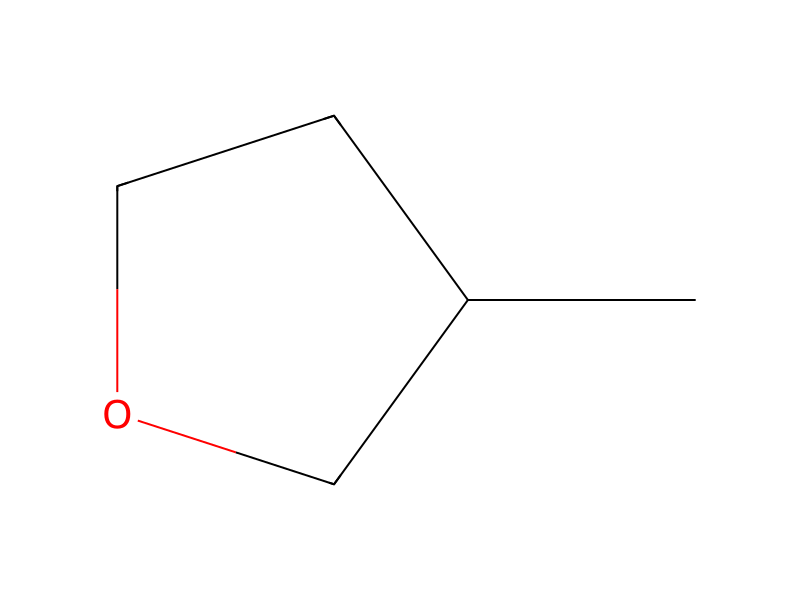

Produkt 1

Reagenzien, Katalysatoren, Lösungsmittel 1

Versuchsvorschrift
Process for the preparation of 3-methyltetrahydrofuran (3-MeTHF) by the steps comprising (1) contacting 3-(hydroxymethyl)tetrahydrofuran (3-HOMeTHF) with acetic acid at a temperature of about 120 to 210° C. in an esterification zone using apparatus which permits water to be removed from the esterification zone to produce 3-(acetoxymethyl)tetrahydrofuran (3-AcOMETHF); (2) heating the 3-AcOMETHF in a pyrolysis zone at a temperature in the range of about 380 to 510° C. for a about 1 to 10 seconds to convert the ester compound to 3-methyleneTHF; and (3) contacting the 3-methyleneTHF with hydrogen at a temperature of 25 to 100° C. and a pressure in the range of about 1 to 50 bar absolute in the presence of a hydrogenation catalyst selected from supported catalysts comprising about 1 to 10 weight percent palladium, platinum or rhodium deposited on a catalyst support material to convert the 3-methyleneTHF to 3-MeTHF.