StartseiteMCPWorkbenchSkills
StartseiteWorkbenchBenachrichtigungenMein Bereich
llms.txt · MCP-AnleitungDatenschutz · Nutzungsbedingungen · Supportv1.8.3
  1. Startseite
  2. /Reaktion

Hydrochloric Acid → 4,4,4-Trifluoro-1-(1-cyclohexenyl)-1,3-butanedione

HRID 1860588
Drucken

Reaktionsgleichung

Reaktionsgleichung von HRID 1860588
[C:1]1([CH2:7][C:8](CC2CCCCC=2)=O)[CH2:6][CH2:5][CH2:4][CH2:3][CH:2]=1.[F:17][C:18]([F:25])([F:24])[C:19]([O:21]CC)=O.C[O-:27].[Na+].Cl>COCCOC.O.CCOC(C)=O>[F:25][C:18]([F:17])([F:24])[C:19](=[O:21])[CH2:8][C:7]([C:1]1[CH2:6][CH2:5][CH2:4][CH2:3][CH:2]=1)=[O:27]
KomponentenVersuchsvorschriftAufarbeitungQuellen und NachweiseNotizen zur Reaktion

Komponenten

8

Edukt 4

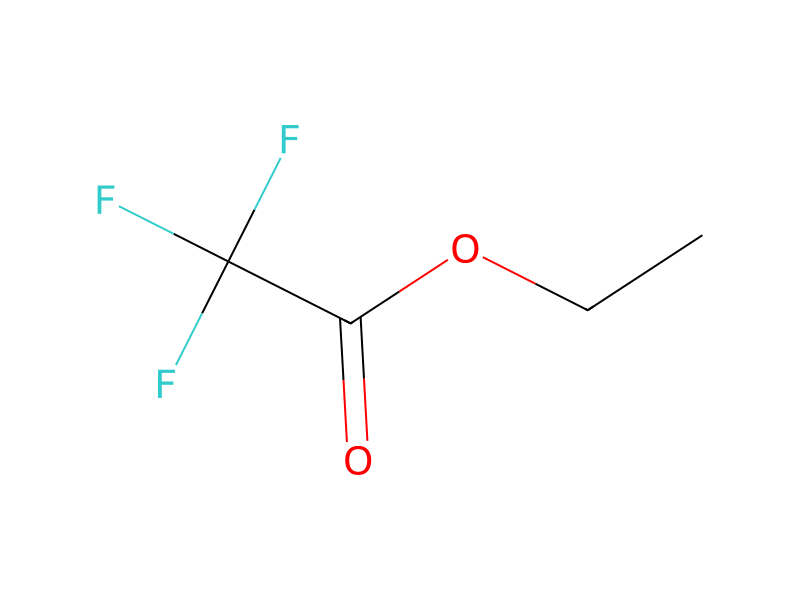
HCID 313Hydrochloric AcidHCID 9794Ethyl trifluoroacetateHCID 10942334Sodium MethoxideHCID 696885601-Cyclohexenylmethylketone

Produkt 1

HCID 186240894,4,4-Trifluoro-1-(1-cyclohexenyl)-1,3-butanedione

Reagenzien, Katalysatoren, Lösungsmittel 3

HCID 962
Water
Lösungsmittel
HCID 80711,2-DimethoxyethaneLösungsmittel
HCID 8857Ethyl AcetateLösungsmittel

Versuchsvorschrift

To a stirred solution of 1-cyclohexenylmethylketone (1 ml, 7.8 mmol) in DME (60 ml) was added ethyl trifluoroacetate (2.8 ml, 23.4 mmol) and sodium methoxide (2.2 g, 39 mmol), and the resulting reaction mixture was stirred at room temperature overnight. EtOAc (200 ml) and water (50 ml) were added, and the pH of the aqueous layer was adjusted to 6 by addition of 2 N HCl solution. The organic layer was washed with brine (50 ml), dried over MgSO4, and concentrated in vacuo to give the title compound in quantitative yield. This was used for the next coupling step without further purification.

Aufarbeitung

  1. customthe resulting reaction mixture
  2. washThe organic layer was washed with brine (50 ml)
  3. dry with materialdried over MgSO4
  4. concentrationconcentrated in vacuo

Quellen und Nachweise

ORD-Eintrag
ord-d8fd76cb92cc47d38969a30e54f11137
Quelldatensatz
uspto-grants-2003_03
DOI
10.6084/m9.figshare.5104873.v1
Patentnummer
US06531492B1

Notizen zur Reaktion

Auf dieser SeiteKomponentenVersuchsvorschriftAufarbeitungQuellen und NachweiseNotizen zur Reaktion