StartseiteMCPWorkbenchSkills
StartseiteWorkbenchBenachrichtigungenMein Bereich
llms.txt · MCP-AnleitungDatenschutz · Nutzungsbedingungen · Supportv1.8.0
  1. Startseite
  2. /Reaktion

Methylamine → 3-{[3-{[(5-Chloro-2-thienyl)sulfonyl]amino}-4-(methyloxy)-1H-indazol-1-yl]methyl}-N-methylbenzamide

HRID 1874728
Notizen
Druckvorschau

Reaktionsgleichung

Reaktionsgleichung von HRID 1874728
[Cl:1][C:2]1[S:6][C:5]([S:7]([N:10](COCC[Si](C)(C)C)[C:11]2[C:19]3[C:14](=[CH:15][CH:16]=[CH:17][C:18]=3[O:20][CH3:21])[N:13]([CH2:22][C:23]3[CH:24]=[C:25]([CH:30]=[CH:31][CH:32]=3)[C:26]([O:28]C)=O)[N:12]=2)(=[O:9])=[O:8])=[CH:4][CH:3]=1.[NH:41]1CCCN2CCCN=[C:42]12.CN.CCCC[N+](CCCC)(CCCC)CCCC.[F-]>C1COCC1.C(Cl)Cl.O>[Cl:1][C:2]1[S:6][C:5]([S:7]([NH:10][C:11]2[C:19]3[C:14](=[CH:15][CH:16]=[CH:17][C:18]=3[O:20][CH3:21])[N:13]([CH2:22][C:23]3[CH:24]=[C:25]([CH:30]=[CH:31][CH:32]=3)[C:26]([NH:41][CH3:42])=[O:28])[N:12]=2)(=[O:8])=[O:9])=[CH:4][CH:3]=1
KomponentenReaktionsbedingungenVersuchsvorschriftAufarbeitungQuellen und NachweiseNotizen zur Reaktion

Komponenten

8

Edukt 4

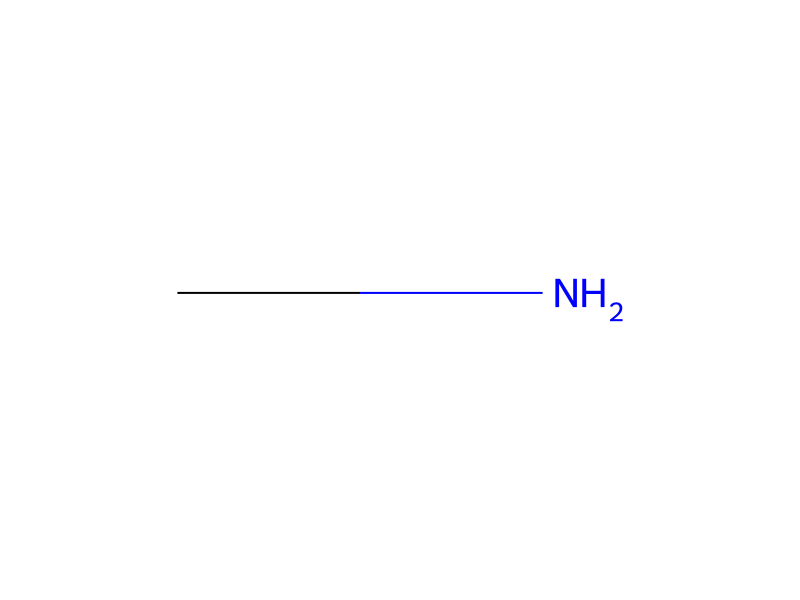
HCID 6329MethylamineHCID 79873TriazabicyclodeceneHCID 2724141Tetrabutylammonium FluorideHCID 58054540Methyl 3-{[3-[[(5-chloro-2-thienyl)sulfonyl]({[2-(trimethylsilyl)ethyl]oxy}methyl)amino]-4-(methyloxy)-1H-indazol-1-yl]methyl}benzoate

Produkt 1

HCID 580545323-{[3-{[(5-Chloro-2-thienyl)sulfonyl]amino}-4-(methyloxy)-1H-indazol-1-yl]methyl}-N-methylbenzamide
Ausbeute 75 %

Reagenzien, Katalysatoren, Lösungsmittel 3

HCID 962WaterLösungsmittelHCID 6344DichloromethaneLösungsmittelHCID 8028TetrahydrofuranLösungsmittel2×

Reaktionsbedingungen

Temperatur
110 °C

Versuchsvorschrift

Methyl 3-{[3-[[(5-chloro-2-thienyl)sulfonyl]({[2-(trimethylsilyl)ethyl]oxy}methyl)amino]-4-(methyloxy)-1H-indazol-1-yl]methyl}benzoate (for a preparation see Intermediate 31) (70 mg, 0.112 mmol) in a Biotage microwave vial was added 1,3,4,6,7,8-hexahydro-2H-pyrimido[1,2-a]pyrimidine (Aldrich) (7.83 mg, 0.056 mmol) and methylamine solution in THF (2M, 1.125 mL). The reaction vessel was sealed and heated in a Biotage Initiator microwave oven using initial very high absorption level to 80° C. for 75 min. The reaction mixture was diluted with DCM (2 mL) and water (3 mL). The organic phase was separated, and the aqueous layer was further extracted with DCM (2 mL). The combined organic solutions were dried through an hydrophobic frit and concentrated under a nitrogen stream in a blowdown unit. The residue was treated TBAF in THF (1M, 1.125 mL, 1.125 mmol). The reaction vessel was sealed and heated in a Biotage Initiator at 110° C. for 15 min (very high absorption level). The solvent was removed under a nitrogen stream in a blowdown unit (T=35° C. overnight), dissolved in 1:1 MeOH-DMSO (2 mL) and purified by Mass Directed AutoPrep on standard C18 column using Acetonitrile Water with a TFA modifier (Method B). The solvent was removed under a stream of nitrogen in a Radleys blowdown apparatus to give the title compound (41.7 mg, 75%) LCMS (System A) RT=1.03 min, ES+ve m/z 491/493 (M+H)+.

Aufarbeitung

  1. customThe reaction vessel was sealed
  2. temperatureheated in a Biotage Initiator microwave oven
  3. customto 80° C.
  4. customfor 75 min
  5. customThe organic phase was separated
  6. extractionthe aqueous layer was further extracted with DCM (2 mL)
  7. customThe combined organic solutions were dried through an hydrophobic frit
  8. concentrationconcentrated under a nitrogen stream in a blowdown unit
  9. customThe reaction vessel was sealed
  10. customThe solvent was removed under a nitrogen stream in a blowdown unit (T=35° C. overnight)
  11. dissolutiondissolved in 1:1 MeOH-DMSO (2 mL)
  12. custompurified by Mass Directed AutoPrep on standard C18 column
  13. customThe solvent was removed under a stream of nitrogen in a Radleys blowdown apparatus

Quellen und Nachweise

ORD-Eintrag
ord-fa43faed63a74ba299b63c6fcf5a9ab5
Quelldatensatz
uspto-grants-2012_11
DOI
10.6084/m9.figshare.5104873.v1
Patentnummer
US08304446B2

Notizen zur Reaktion

Wird geladen…

Auf dieser SeiteKomponentenReaktionsbedingungenVersuchsvorschriftAufarbeitungQuellen und NachweiseNotizen zur Reaktion


