StartseiteMCPWorkbenchSkills
StartseiteWorkbenchBenachrichtigungenMein Bereich
llms.txt · MCP-AnleitungDatenschutz · Nutzungsbedingungen · Supportv1.8.0
  1. Startseite
  2. /Reaktion

Carbamate → Trifluoroacetic acid

HRID 1891230
Notizen
Druckvorschau

Reaktionsgleichung

Reaktionsgleichung von HRID 1891230
[C:1]([O:5][C:6]([N:8]1[CH2:11][CH:10]([C:12]2[CH:49]=[CH:48][C:15]([CH2:16][O:17][C:18]3[C:23]([C:24]([F:27])([F:26])[F:25])=[CH:22][CH:21]=[CH:20][C:19]=3[C:28]3[N:33]=[C:32]([N:34]4[C:38]([C:39]([F:42])([F:41])[F:40])=[C:37]([C:43]([O:45]CC)=[O:44])[CH:36]=[N:35]4)[CH:31]=[CH:30][CH:29]=3)=[CH:14][CH:13]=2)[CH2:9]1)=[O:7])(C)(C)C.[C:50]([OH:56])([C:52]([F:55])([F:54])[F:53])=[O:51].CCN(C(C)C)C(C)C.ClC(OC)=O.C(=O)([O-])N.[OH-].[Li+].Cl>C(Cl)Cl.O1CCOCC1.C(#N)C>[C:50]([OH:56])([C:52]([F:55])([F:54])[F:53])=[O:51].[CH3:1][O:5][C:6]([N:8]1[CH2:9][CH:10]([C:12]2[CH:13]=[CH:14][C:15]([CH2:16][O:17][C:18]3[C:23]([C:24]([F:25])([F:26])[F:27])=[CH:22][CH:21]=[CH:20][C:19]=3[C:28]3[N:33]=[C:32]([N:34]4[C:38]([C:39]([F:41])([F:42])[F:40])=[C:37]([C:43]([OH:45])=[O:44])[CH:36]=[N:35]4)[CH:31]=[CH:30][CH:29]=3)=[CH:48][CH:49]=2)[CH2:11]1)=[O:7]
KomponentenReaktionsbedingungenVersuchsvorschriftAufarbeitungQuellen und NachweiseNotizen zur Reaktion

Komponenten

12

Edukt 7

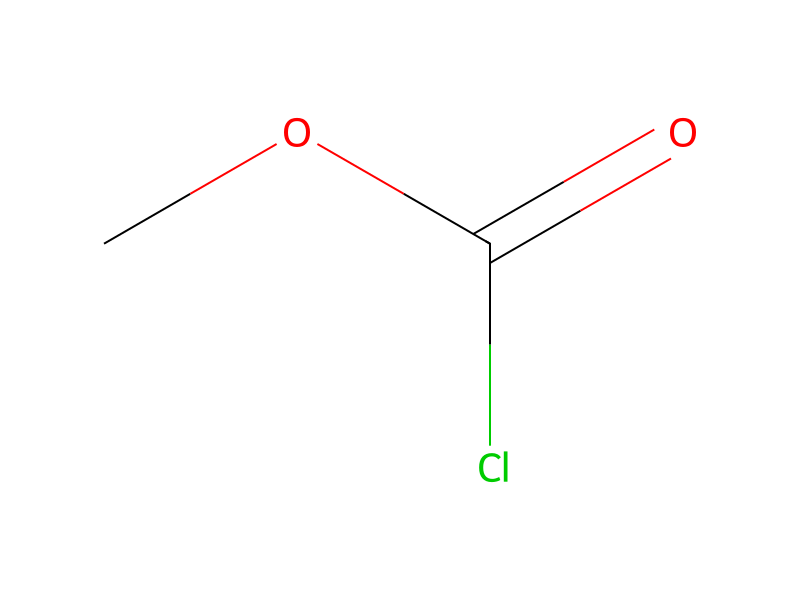
HCID 276CarbamateHCID 313Hydrochloric AcidHCID 3939Lithium HydroxideHCID 6422Trifluoroacetic acid2×HCID 6586Methyl chloroformateHCID 81531DiisopropylethylamineHCID 86644580HCID 86644580, Verbindung

Produkt 2

HCID 6422Trifluoroacetic acidHCID 46897231HCID 46897231, Verbindung

Reagenzien, Katalysatoren, Lösungsmittel 3

HCID 6342AcetonitrileLösungsmittelHCID 6344DichloromethaneLösungsmittel2×HCID 312751,4-DioxaneLösungsmittel

Reaktionsbedingungen

Temperatur
50 °C

Versuchsvorschrift

To a solution of the title compound from Example 148 Step C (170 mg, 0.246 mmol) in DCM (3 mL) was added TFA (1 mL). After 3 min, the reaction mixture was concentrated in vacuo to provide the crude TFA-salt, which was used without further purification: LCMS m/z 590.9 [M+1-1]+. A portion of the unpurified TFA salt (0.08 mmol) was dissolved in DCM (1 mL), and DIEA (130 μL, 0.74 mmol) was added, followed by methyl chloroformate (19 μL, 0.25 mmol). After 20 min, the reaction mixture was quenched by addition of sat aq NaHCO3 and the aqueous phase was extracted with DCM. The organic phase was separated and concentrated in vacuo to provide the unpurified carbamate, which was used without further purification: LCMS m/z 648.9 [M+H]+. To a solution of the carbamate in dioxane (2 mL) was added lithium hydroxide (1 mL, 2N aqueous, 2 mmol), and the mixture was stirred at 50° C. for 1 h, then at ambient temperature. After 15 h, the reaction mixture was rendered acidic by addition of HCl (2N aqueous), then was diluted with acetonitrile and purified by reverse phase HPLC (30 to 100% acetonitrile/water, both 0.1% v/v TFA) to provide the title compound: LCMS m/z 620.9 [M+H]+; 1H NMR (500 MHz, d6-DMSO) δ 8.34 (s, 1H), 8.22 (t, J=8.0 Hz, 1H), 8.07 (d, J=8.0 Hz, 1H), 7.95 (d, J=8.0 Hz, 1H), 7.88-7.86 (m, 2H), 7.54 (t, J=8.0 Hz, 1H), 7.32 (d, J=8.0 Hz, 2H), 7.13 (d, J=8.0 Hz, 2H), 4.54 (s, 2H), 4.33-4.26 (m, 2H), 3.90-3.81 (m, 3H), 3.59 (s, 3H).

Aufarbeitung

  1. concentrationthe reaction mixture was concentrated in vacuo
  2. customto provide the crude TFA-salt, which
  3. customwas used without further purification
  4. waitAfter 20 min
  5. customthe reaction mixture was quenched by addition of sat aq NaHCO3
  6. extractionthe aqueous phase was extracted with DCM
  7. customThe organic phase was separated
  8. concentrationconcentrated in vacuo
  9. customto provide the unpurified carbamate, which
  10. customwas used without further purification
  11. customat ambient temperature
  12. waitAfter 15 h
  13. custompurified by reverse phase HPLC (30 to 100% acetonitrile/water

Quellen und Nachweise

ORD-Eintrag
ord-e61c1d494475409f8bf2c68f7b6072a0
Quelldatensatz
uspto-grants-2013_08
DOI
10.6084/m9.figshare.5104873.v1
Patentnummer
US08507512B2

Notizen zur Reaktion

Wird geladen…

Auf dieser SeiteKomponentenReaktionsbedingungenVersuchsvorschriftAufarbeitungQuellen und NachweiseNotizen zur Reaktion