StartseiteMCPWorkbenchSkills
StartseiteWorkbenchBenachrichtigungenMein Bereich
llms.txt · MCP-AnleitungDatenschutz · Nutzungsbedingungen · Supportv1.8.3
  1. Startseite
  2. /Reaktion

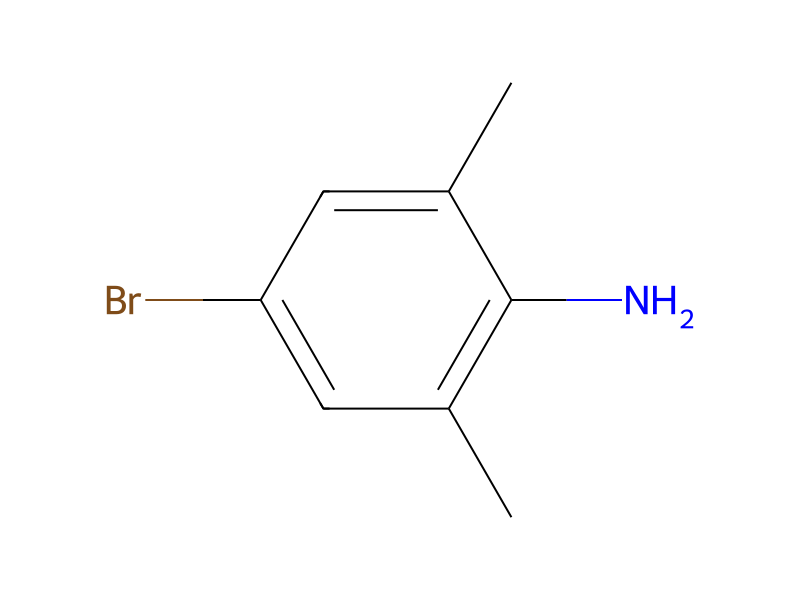
Hydrochloric Acid → (4-Bromo-2,6-dimethylphenyl)hydrazine

HRID 1892639
Drucken

Reaktionsgleichung

Reaktionsgleichung von HRID 1892639
Cl.[Br:2][C:3]1[CH:8]=[C:7]([CH3:9])[C:6]([NH2:10])=[C:5]([CH3:11])[CH:4]=1.[N:12]([O-])=O.[Na+].[Sn](Cl)Cl>O>[Br:2][C:3]1[CH:8]=[C:7]([CH3:9])[C:6]([NH:10][NH2:12])=[C:5]([CH3:11])[CH:4]=1
KomponentenReaktionsbedingungenVersuchsvorschriftAufarbeitungQuellen und NachweiseNotizen zur Reaktion

Komponenten

6

Edukt 4

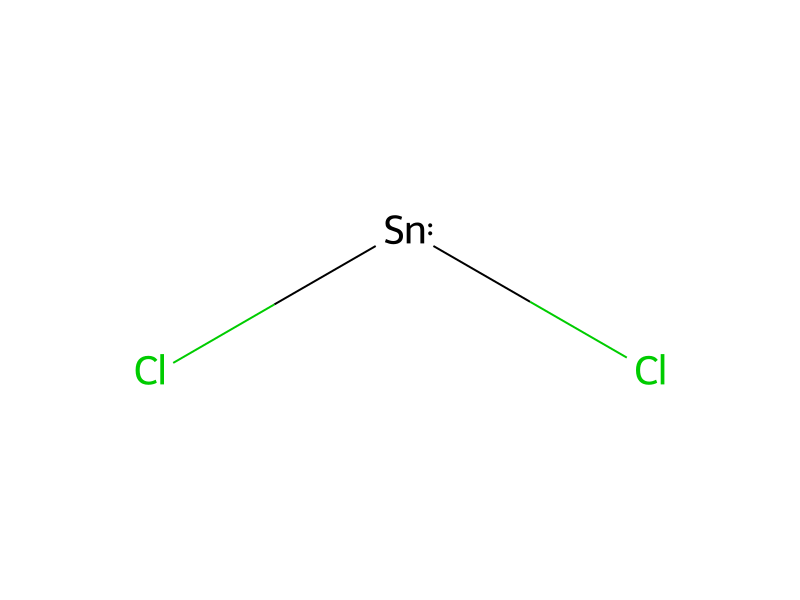
HCID 313Hydrochloric Acid2×HCID 24479Stannous ChlorideHCID 905494-Bromo-2,6-xylidineHCID 23668193Sodium Nitrite

Produkt 1

HCID 3433671(4-Bromo-2,6-dimethylphenyl)hydrazineAusbeute 70,6 %

Reagenzien, Katalysatoren, Lösungsmittel 1

HCID 962
Water
Lösungsmittel
3×

Reaktionsbedingungen

Temperatur
2.5 °C

Versuchsvorschrift

In a 3 L 3-neck round bottom flask equipped with a mechanical stirrer was added concentrated hydrochloric acid (125 mL) and water (250 mL). 4-Bromo-2,6-dimethylbenzenamine (100 g, 500 mmol) was added slowly at 0° C. Stirring was continued for an additional 15 minutes, resulting in a thick white slurry. A freshly prepared solution of sodium nitrite (34.5 g, 500 mmol) in water (100 mL) was added to the slurry dropwise maintaining the internal temperature below 5° C. After stirring for 30 minutes, a deep orange solution was formed. Tin(II) chloride dehydrate (282 g, 1250 mmol) in 1:1 concentrated hydrochloric acid:water (300 mL) was added dropwise while maintaining the internal temperature between 0-5° C. The resulting mixture was stirred at 0° C. for 1 hour and then warmed to room temperature and stirred for 15 hours. The reaction mixture was filtered and washed with diethyl ether. The solid was slowly added to an aqueous 10 M solution of sodium hydroxide (1 L) between 0-10° C. and extracted with ethyl acetate (3×800 mL). The organic layer was washed with brine twice, dried over anhydrous sodium sulfate, and concentrated to give 1-(4-bromo-2,6-dimethylphenyl)hydrazine (76.0 g, 353 mmol). The hydrazine was dissolved in ethyl acetate (800 mL) to which hydrochloric acid/methanol (88.2 mL) was added. The mixture was stirred for 25 minutes. The reaction was filtered, washed with ethyl acetate until the solid is white. The white solid was dried in vacuo to afford 1-(4-bromo-2,6-dimethylphenyl)hydrazine hydrochloride (80.0 g, 64%). 1H NMR (400 MHz, DMSO-d6, δ): 9.71 (s, 3H), 7.32 (s, 2H), 6.78 (s, 1H), 2.37 (s, 6H).


Aufarbeitung

  1. customIn a 3 L 3-neck round bottom flask equipped with a mechanical stirrer
  2. customresulting in a thick white slurry
  3. temperaturedropwise maintaining the internal temperature below 5° C
  4. stirringAfter stirring for 30 minutes
  5. customa deep orange solution was formed
  6. stirringThe resulting mixture was stirred at 0° C. for 1 hour
  7. temperaturewarmed to room temperature
  8. stirringstirred for 15 hours
  9. filtrationThe reaction mixture was filtered
  10. washwashed with diethyl ether
  11. additionThe solid was slowly added to an aqueous 10 M solution of sodium hydroxide (1 L) between 0-10° C.
  12. extractionextracted with ethyl acetate (3×800 mL)
  13. washThe organic layer was washed with brine twice
  14. dry with materialdried over anhydrous sodium sulfate
  15. concentrationconcentrated

Quellen und Nachweise

ORD-Eintrag
ord-1716b621b15e4209b139e3e4c085a7a7
Quelldatensatz
uspto-grants-2013_08
DOI
10.6084/m9.figshare.5104873.v1
Patentnummer
US08507533B2

Notizen zur Reaktion

Auf dieser SeiteKomponentenReaktionsbedingungenVersuchsvorschriftAufarbeitungQuellen und NachweiseNotizen zur Reaktion