Reaktionsgleichung

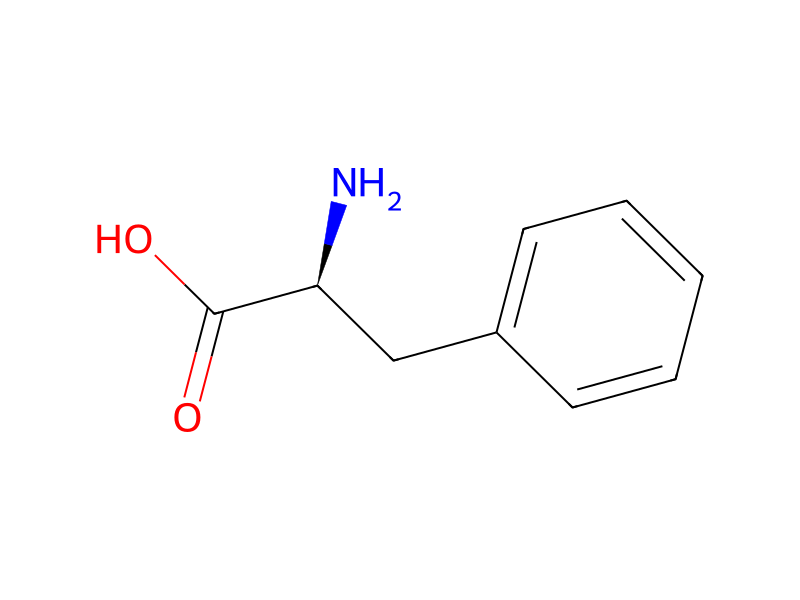
C1N(CCS(O)(=O)=O)CCN(CCS(O)(=O)=O)C1.ClCC([NH:23][C@H:24]([C:32]([OH:34])=[O:33])[CH2:25][C:26]1[CH:31]=[CH:30][CH:29]=[CH:28][CH:27]=1)=O.C(O)(=O)C>O>[NH2:23][C@H:24]([C:32]([OH:34])=[O:33])[CH2:25][C:26]1[CH:31]=[CH:30][CH:29]=[CH:28][CH:27]=1Komponenten
5
Edukt 3



Produkt 1
Reagenzien, Katalysatoren, Lösungsmittel 1

Versuchsvorschrift
Ten microliters of 0.2 M piperazine-N,N'-bis(2-ethanesulfonic acid) [=PIPES] buffer, pH 7.3, and 10 μl of 100 mM N-chloroacetyl-L-phenylalanine (adjusted to pH 6-7 with NaOH) are dissolved in 20 μl of water. After 10 μl of an enzyme solution (30-50 μg/ml) is added, the mixture is incubated at 37° C. for 15 minutes. Then, 50 μl of 50% acetic acid is added to stop the enzymatic reaction. The amount of L-phenylalanine produced from the substrate in the reaction solution is determined by the Yemm-Cocking ninhydrin colorimetric method (E. W. Yemm & E. C. Cocking: Analyst, Vol. 80, page 209, 1955) or with an amino acid automatic analyzer (Model 835-50, Hitachi Limited).
Aufarbeitung
- customthe enzymatic reaction
Quellen und Nachweise
- ORD-Eintrag
- ord-8511b57a37874ce9aaa5c2d26164ef68
- Quelldatensatz
- uspto-grants-1984_03
- Patentnummer
- US04438201
Verknüpfte Notizen
Wird geladen…