StartseiteMCPWorkbenchSkills
StartseiteWorkbenchBenachrichtigungenMein Bereich
llms.txt · MCP-AnleitungDatenschutz · Nutzungsbedingungen · Supportv1.8.3
  1. Startseite
  2. /Reaktion

Dimethylformamide → N-(5-(3-formyl-1-(tetrahydro-2H-pyran-2-yl)-1H-pyrazolo[3,4-b]pyridin-5-yl)pyridin-3-yl)pivalamide

HRID 1916505
Drucken

Reaktionsgleichung

Reaktionsgleichung von HRID 1916505
Br[C:2]1[CH:3]=[C:4]2[C:10]([CH:11]=[O:12])=[N:9][N:8]([C:13]([C:26]3[CH:31]=[CH:30][CH:29]=CC=3)(C3C=CC=CC=3)C3C=CC=CC=3)[C:5]2=[N:6][CH:7]=1.B1(B2OC(C)(C)C(C)(C)O2)O[C:35](C)(C)[C:34]([CH3:40])([CH3:39])O1.CC([O-])=[O:52].[K+].Br[C:56]1[CH:57]=[C:58]2C(C(OC)=O)=NN[C:59]2=[N:60][CH:61]=1.P([O-])([O-])([O-])=O.[K+].[K+].[K+].C[N:78]([CH:80]=[O:81])C>C1C=CC(P(C2C=CC=CC=2)[C-]2C=CC=C2)=CC=1.C1C=CC(P(C2C=CC=CC=2)[C-]2C=CC=C2)=CC=1.Cl[Pd]Cl.[Fe+2].O>[CH:11]([C:10]1[C:4]2[C:5](=[N:6][CH:7]=[C:2]([C:58]3[CH:57]=[C:56]([NH:78][C:80](=[O:81])[C:34]([CH3:40])([CH3:39])[CH3:35])[CH:61]=[N:60][CH:59]=3)[CH:3]=2)[N:8]([CH:13]2[CH2:26][CH2:31][CH2:30][CH2:29][O:52]2)[N:9]=1)=[O:12]


KomponentenReaktionsbedingungenVersuchsvorschriftAufarbeitungQuellen und NachweiseNotizen zur Reaktion

Komponenten

9

Edukt 6

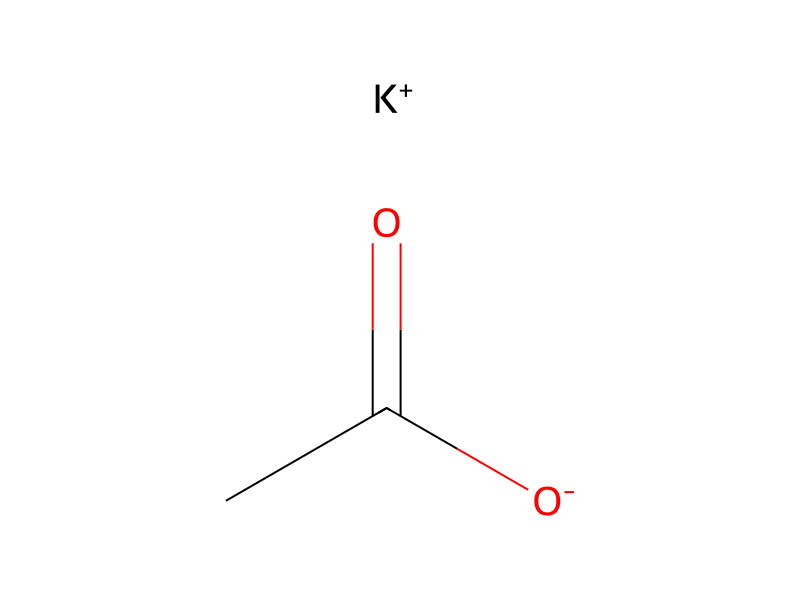
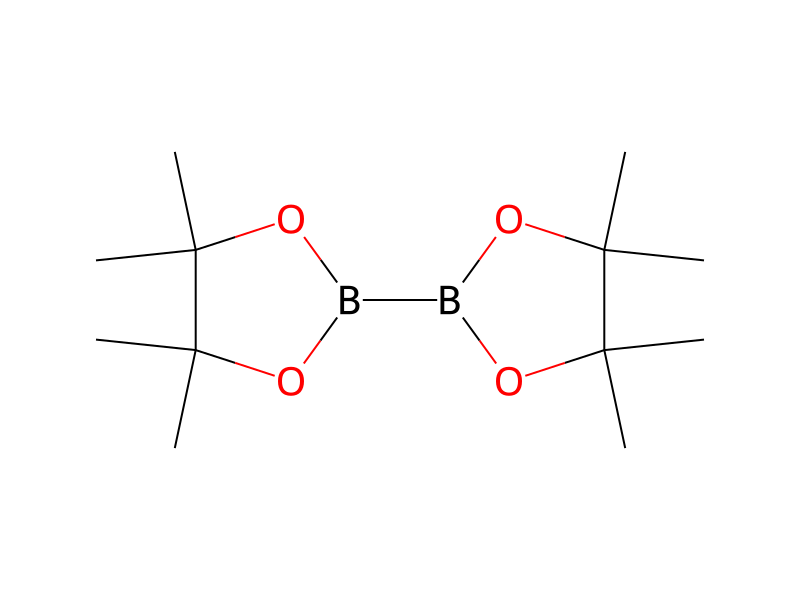
HCID 6228DimethylformamideHCID 62657Potassium Phosphate, TribasicHCID 517044Potassium AcetateHCID 2733548Bis(pinacolato)diboraneHCID 867010605-bromo-1-trityl-1H-pyrazolo[3,4-b]pyridine-3-carbaldehydeHCID 178499173HCID 178499173, Verbindung

Produkt

1
HCID 86701079N-(5-(3-formyl-1-(tetrahydro-2H-pyran-2-yl)-1H-pyrazolo[3,4-b]pyridin-5-yl)pyridin-3-yl)pivalamideAusbeute 68 %

Reagenzien, Katalysatoren, Lösungsmittel 2

HCID 44119782Bis(cyclopenta-1,4-dien-1-yl(diphenyl)phosphane);dichloropalladium;iron(2+)KatalysatorHCID 962WaterLösungsmittel

Reaktionsbedingungen

Temperatur
90 °C

Versuchsvorschrift

A solution of 5-bromo-1-(tetrahydro-pyran-2-yl)-1H-pyrazolo[3,4-b]pyridin-3-yl]-carbaldehyde (XI) (436 mg, 1.4 mmol), bis(pinacolato)diboron (426 mg, 1.6 mmol), and KOAc (412 mg, 4.2 mmol) in dry DMF (20 ml) was purged with argon. PdCl2(dppf)2 (68 mg, 0.08 mmol) was added to the solution and purged again with argon. The solution was heated at 90° C. for 2 h under argon and cooled to the room temperature. N-(5-bromopyridin-3-yl)pivalamide (XVII) (358 mg, 1.4 mmol), potassium phosphate (446 mg, 2.1 mmol) and water (2 mL) was added to the solution and purged with argon. Pd(PPh3)4 was then added and the solution was again purged with the argon. The solution was heated at 90° C. for 4 h under argon. The solution was filtered through a bed of Celite and the solvent was distilled under vacuum. The crude product was suspended in water, sonicated briefly. The solids were filtered, dried under vacuum and purified by flash chromatography (100% DCM→3:97 MeOH:DCM) to get N-(5-(3-formyl-1-(tetrahydro-2H-pyran-2-yl)-1H-pyrazolo[3,4-b]pyridin-5-yl)pyridin-3-yl)pivalamide (LXV) as a brown solid (390 mg, 0.96 mmol, 68% yield). 1H NMR (DMSO-d6, 500 MHz) δ ppm 1.27 (s, 9H), 1.58-1.69 (m, 2H), 1.78-1.90 (m, 1H), 2.02-2.14 (m, 2H), 2.49-2.57 (m, 1H), 3.78 (dt, J=11 Hz, J=4 Hz, 1H), 3.94-4.03 (d, J=11 Hz, 1H), 6.25 (dd, J=10 Hz, J=2 Hz, 1H), 8.44 (t, J=2 Hz, 1H), 8.72 (dd, J=4 Hz, J=2 Hz, 2H), 8.98 (d, J=2 Hz, 1H), 9.09 (d, J=2 Hz, 1H), 9.60 (s, 1H), 10.21 (s, 1H); ESIMS found C22H25N5O3 m/z 408 (M+H).

Aufarbeitung

  1. custompurged again with argon
  2. temperaturecooled to the room temperature
  3. custompurged with argon
  4. additionPd(PPh3)4 was then added
  5. customthe solution was again purged with the argon
  6. temperatureThe solution was heated at 90° C. for 4 h under argon
  7. filtrationThe solution was filtered through a bed of Celite
  8. distillationthe solvent was distilled under vacuum
  9. customsonicated briefly
  10. filtrationThe solids were filtered
  11. customdried under vacuum
  12. custompurified by flash chromatography (100% DCM→3:97 MeOH:DCM)

Quellen und Nachweise

ORD-Eintrag
ord-d8d8bebaa6d4416dbf098ebf00ddfbad
Quelldatensatz
uspto-grants-2013_12
DOI
10.6084/m9.figshare.5104873.v1
Patentnummer
US08618128B1

Notizen zur Reaktion

Auf dieser SeiteKomponentenReaktionsbedingungenVersuchsvorschriftAufarbeitungQuellen und NachweiseNotizen zur Reaktion