Reaktionsgleichung

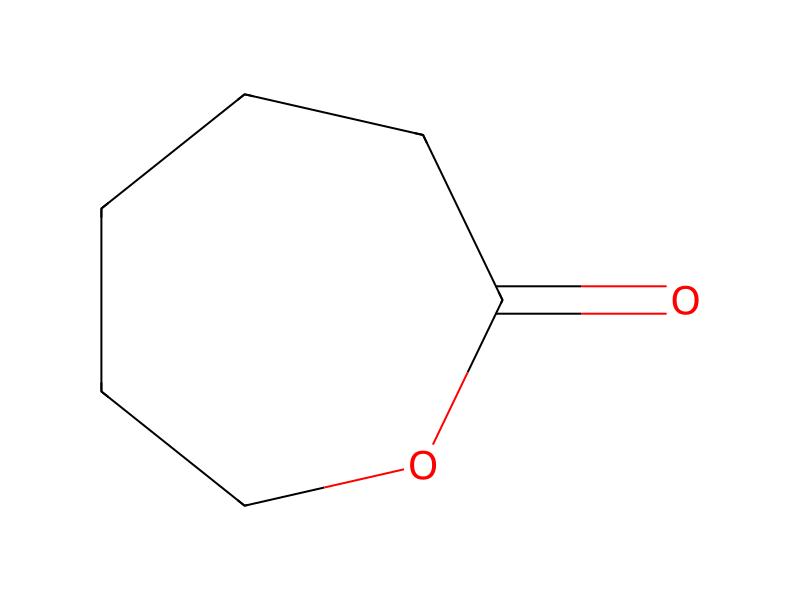
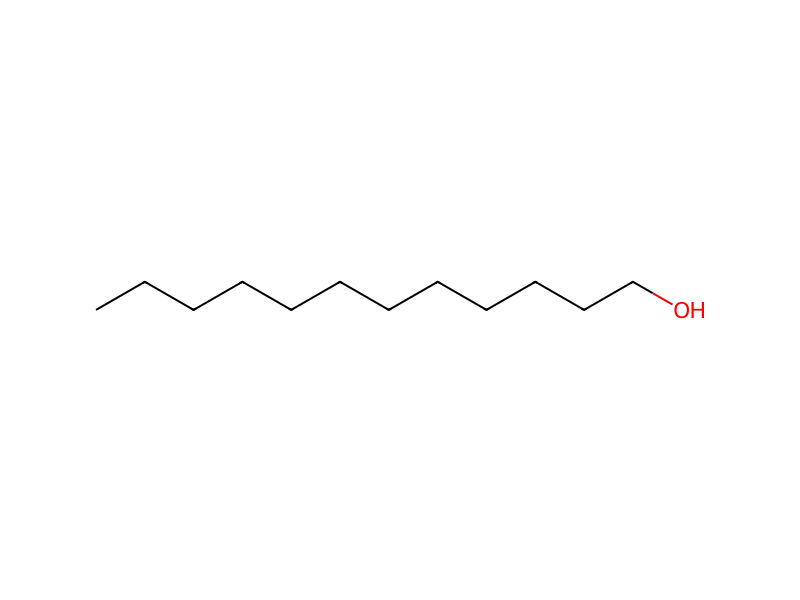
[CH3:1][CH:2]1[O:9][C:7](=[O:8])[CH:6]([CH3:10])[O:5][C:3]1=[O:4].[C:11]1(=[O:18])[O:17][CH2:16][CH2:15][CH2:14][CH2:13][CH2:12]1>[Sn].C(O)CCCCCCCCCCC>[CH3:1][CH:2]1[O:9][C:7](=[O:8])[CH:6]([CH3:10])[O:5][C:3]1=[O:4].[C:11]1(=[O:18])[O:17][CH2:16][CH2:15][CH2:14][CH2:13][CH2:12]1Komponenten
Edukt 2

Produkt 1

Reagenzien, Katalysatoren, Lösungsmittel 2

Reaktionsbedingungen
- Temperatur
- 160 °C
Versuchsvorschrift
Next, 72.3 grams (0.50 moles) of DL-lactide (Purac) was weighed and placed into the round-bottom flask. Then 57.1 grams (0.50 moles) of ε-caprolactone (Fluka) was weighed and placed in the flask. To this mixture was added 5.6 mL (0.025 moles) of dodecanol and 0.1 mL of the Tin catalyst. The round-bottom flask was placed in an oil bath and heated at 160° C. for 18 hours with stirring by a magnetic stirring bar. The flask was cooled to 110° C. and a vacuum was pulled for 12 hours to remove any residual monomer. The flask was then cooled to room temperature, the vacuum released, and the thick viscous liquid polymer transferred to a sealed glass container. A total of 96.7 grams of the viscous liquid polymer was obtained. The molecular weight (MW) of the copolymer as determined by gel permeation chromatography with a multi-angle light-scattering detector (GPC-MALS) was 8250 daltons with a polydispersity (MW/MN) of 1.13.
Aufarbeitung
- customThe round-bottom flask was placed in an oil bath
- temperatureThe flask was cooled to 110° C.
- customto remove any residual monomer
- temperatureThe flask was then cooled to room temperature
Quellen und Nachweise
- ORD-Eintrag
- ord-31758408cbc548d1a2c95bca4ba40e26
- Quelldatensatz
- uspto-grants-2012_05
- Patentnummer
- US08187640B2
Verknüpfte Notizen
Wird geladen…