StartseiteMCPWorkbenchSkills
StartseiteWorkbenchBenachrichtigungenMein Bereich
llms.txt · MCP-AnleitungDatenschutz · Nutzungsbedingungen · Supportv1.8.0
  1. Startseite
  2. /Reaktion

Hydrochloric Acid → HCID 22251420, Verbindung

HRID 1934867
Notizen
Druckvorschau

Reaktionsgleichung

Reaktionsgleichung von HRID 1934867
[NH2:1][C:2]1[CH:7]=[C:6]([Cl:8])[CH:5]=[CH:4][C:3]=1[OH:9].C([O:12][C:13](=[O:23])[CH2:14][CH2:15][CH2:16][CH2:17][CH2:18][CH2:19][C:20](O)=[O:21])C.[OH-].[Na+].Cl>C1(C)C=CC=CC=1.C(OCC)(=O)C.O.B(O)(O)O.NC1C=CC(C)=CN=1>[Cl:8][C:6]1[CH:5]=[CH:4][C:3]([OH:9])=[C:2]([CH:7]=1)[NH:1][C:20](=[O:21])[CH2:19][CH2:18][CH2:17][CH2:16][CH2:15][CH2:14][C:13]([OH:23])=[O:12]
KomponentenReaktionsbedingungenVersuchsvorschriftAufarbeitungQuellen und NachweiseNotizen zur Reaktion

Komponenten

10

Edukt 4

HCID 313Hydrochloric AcidHCID 72652-Amino-4-chlorophenolHCID 14798Sodium HydroxideHCID 84204Ethyl hydrogen suberate

Produkt 1

HCID 22251420HCID 22251420, VerbindungAusbeute 60 %

Reagenzien, Katalysatoren, Lösungsmittel 5

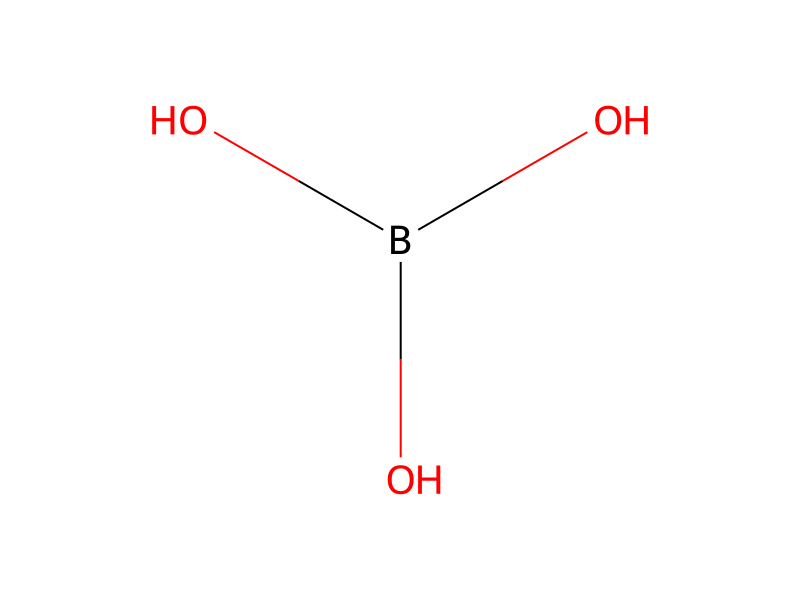
HCID 7628
Boric Acid
Katalysator
HCID 153482-Amino-5-methylpyridineKatalysator
HCID 962WaterLösungsmittel2×
HCID 1140TolueneLösungsmittel
HCID 8857Ethyl AcetateLösungsmittel

Reaktionsbedingungen

Temperatur
85 °C

Versuchsvorschrift

8-(5-chloro-2-hydroxyanilino)-8-oxooctanoic acid was prepared as follows. A suspension of 2 amino-4-chlorophenol (17.88 g, 124.5 mmol), 8-ethoxy-8-oxo-octanoic acid (25.19 g, 124.5 mmol), boric acid (0.385 g, 6.23 mmol), and 2-amino-5-picoline (0.675 g, 6.23 mmol) in 160 mL of dried toluene was heated at reflux (110° C.) under nitrogen for 4 hours during which water (2.5 mL) produced in the reaction was removed by azeotropic distillation in a Dean-Stark separation unit. Thin layer chromatography on silica gel with an eluant of ethylacetate and heptane at a molar ratio of 1:1 indicated the completion of the reaction. The mixture was cooled and a 2N aqueous solution of sodium hydroxide (125 mL, 250 mmol) was added. The mixture was heated at reflux (about 85° C.) for 4 hours and cooled. The cooled mixture was diluted with ethyl acetate (300 mL) and water (150 mL). The aqueous layer was washed with two portions of ethyl acetate (250 mL). After careful separation, the aqueous layer was chilled and acidified with a 10% (by weight) solution of hydrochloric acid (86.20 mL, 250 mmol) to yield a solid. The solid was filtered, washed with hexane, and dried under vacuum. Trituration with dichloromethane yielded the 8-(5-chloro-2-hydroxyanilino)-8-oxooctanoic acid (22.39 g, 60%) as an off-white solid. HPLC (Column: Higgins Kromasil 100 C18, water/acetonitile/acetic acid: 950/50/1, 3 mL/min, 220 nm) Rt 5.38 min.; melting point 123-124° C.; 1H NMR(DMSO d6, 300 MHz)δ: 1.28(m, 4H), 1.51 (m, 4H), 2.19 (t, 2H), 2.39 (t, 2H),6.83 (d, 1H), 6.93 (dd, 1H), 7.95 (d, 1H), 9.20 (s, 1H), 10.10 (s, 1H), 12.00 (br s, 1H); 13C NMR (DMSO d6, 75 MHz) δ: 24.29, 24.90, 28.20, 33.58, 35.90, 116.50, 121.02, 122.20, 123.41, 127.74, 148.23, 171.93, 174.26. MS m/z 300 (M+1)+. Anal. Calcd for C14H18ClNO4: C, 56.10; H, 6.05; Cl, 11.83, N, 4.67. Found: C, 56.07, H, 6.11, 11.98, N, 4.64.


Aufarbeitung

  1. custom8-(5-chloro-2-hydroxyanilino)-8-oxooctanoic acid was prepared
  2. temperaturewas heated
  3. customproduced in the reaction
  4. customwas removed by azeotropic distillation in a Dean-Stark separation unit
  5. customthe completion of the reaction
  6. temperatureThe mixture was cooled
  7. temperatureThe mixture was heated
  8. temperaturecooled
  9. washThe aqueous layer was washed with two portions of ethyl acetate (250 mL)
  10. customAfter careful separation
  11. temperaturethe aqueous layer was chilled
  12. customto yield a solid
  13. filtrationThe solid was filtered
  14. washwashed with hexane
  15. customdried under vacuum

Quellen und Nachweise

ORD-Eintrag
ord-2fd8fb39960a4bf3968c357347ba06f1
Quelldatensatz
uspto-grants-2002_05
DOI
10.6084/m9.figshare.5104873.v1
Patentnummer
US06384278B1

Notizen zur Reaktion

Wird geladen…

Auf dieser SeiteKomponentenReaktionsbedingungenVersuchsvorschriftAufarbeitungQuellen und NachweiseNotizen zur Reaktion