StartseiteMCPWorkbenchSkills
StartseiteWorkbenchBenachrichtigungenMein Bereich
llms.txt · MCP-AnleitungDatenschutz · Nutzungsbedingungen · Supportv1.8.0
  1. Startseite
  2. /Reaktion

Chlorotrimethylsilane → (E)-2-[3-chloro-4-(5-trifluoromethyl-tetrazol-1-yl)-phenyl]-3-cyclohexyl-acrylic acid methyl ester

HRID 1936354
Notizen
Druckvorschau

Reaktionsgleichung

Reaktionsgleichung von HRID 1936354
BrCCBr.C[Si](Cl)(C)C.[CH3:10][O:11][C:12](=[O:22])/[C:13](/I)=[CH:14]\[CH:15]1[CH2:20][CH2:19][CH2:18][CH2:17][CH2:16]1.C1(P(C2C=CC=CC=2)C2C=CC=CC=2)C=CC=CC=1.[Cl:42][C:43]1[CH:48]=[C:47](I)[CH:46]=[CH:45][C:44]=1[N:50]1[C:54]([C:55]([F:58])([F:57])[F:56])=[N:53][N:52]=[N:51]1.[Cl-].[NH4+]>O1CCCC1.[Zn].C1C=CC(/C=C/C(/C=C/C2C=CC=CC=2)=O)=CC=1.C1C=CC(/C=C/C(/C=C/C2C=CC=CC=2)=O)=CC=1.[Pd]>[CH3:10][O:11][C:12](=[O:22])/[C:13](/[C:47]1[CH:46]=[CH:45][C:44]([N:50]2[C:54]([C:55]([F:56])([F:57])[F:58])=[N:53][N:52]=[N:51]2)=[C:43]([Cl:42])[CH:48]=1)=[CH:14]/[CH:15]1[CH2:20][CH2:19][CH2:18][CH2:17][CH2:16]1
KomponentenReaktionsbedingungenVersuchsvorschriftAufarbeitungQuellen und NachweiseNotizen zur Reaktion

Komponenten

10

Edukt 6

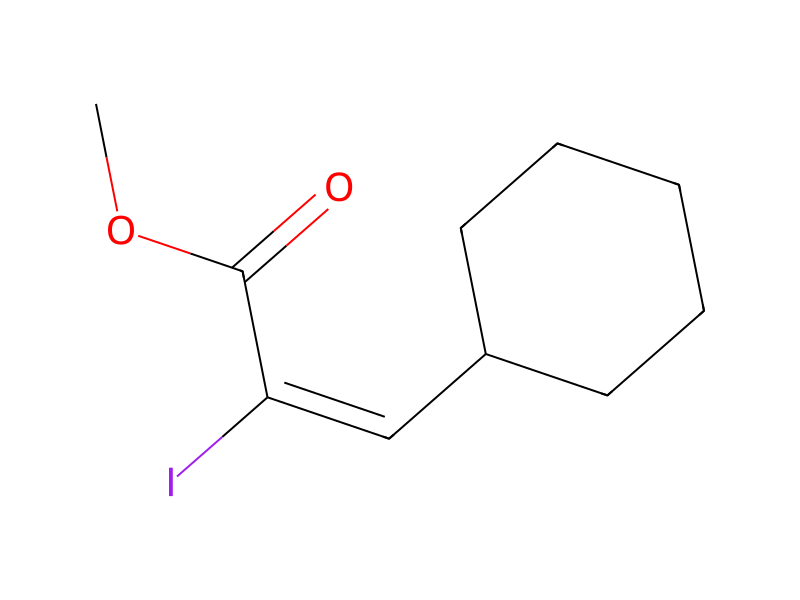
HCID 6397ChlorotrimethylsilaneHCID 78391,2-DibromoethaneHCID 11776TriphenylphosphineHCID 25517Ammonium ChlorideHCID 184343631-(2-chloro-4-iodo-phenyl)-5-trifluoromethyl-1H-tetrazoleHCID 86583971(E)-3-cyclohexyl-2-iodo-acrylic acid methyl ester

Produkt 1

HCID 69691727(E)-2-[3-chloro-4-(5-trifluoromethyl-tetrazol-1-yl)-phenyl]-3-cyclohexyl-acrylic acid methyl esterAusbeute 73 %

Reagenzien, Katalysatoren, Lösungsmittel 3

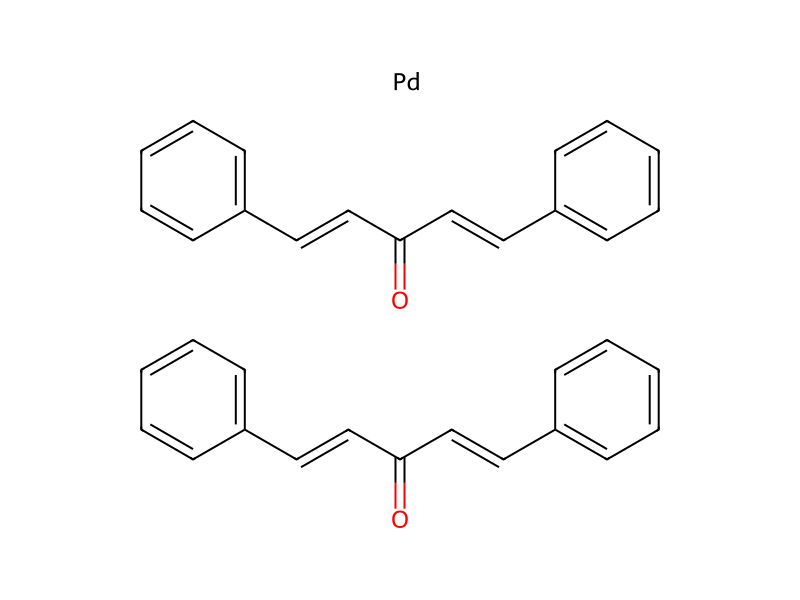
HCID 23994ZincKatalysator6×HCID 6505921(1E,4E)-1,5-diphenylpenta-1,4-dien-3-one; palladiumKatalysatorHCID 8028TetrahydrofuranLösungsmittel5×

Reaktionsbedingungen

Temperatur
25 °C

Versuchsvorschrift

A mixture of zinc dust (650 mg, 10 mmol, Aldrich, −325 mesh) and dry tetrahydrofuran (2 mL) under argon was treated with 1,2-dibromoethane (187 mg, 1 mmol). The zinc suspension was then heated with a heat gun to ebullition, allowed to cool, and heated again. This process was repeated three times to make sure the zinc dust was activated. The activated zinc dust suspension was then treated with trimethylsilyl chloride (110 mg, 1 mmol), and the suspension was stirred for 15 min at 25° C. The reaction mixture was then treated dropwise with a solution of (E)-3-cyclohexyl-2-iodo-acrylic acid methyl ester (prepared in Example 4, 1.32 g, 4.5 mmol) in dry tetrahydrofuran (2 mL) over 5 min. After the addition, the reaction mixture was stirred for 1 h at 40-45° C. and then stirred overnight at 25° C. The reaction mixture was then diluted with dry tetrahydrofuran (4 mL), and the stirring was stopped to allow the excess zinc dust to settle down (˜2 h). In a separate reaction flask, bis(dibenzylideneacetone)palladium(0) (54 mg, 0.1 mmol) and triphenylphosphine (104 mg, 0.4 mmol) in dry tetrahydrofuran (8 mL) was stirred at 25° C. under argon for 10 min and then treated with 1-(2-chloro-4-iodo-phenyl)-5-trifluoromethyl-1H-tetrazole (1.12 g, 3 mmol) and the freshly prepared zinc compound in tetrahydrofuran. The resulting brick red solution was heated at 50° C. for 15 h. The reaction mixture was cooled to 25° C. and then poured into a saturated aqueous ammonium chloride solution (70 mL), and the organic compound was extracted into ethyl acetate (3×50 mL). The combined organic extracts were washed with a saturated aqueous sodium chloride solution (1×100 mL), dried over anhydrous magnesium sulfate, filtered, and concentrated in vacuo. Biotage chromatography (FLASH 40M, Silica, 6/1 hexanes/ethyl acetate) afforded (E)-2-[3-chloro-4-(5-trifluoromethyl-tetrazol-1-yl)-phenyl]-3-cyclohexyl-acrylic acid methyl ester (908 mg, 73%) as an amorphous white solid: EI-HRMS m/e calcd for C18H18ClF3N4O2 (M+) 414.1070, found 414.1075.

Aufarbeitung

  1. temperatureto cool
  2. temperatureheated again
  3. additionAfter the addition
  4. stirringthe reaction mixture was stirred for 1 h at 40-45° C.
  5. stirringstirred overnight at 25° C
  6. custom(˜2 h)
  7. stirringwas stirred at 25° C. under argon for 10 min
  8. temperatureThe resulting brick red solution was heated at 50° C. for 15 h
  9. temperatureThe reaction mixture was cooled to 25° C.
  10. extractionthe organic compound was extracted into ethyl acetate (3×50 mL)
  11. washThe combined organic extracts were washed with a saturated aqueous sodium chloride solution (1×100 mL)
  12. dry with materialdried over anhydrous magnesium sulfate
  13. filtrationfiltered
  14. concentrationconcentrated in vacuo

Quellen und Nachweise

ORD-Eintrag
ord-ec74f386d4474835b829cc9ed44207d4
Quelldatensatz
uspto-grants-2002_05
DOI
10.6084/m9.figshare.5104873.v1
Patentnummer
US06388088B1

Notizen zur Reaktion

Wird geladen…

Auf dieser SeiteKomponentenReaktionsbedingungenVersuchsvorschriftAufarbeitungQuellen und NachweiseNotizen zur Reaktion