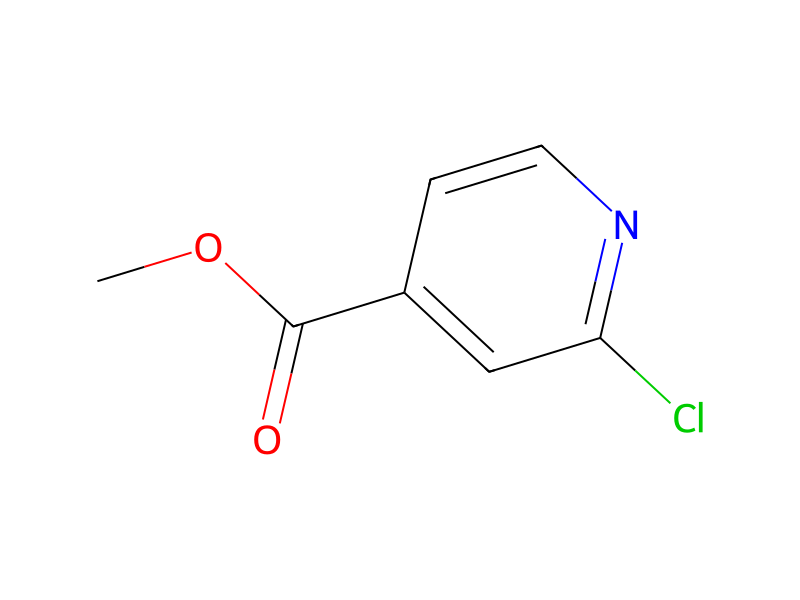
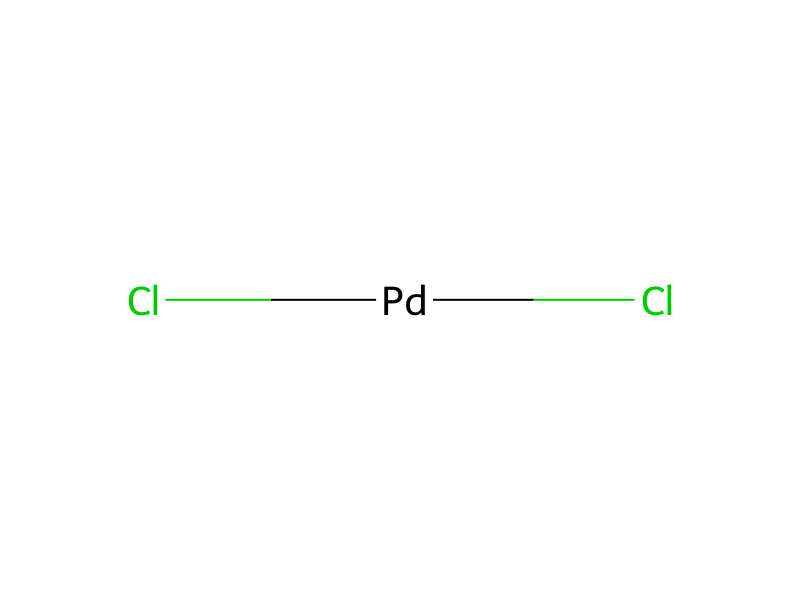
C(=O)([O-])[O-].[K+].[K+].Cl[C:8]1[CH:9]=[C:10]([CH:15]=[CH:16][N:17]=1)[C:11]([O:13][CH3:14])=[O:12].[Cl:18][C:19]1[CH:20]=[C:21](B2OC(C)(C)C(C)(C)O2)[CH:22]=[C:23]([Cl:25])[CH:24]=1.CO>O.C(Cl)Cl.Cl[Pd]Cl>[Cl:18][C:19]1[CH:20]=[C:21]([C:8]2[CH:9]=[C:10]([CH:15]=[CH:16][N:17]=2)[C:11]([O:13][CH3:14])=[O:12])[CH:22]=[C:23]([Cl:25])[CH:24]=1Potassium carbonate (2.416 g, 17.48 mmol), methyl 2-chloroisonicotinate (5 g, 29.14 mmol), 2-(3,5-dichlorophenyl)-4,4,5,5-tetramethyl-1,3,2-dioxaborolane (10.34 g, 37.88 mmol), PdCl2 (dppf) (0.633 g, 0.87 mmol), and MeOH (45.7 mL) were split in three 20 mL microwave-vials and heated to 100° C. in a single node microwave reactor for 20 min. The reaction mixture was diluted with water and DCM, the aqueous layer extracted with DCM and the combined organic layers were evaporated. Purified by automated flash chromatography using 5% EtOAc in heptane ->30% EtOAc over 15 CV at 280 nm. Methyl 2-(3,5-dichlorophenyl)isonicotinate (6.1 g, 74%) was isolated as a white powder. 1H NMR (400 MHz, cdcl3) δ 4.01 (s, 3H), 7.44 (t, 1H), 7.84 (dd, 1H), 7.96 (d, 2H), 8.23-8.28 (m, 1H), 8.85 (dd, 1H).