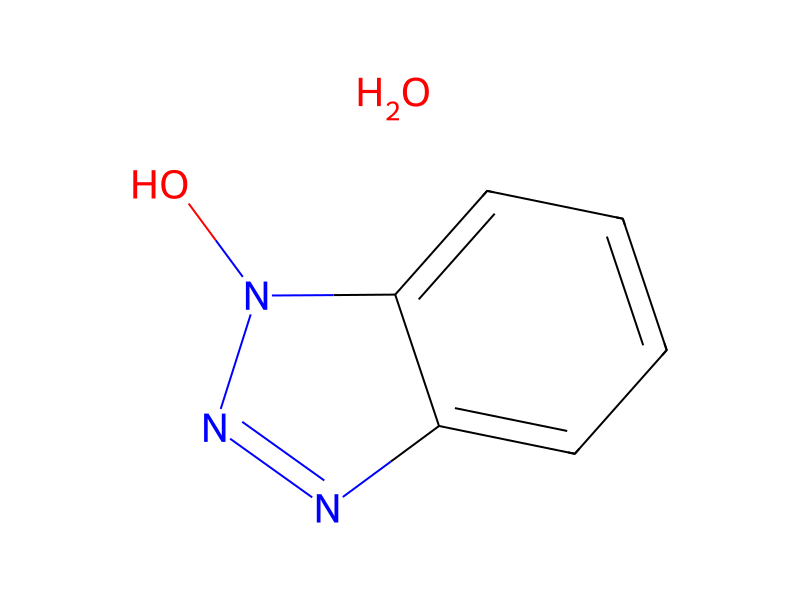
[NH:1]([C:8]1[S:9][C:10]([C:16]2[CH:21]=[CH:20][CH:19]=[CH:18][CH:17]=2)=[CH:11][C:12]=1[C:13](O)=[O:14])[C:2]1[CH:7]=[CH:6][CH:5]=[CH:4][CH:3]=1.[Cl-].[NH4+].C([N:27](CC)C(C)C)(C)C.O.ON1C2C=CC=CC=2N=N1.Cl.C(N=C=NCCCN(C)C)C>CN(C)C=O.C(OCC)(=O)C.C(=O)(O)[O-].[Na+].O>[NH:1]([C:8]1[S:9][C:10]([C:16]2[CH:21]=[CH:20][CH:19]=[CH:18][CH:17]=2)=[CH:11][C:12]=1[C:13]([NH2:27])=[O:14])[C:2]1[CH:7]=[CH:6][CH:5]=[CH:4][CH:3]=1To a solution of 2-anilino-5-phenylthiophene-3-carboxylic acid (47.3 mg, 0.160 mmol), ammonium chloride (17.12 mg, 0.320 mmol), and N,N-diisopropylethylamine (0.084 ml, 0.480 mmol) in N,N-dimethylformamide (1 mL) was added 1-hydroxybenzotriazole hydrate (32.4 mg, 0.240 mmol) and then 1-ethyl-3-(3-dimethylaminopropyl)carbodiimide hydrochloride (46.0 mg, 0.240 mmol). After being stirred for 15 hours, the reaction mixture was diluted with ethyl acetate (20 mL), saturated aqueous sodium bicarbonate solution (10 mL), and water (2 mL). The layers were separated and the organic layer was washed with water (2×5 mL) and brine (10 mL), dried over sodium sulfate, filtered, and concentrated. The crude reaction mixture was purified by silica gel chromatography (50% ethyl acetate/hexanes) to afford 2-anilino-5-phenylthiophene-3-carboxamide.