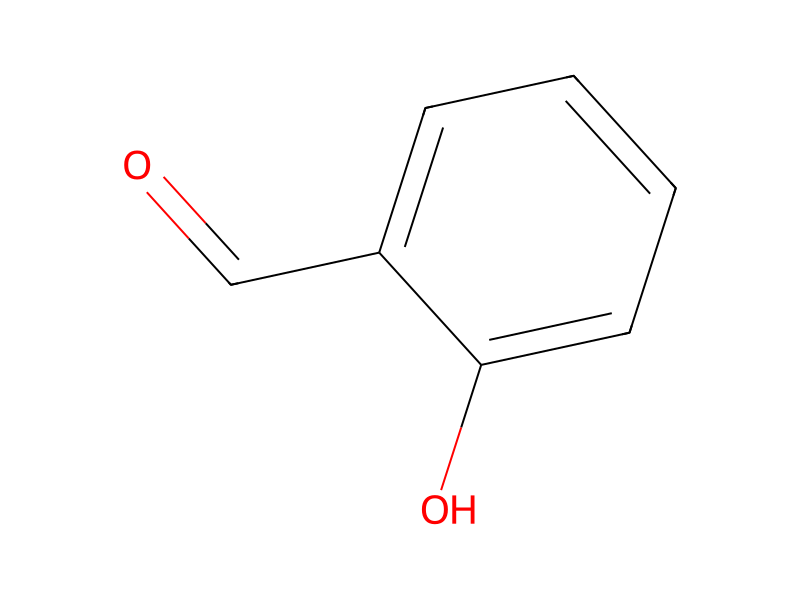
Into a 100 ml round bottomed flask equipped with heating mantle and magnetic stirrer, were added 2.0 g (0.017 mol) of dithiooxamide (DTO) and 21 g (0.17 mol--a tenfold excess) of o-hydroxybenzaldehyde (salicylaldehyde). The salicylaldehyde was purchased from Eastman Organic Chemicals Division of Eastman Kodak Company, Rochester, N.Y. The mixture was stirred and heated at 180°-185° C. for 2 hr. At 160° C. water began to boil off. After 2 hr, the reaction mixture was cooled to room temperature and 50 ml of ethanol/ether 1:1 were added. Stirring for 10 min was followed by filtration to remove the product. The product was washed with ethanol and dried in air overnight to afford 2.9 g (50%) of 2,5-bis(o-hydroxyphenyl)thiazolo[5,4-d]thiazole, mp 300° C. NMR and IR were in agreement with the assigned structure.